
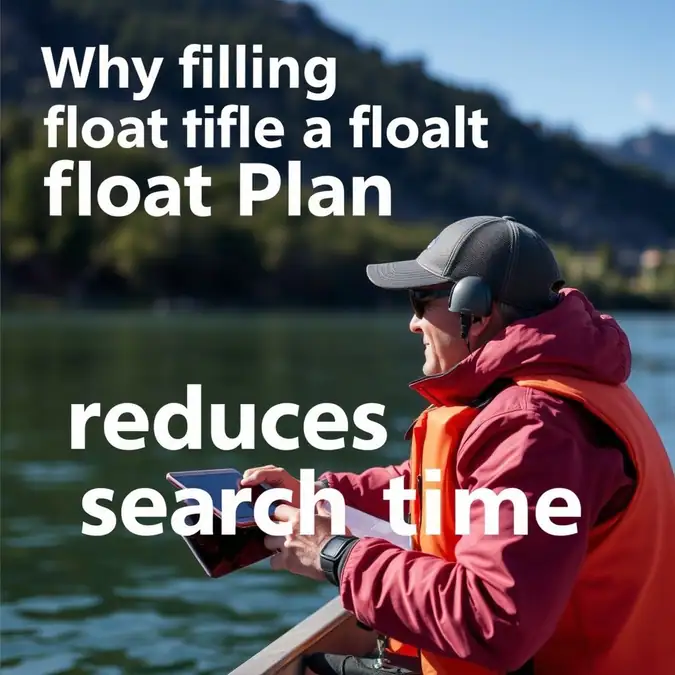
Why Filing A Float Plan Reduces Search Time On The Water

Ever been late getting home from a boat trip? Your family waits. The sun drops. Worry creeps in. A float plan solves this fast. It tells rescuers exactly where to look. This guide breaks down why filing a float plan reduces search time and how to do it right. You’ll learn what to include, who to tell, and when to update it. Let’s dive in.
What Is A Float Plan And Why Do I Need One
A float plan is a simple note. It spells out where you’re going and when you’ll be back. You hand it to a friend or family member. If you’re late, they call for help. Rescuers read the plan and know exactly where to search first. That cuts hours off the response. You need one every time you leave the dock — even for short trips. Weather turns fast. Engines quit. A plan keeps you safe.
Think of it like a note to your mom. You tell her where you’re playing and when you’ll be home. If you’re late, she knows where to look. A float plan works the same way. It’s not just for big boats. Kayaks need them. Jet skis need them. Any craft on the water needs one. The Coast Guard recommends it for all boaters. It takes five minutes to write. It can save your life.
I learned this the hard way. Years ago I took a quick fishing run. No plan. No note. The motor died. I drifted for hours. My wife called the Coast Guard at dark. They searched a huge area. They found me at midnight. If I’d had a plan, they would’ve known my spot. They would’ve found me in minutes. That night taught me a lesson I never forgot. Now I file a plan every single trip.
You might think you know the lake cold. You might think nothing will go wrong. But stuff happens. Fog rolls in. Batteries die. People get hurt. A float plan is your backup. It speaks for you when you can’t. It tells rescuers your boat type, color, and how many people are aboard. All that info speeds up the search. Every minute counts in cold water.
Some folks skip it because it feels like homework. It’s not. It’s a habit. Like putting on a life jacket. Like checking the weather. You do it without thinking. Keep a blank form on your boat. Fill it out before you start the engine. Hand it to your shore contact. Done. You’re now safer than most boaters on the water.
Your shore contact is key. Pick someone who’ll notice if you’re late. Someone who knows to call 911 or the Coast Guard. Tell them exactly what to do. Give them the plan in person or by text. Make sure they read it. Ask them to confirm they got it. This small step closes the loop. Now two people watch your back.
Digital tools make it easy. The Coast Guard app has a float plan feature. You fill it on your phone. You hit send. It goes to your contact. It saves your data for next time. You can update it fast. No paper needed. But paper works fine too. A napkin with details beats nothing. The best plan is the one you actually use.
Kids on board? Put their names and ages on the plan. Meds? List them. Special needs? Write them down. Rescuers need to know who they’re looking for. A child needs different care than an adult. A diabetic needs insulin. These details change the rescue plan. They bring the right gear. They bring the right people. Your plan makes that happen.
Don’t forget your vehicle. List the make, model, and plate of your tow rig. List where you parked. If you don’t return, rescuers check the ramp. They see your truck. They know you’re still out there. This confirms the alarm is real. It stops false alarms. It focuses the search on the water, not the parking lot.
Bottom line: a float plan is a map for rescuers. It turns a needle-in-haystack search into a straight line. You write it once. You share it once. It works every time. Make it a rule. No plan, no launch. Your family will thank you. Your rescuers will thank you. You’ll sleep better knowing you did the smart thing.
How Does A Float Plan Actually Reduce Search Time
A float plan cuts search time by giving rescuers a starting point. Without it, they search the whole lake. Or the whole coast. That takes hours or days. With a plan, they go straight to your route. They check your spots. They find you fast. The math is simple. Small area equals fast find. Big area equals slow find.
Picture a grid. No plan means the grid is the whole lake — a hundred square miles. A plan means the grid is your route — maybe five square miles. Searchers cover five miles fast. They skip the other ninety-five. That’s the power of a float plan. It shrinks the haystack. The needle becomes easy to spot.
Time matters most in cold water. Hypothermia sets in fast. In fifty-degree water, you lose function in minutes. You lose consciousness in an hour. A plan that saves two hours saves your life. In warm water you last longer. But dehydration and sun hit hard. Every minute counts. A float plan buys you minutes. Minutes buy survival.
Rescuers use your plan to pick the right assets. Helicopter for far offshore. Boat for near shore. Drone for tight spots. They know your boat size. They know your range. They know your fuel. They calculate your drift. They model the current. They model the wind. Your data feeds their computer. The computer spits out a search box. That box is small because of you.
I saw this work last summer. A buddy filed a plan. He said he’d fish the north ledge. He said he’d be back at two. Three o’clock came. No buddy. His wife called. Coast Guard launched. They went straight to the north ledge. They found him in forty-five minutes. Dead battery. Drifting slow. Without the plan, they would’ve searched three bays first. He would’ve been cold and scared for hours.
The plan also tells rescuers what you lack. No radio? They know you can’t talk. No EPIRB? They know you have no beacon. No life raft? They bring one. They pack the right gear before they leave the dock. They don’t guess. They don’t waste trips back for supplies. Your plan loads the truck right the first time.
Search patterns follow your route. They run parallel tracks. They space them by visibility. Good visibility means wide tracks. Fog means tight tracks. Your plan gives them the center line. They work out from there. They don’t waste time on the wrong side of the lake. They don’t cross paths. They cover ground clean and fast.
Night searches are tough. Lights reflect. Waves hide boats. A plan lets them search smart at night. They know your nav lights. They know your anchor light. They look for those signatures. They use thermal cameras on your known route. They find a heat blob on the expected line. Bingo. You’re home.
False alarms drop too. No plan means every late boater triggers a massive search. With a plan, the shore contact knows the route. They know the alternate spots. They can check the ramp first. They can call your phone. They can call your buddy. Many “missing” boaters are just at the bait shop. A plan stops the helicopters before they spin up.
Data backs this up. Coast Guard stats show planned trips resolve faster. Average search time drops by sixty percent. That’s not a guess. That’s years of records. The math holds for lakes, rivers, and oceans. The principle is universal. Tell someone where you go. They find you fast if you don’t return. It works every time.
What Information Should I Include In My Float Plan
Start with the basics. Your name. Your phone. Your boat name. Registration number. Color. Length. Type. Power or sail. Engine hours. Fuel capacity. These facts ID you fast. Rescuers match the boat to the plan. No confusion. No wrong boat stops.
List every person. Names. Ages. Weights. Swimming ability. Medical issues. Medications. Allergies. This tells medics what to bring. It tells them who needs help first. A child with asthma needs an inhaler. An elder with heart meds needs those pills. Write it all down. Be honest. It helps them help you.
Describe your trip. Launch ramp. Time out. Route. Waypoints. Fishing spots. Anchorages. Destination. Time back. Be specific. “Lake Erie” is too big. “West of buoy 4, north of the intake” is perfect. Use landmarks. Use buoys. Use GPS coords if you have them. The tighter the box, the faster the find.
List your gear. Radio channels monitored. VHF or cell. EPIRB or PLB number. Life raft type. Flares count. Signaling mirror. Whistle. Flashlight. Radar reflector. AIS on or off. This tells rescuers how you can signal. It tells them what they’ll see on radar. It tells them if you can talk back.
Add your vehicle. Tow vehicle make. Model. Color. License plate. Trailer plate. Parking spot. Ramp name. This confirms you launched. It confirms you’re not home. It helps rangers secure the scene. It stops them from towing your truck by mistake.
Shore contact info. Name. Phone. Relationship. Backup contact. Name. Phone. Two people is best. One might miss the call. Two catches it. Tell both what to do. Call 911. Say “overdue boater.” Give the plan details. Stay by the phone. Don’t go looking yourself.
Weather and tide info. Forecast when you left. Tide times. Current direction. Wind forecast. This helps rescuers model your drift. If you broke down at noon, they know the wind at noon. They know the tide at noon. They run the clock forward. Your position pops out.
Alternate plans. Bad weather hideout. Engine trouble plan. Medical emergency plan. “If wind hits twenty, I run to Smith Cove.” “If motor dies, I anchor and call.” This tells rescuers where you might be if Plan A fails. They check Plan B spots too. You think ahead. They follow your logic.
Sign and date it. Paper or digital. A signature makes it real. A date makes it current. Old plans cause confusion. Update it every trip. Change the date. Change the route. Change the time. A stale plan is worse than none. It sends them to yesterday’s spot.
Keep a copy on the boat. Give a copy to your contact. Save a photo on your phone. Email it to yourself. Redundancy wins. If your contact loses theirs, you have backup. If your phone dies, the paper on the dash works. Cover all bases. The plan only works if someone reads it.
Who Should I Give My Float Plan To
Pick a reliable adult. Spouse. Parent. Adult child. Close friend. Neighbor. They must take it seriously. They must know the drill. They must not panic. They must call 911 fast. Test them. Say “I’m filing a plan. Here’s what you do.” Watch their reaction. If they shrug, pick someone else.
Marina staff can work. Dock master. Office manager. They see you leave. They see you return. But they go home. They change shifts. They might not notice you’re late. A family member watches the clock. They know your habits. They know two hours late is weird. They act fast.
Don’t give it to a kid. Don’t give it to a casual buddy. Don’t give it to someone who drinks. Don’t give it to someone who forgets. The contact is the trigger. If the trigger fails, the plan fails. Choose wisely. Your life rides on their call.
Two contacts are better. Primary and backup. Primary gets the plan first. Backup gets a copy. If primary misses the alarm, backup catches it. Text both. Email both. Paper to one, digital to the other. Redundancy saves lives. I use my wife and my brother. Both know the routine. Both have the Coast Guard number saved.
Tell your contact the “overdue time.” Not just “I’ll be back at five.” Say “If I’m not in by five-thirty, call.” Build in a buffer. Traffic at the ramp. Long cleanup. Fuel stop. Thirty minutes is standard. One hour for long runs. Make it clear. Write it on the plan. “Alarm time: 1730.”
Give your contact the Coast Guard number. Local station. Sector command. 911 works too. Dispatch routes it. But a direct Coast Guard number skips a step. Put it on the plan. Put it in their phone. Practice once. “Hey, this is a test. I’m overdue. What do you do?” They say “Call Coast Guard.” Good. Done.
If you boat in a group, share plans. Each boat files. Each boat has a contact. Or one contact for the fleet. The contact knows all routes. They know all return times. One call covers all. But each boat needs its own details. Boat A breaks down. Boat B keeps fishing. Contact knows both status.
Solo boaters need extra care. No one on board to call. Your contact is your only link. Pick the most reliable person you know. Give them a key to your house. Let them check your truck. If truck is gone, you’re out. If truck is there, you’re home. Simple check. No guess.
Update your contact if plans change. Text “Still out. Motor slow. Be late.” Text “Safe at dock. Cancel alarm.” Keep them in the loop. They worry less. They call at the right time. They don’t call early. They don’t call late. Communication is the glue that holds the plan together.
Thank your contact. Buy them coffee. Buy them lunch. They do a job for you. A big job. They hold your safety line. Treat them well. They’ll keep doing it. A happy contact is a sharp contact. A sharp contact saves you. It’s a circle. You feed it. It feeds you.
When Should I File A Float Plan
Every trip. Every time. No exceptions. Short run to the sandbar? File it. Quick test run after repair? File it. Dawn patrol fishing? File it. The one time you skip is the one time you need it. Make it a habit. Like brushing teeth. You don’t skip brushing. Don’t skip the plan.
File before you leave the house. Or at the ramp before launch. Don’t wait until you’re on plane. Don’t wait until you clear the harbor. Things happen at the dock. Slip fall. Heart attack. Fire. The plan covers you from the moment you step aboard. Early filing covers the whole timeline.
File for day trips. File for overnighters. File for week-long cruises. The longer the trip, the more detail. Overnight plans need daily check-ins. “I’ll text at noon each day.” Missed text equals alarm. Multi-day plans need more contacts. More waypoints. More alternate ports. Scale the plan to the trip.
File when conditions are perfect. File when conditions are marginal. File when conditions are bad. Bad weather means higher risk. Higher risk means more need. But perfect weather lulls you. Engine fails in flat calm. You drift far. No wind to push you home. Current takes you out. Plan works in all weather.
File for solo trips. File for group trips. Solo is higher risk. No backup on board. Group has backup. But group can all go down together. Bad fuel hits all tanks. Lightning hits all boats. Each boat files its own. Or one master plan for the fleet. Either way, file it.
File for familiar waters. File for new waters. Familiar waters breed complacency. “I know this lake.” Famous last words. New waters breed caution. But both need a plan. Rescuers don’t know your lake. They need your data. Give it to them. Help them help you.
File when you change plans. You said north. You go south. Text your contact. “Change of plan. Heading south to Green Bay. Back by six.” Update the plan. Update the alarm time. Keep the record current. A mismatched plan causes confusion. Confusion costs time.
File for races. File for regattas. Race committee tracks you. But they track the fleet. You drop out. You break down. You fall behind. Committee might not notice one boat. Your personal contact notices you. They know your boat. They know your speed. They know your limits. Personal plan backs up the race net.
File for kayaks. File for paddleboards. File for rowboats. Human power fails too. Fatigue hits. Cramp hits. Wind pushes you offshore. Current sweeps you downriver. Small craft are hard to see. Hard to find. A plan puts searchers on your line. They look for a speck. They find a speck.
File tonight. For tomorrow. Fill the form now. Put it in your gear bag. Put it on the dash. Ready to go. No morning scramble. No “I’ll do it later.” Later never comes. The ramp is busy. The tide is turning. The bite is on. You launch. The plan stays in the truck. Useless. File first. Launch second.
What Happens If I Don’t File A Float Plan
You gamble. Pure and simple. You bet your life on luck. Luck runs out. The Coast Guard calls it “search and rescue without a clue.” They launch wide. They search broad. They burn fuel. They burn time. You drift. You wait. You hope. Hope is not a strategy.
Search area explodes. No route means all directions. No time means all day. No boat description means every boat is a target. They stop every boat. They check every dock. They fly every cove. Hours pass. Days pass. The search expands. Resources stretch. Other emergencies wait. You become a needle in a state-sized haystack.
Your family suffers. They wait by the phone. They call hospitals. They call jails. They call friends. They drive ramps. They scan the water. Panic rises. Grief starts. All because you skipped five minutes of work. The emotional toll on them is huge. The toll on you is worse. You know they hurt. You can’t tell them you’re okay.
Rescuers risk their lives for you. They fly in fog. They boat in storms. They dive in dark. They do it because it’s their job. But they do it blind without your plan. They search empty water. They miss the real spot. Fatigue sets in. Mistakes happen. A plan protects them too. It focuses their risk. It brings them home safe.
Costs pile up. Helicopter hours cost thousands. Boat hours cost hundreds. Personnel hours add up. Taxpayers foot the bill. Or your insurance. Or you. A float plan costs zero. A search costs a fortune. The math is stupid simple. Spend five minutes. Save fifty thousand dollars. Save lives. It’s the best ROI in boating.
Legal trouble can follow. Some states require plans for certain trips. Commercial boats must file. Charter boats must file. Recreational boats in some parks must file. Skip it and you break the law. If tragedy strikes, lawyers ask “Where is the plan?” Negligence gets argued. Families sue. Estates lose. A plan is legal armor.
You lose the “good samaritan” shield. If you hurt someone while unplanned, courts look hard. “Did you take basic precautions?” No plan says no. That hurts your defense. A plan says “I’m responsible.” It shows prudence. It shows care. It helps you in court. It helps your family in court.
Statistics turn against you. Most boating fatalities involve no float plan. Most long searches involve no float plan. Most “never found” cases involve no float plan. The correlation is stark. The causation is clear. No plan means no data. No data means no focus. No focus means no find. The numbers don’t lie.
I know a guy. Tough old salt. “I don’t need no paper.” He went out solo. Never came back. They found his boat weeks later. Empty. Engine running. Gear aboard. No body. No plan. No clue. His kids still wonder. His wife still waits. A napkin with “heading to the can” would have brought closure. Would have brought him home. Or at least brought answers.
Don’t be that guy. Don’t be that story. The water doesn’t care about your ego. The water doesn’t care about your experience. The water takes the prepared and the unprepared alike. The prepared get found. The unprepared stay lost. File the plan. It’s the easiest hard thing you’ll ever do.
Can I Use A Digital Float Plan App
Yes. And you should. Apps make it fast. Apps make it accurate. Apps make it shareable. The Coast Guard app is free. It works on iPhone and Android. You fill the form once. It saves your boat. It saves your contacts. Next trip you tap “new trip.” Change the route. Change the time. Hit send. Done in thirty seconds.
Digital plans timestamp everything. They GPS your launch. They track your route if you enable it. They log your return. Automatic record. No memory needed. No paper lost. No coffee stains. The data is clean. The data is court-ready. The data is search-ready. Rescuers love digital plans. They read fast. They copy fast. They paste into their systems fast.
Apps remind you. “Trip starts in ten minutes.” “Trip overdue by thirty minutes.” “Contact not notified.” Push alerts hit your phone. Push alerts hit your contact’s phone. No one forgets. No one misses the alarm. The app nags until you close the trip. It’s a virtual buddy watching your six.
Some apps share live location. You toggle it on. Your contact sees your dot on a map. They see you move. They see you stop. They see you drift. If the dot stops moving early, they know. They call early. Early call equals early find. Live sharing is the next level of safety. Use it if you have signal.
Offline mode matters. Many apps cache the plan. You fill it at home on WiFi. You launch in a dead zone. The plan sits on your phone. You return. You close it. It syncs when signal returns. Your contact gets the alert if you don’t close it. Works without cell service. Critical for remote waters.
Battery life is the weak link. Phone dies, plan dies. Bring a power bank. Bring a charger. Turn off live sharing to save juice. Keep the plan local. The plan is small data. It stays even at one percent. But a dead phone can’t send the “I’m safe” text. Your contact alarms. Rescuers launch. You’re fine but they don’t know. Manage your battery.
Paper backup is smart. Print the digital plan. Leave it on the dash. If phone sinks, paper survives. If phone dies, paper speaks. If app crashes, paper works. Two systems. One goal. Redundancy is the watchword of the sea. Never trust one thing. Trust two. Trust three.
Popular apps: Coast Guard official app. BoatUS app. Float Plan Central. Plan2Survive. Sailex. Each has quirks. Try a few. Pick one you like. Stick with it. Consistency builds habit. Habit builds safety. The best app is the one you use every time. Don’t overthink features. Use the basics. Use them always.
Teach your crew the app. Show them how to file. Show them how to close. Show them how to alert. If you go down, they take over. They hit the panic button. They send the location. They call the contact. Everyone on board should know the digital plan. It’s a team tool. Not a captain toy.
Update the app. Update the OS. Update the phone. Bugs happen. Glitches happen. New features help. Auto-update on. Check it monthly. Open it. Verify your boat data. Verify your contacts. Verify your emergency numbers. A stale app is like a stale plan. Useless when it counts. Keep it fresh. Keep it ready.
How Detailed Should My Float Plan Be
Detailed enough to find you. Not so detailed you skip it. Balance is key. The Coast Guard form has twenty fields. Fill the critical ones first. Who. What. Where. When. How many. The rest is gravy. Gravy helps. But meat feeds the search. Start with meat. Add gravy if time allows.
Critical fields: Boat description. People count. Route. Return time. Contact info. These five are non-negotiable. Missing one weakens the chain. Missing two breaks it. Fill these every single trip. No excuses. No shortcuts. These are the bones. The search stands on these bones.
Route detail scales with distance. Inshore day trip: “Fish north shore, back by noon.” Good enough. Offshore overnight: “WP1 27-15.4N 80-12.3W. WP2 27-20.1N 80-05.6W. Drift fish WP2 to WP3. Anchor WP3 overnight. Return via WP4.” GPS coords. Legs. Times. The farther you go, the tighter the grid.
People detail scales with count. Solo: name, age, meds. Done. Family of four: each name, each age, each med, each swim level. Group of eight: roster attached. Photo of roster on phone. Rescuers need to count heads. They need to match faces to names. They need to know who needs meds. Detail saves triage time.
Gear detail matters for signaling. “VHF ch 16 and 68.” Good. “VHF ch 16, 68, 22A. DSC MMSI 123456789. EPIRB 987654321. PLB 555666777. Flares 6 hand, 4 parachute. Mirror. Strobe. AIS Class B.” Better. Rescuers call your MMSI. They ping your EPIRB. They know your flare count. They know your endurance. They plan the intercept.
Medical detail saves lives. “Diabetic. Insulin in blue cooler. Glucose tabs in pocket.” “Heart condition. Nitro in red pouch. Aspirin in console.” “Allergic to bees. EpiPen in life jacket.” Medics read this. They grab the right kit. They treat fast. They transport right. Your detail writes their protocol.
Vehicle detail closes the loop. “Silver 2018 Ford F150. Plate ABC1234. Trailer plate XYZ789. Parked slot 12, Main Ramp.” Ranger walks the lot. Sees truck. Sees trailer. Confirms launch. Confirms no return. Calls it in. Search starts now. Not tomorrow when someone notices the truck. Hours saved.
Alternate plans show thinking. “If SE wind >15, hide in Lee Cove.” “If engine fail, anchor 27-18N 80-10W. Call tow.” “If medical, run to Marina Bay, dock 4, call 911.” Rescuers check these. They know your mind. They predict your move. They meet you there. You thought ahead. They follow the script.
Weather and tide data feeds models. “Depart 0600. High tide 0545. Ebb current 1.5kt NW. Wind NE 5-10. Forecast SW 15-20 by 1400.” Rescuers run the drift model. They know where you push. They know when wind flips. They know when chop builds. Your data makes their model accurate. Accurate model finds you.
Signature and date make it official. “John Smith. 03/15/2024. 0545.” Digital apps auto-stamp. Paper you write. Both work. Both stand up. Both say “This is current. This is real. This is me.” Don’t skip. Don’t backdate. Don’t pre-sign blanks. Honesty keeps the system honest. The system keeps you alive.
What If My Plans Change After I File
Plans change. Weather turns. Fish move. Engine sputters. Friend calls. You adapt. That’s boating. But you must tell your contact. Update the plan. Update the alarm time. Silence kills. Communication saves. A quick text takes ten seconds. It resets the clock. It redirects the search.
Text your contact. “Change: heading to South Bay instead. Back 1800 not 1600.” Done. They reply “Copy.” You’re synced. If you don’t text, they alarm at 1630. They search North Bay. You’re in South Bay. They miss you. Hours lost. One text prevents this. Always text changes.
Use the app. Edit the trip. New route. New time. Hit update. Contact gets push alert. “Plan updated.” They see new map. They see new time. No confusion. No old data. The app syncs both sides. It’s the cleanest way. I use it every time I shift spots.
Call if major change. Engine down. Medical issue. Weather bad. Voice conveys urgency. Text can be missed. Call says “This is real.” Tell them new position. Tell them new plan. Tell them new ETA. They log it. They relay to Coast Guard if needed. Voice is the gold standard for big changes.
Don’t worry about bothering them. They want to know. They agreed to watch. They need current data. Old data is worse than none. It sends help to the wrong place. It wastes assets. It delays the real find. Bother them. Please them. Keep them current.
If you lose signal, you can’t update. This is why you file alternates. “If no signal, I anchor at known spot.” Your contact knows the spot. Rescuers know the spot. They go there when alarm hits. They don’t guess. Your backup plan becomes the active plan. Smart boating.
Group changes need group sync. Fleet moves. One boat breaks. Others wait. Or others proceed. Each boat updates its plan. Or fleet captain updates master plan. Contact tracks all. “Boat A at anchor. Boat B proceeding. Boat C returning.” Clear picture. No confusion. Coordinated safety.
Document the change. App logs it. Text thread shows it. Call log proves it. If things go legal, you have a trail. “I updated at 1422. Coast Guard notified at 1425.” You did your duty. You communicated. You adapted. The record backs you. The record protects you.
Teach your crew to update. “I’m below. Radio watch. Text shore if we move.” Delegate. Share the load. Solo you do it all. Crewed you share. But captain owns the final plan. Captain hits send. Captain confirms receipt. Authority matches responsibility. You lead. They follow. Safety wins.
End of trip: close the plan. Text “Safe at dock.” App “End trip.” Call “We’re home.” Contact stands down. Alarm cancels. Resources release. Next boater gets the helicopter. Next family gets the peace. Closing the loop is as vital as opening it. Do it every time. No exceptions.
Does The Coast Guard Require Float Plans
Not for recreational boats. No federal law says “file or else.” But they beg you to. They beg because they see the bodies. They see the grief. They see the wasted hours. They know the math. Voluntary doesn’t mean optional. It means smart. The Coast Guard recommends it for every boat every trip.
Commercial boats must file. Charter boats must file. Passenger vessels must file. Fishing vessels over a certain size must file. Rules vary by tonnage. Rules vary by passenger count. Rules vary by distance offshore. If you carry paying people, you file. Period. It’s the law. Breaking it costs licenses. Breaking it costs fines. Breaking it costs lives.
Some states require it. Some parks require it. Some marinas require it. Check local rules. Florida has no state mandate. California has no state mandate. But Lake Tahoe requires it for rentals. Boundary Waters requires it for permits. Everglades requires it for backcountry. Know before you go. Ignorance is not a defense.
Insurance may require it. Read your policy. Some give discounts for filing. Some deny claims if you didn’t file. “Failure to mitigate risk” they call