
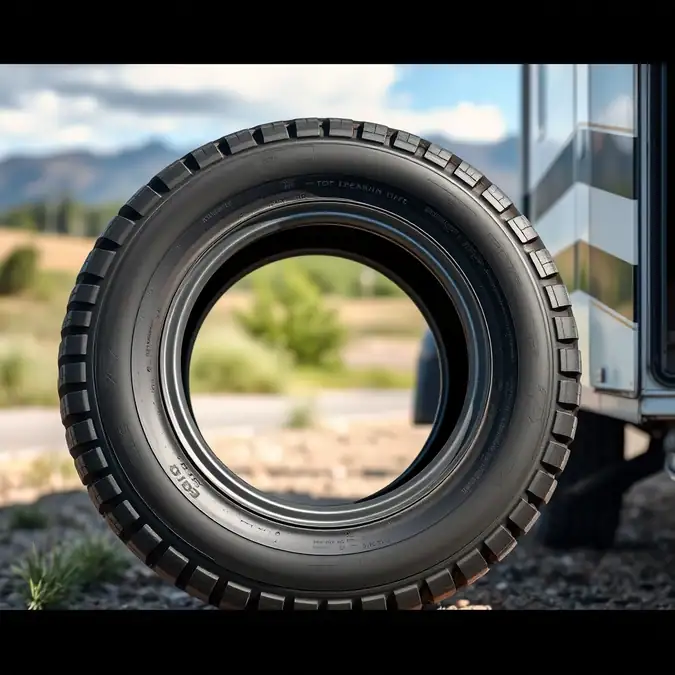
RV tire age and replacement guide: Simple steps to stay safe

Ever wonder how old your RV tires really are? Old tires can fail even if they look fine. This guide shows you how to check tire age, know when to replace, and keep your trips safe. We’ll use plain words and short steps.
RV tire age and replacement guide: Finding the Date Code
Look at the sidewall of each tire. You will see a series of numbers and letters. The last four digits tell the week and year the tire was made. For example, “2319” means the 23rd week of 2019.
Use a flashlight if the mark is hard to see. Clean the area with a rag first. Dirt can hide the code.
Write down the code for each tire. Keep the list in your RV folder.
RV tire age and replacement guide: Why Tire Age Matters
Rubber gets hard and cracks as it ages. Sun, heat, and ozone speed this up. A tire that is six years old may lose grip even if the tread looks deep.
Most makers say replace RV tires after six years. Some say ten years if stored well. Check your tire maker’s advice.
Old tires can blow out at high speed. That can cause a crash. Knowing the age helps you avoid risk.
RV tire age and replacement guide: Signs It’s Time to Replace RV Tires
Check for cracks in the sidewall. Small lines that look like spider webs are a warning.
Look for bulges or soft spots. These mean the inner structure is weak.
Measure tread depth with a penny. If you see the top of Lincoln’s head, the tread is too low.
Feel for vibration while driving. A shaky ride can mean uneven wear or internal damage.
If you see any of these signs, plan to replace the tire soon.
RV tire age and replacement guide: How to Choose New RV Tires
First, know your tire size. It is written on the sidewall like “ST205/75R15”. Match that exactly.
Decide between radial and bias ply. Radial tires run cooler and last longer. Bias ply tires cost less and handle rough roads better.
Consider load rating. Your RV’s weight plus cargo must be below the tire’s max load.
Think about the places you travel. If you go off‑road often, pick a tire with tougher sidewalls.
Ask your dealer for a warranty. A good warranty can save money if a defect shows up.
| Type | Pros | Cons |
|---|---|---|
| Radial | Long life, smooth ride, better fuel use | Higher cost |
| Bias ply | Lower cost, strong sidewalls, good for rough terrain | Shorter life, rougher ride |
RV tire age and replacement guide: Simple Maintenance Tips to Extend Life
Keep tires clean. Wash off mud and salt after each trip.
Check air pressure once a month. Use a good gauge. Follow the PSI on the sidewall.
Cover tires when the RV is stored for a long time. UV covers block sun damage.
Rotate tires every 5,000 to 7,000 miles if your axle allows. This spreads wear.
Avoid overloading. Weigh your RV at a scale to stay within limits.
Drive slow on hot roads. Heat speeds up aging.
Frequently Asked Questions About RV tire age and replacement guide
How often should I check the tire date code?
Check the date code when you buy the RV and once each year after. Write it down so you can track age.
Can I use a tire that is nine years old if it looks good?
Most experts say replace after six to ten years, even if the tread looks fine. Old rubber can fail without warning.
What is the best way to store RV tires for winter?
Clean them, cover them, and keep them off the ground. Store in a cool, dry place away from direct sun.
Do I need to replace all four tires at once?
If one tire is old or damaged, replace the pair on the same axle. For best handling, replace all four if they are near the same age.
How much does a new RV tire cost?
Price varies by size and brand. Expect to spend between $100 and $300 per tire. Ask for a quote that includes mounting and balancing.
Keeping your RV tires fresh makes every trip safer and smoother. Use the steps in this guide to check age, spot wear, and pick the right replacement. Now you can hit the road with confidence.