
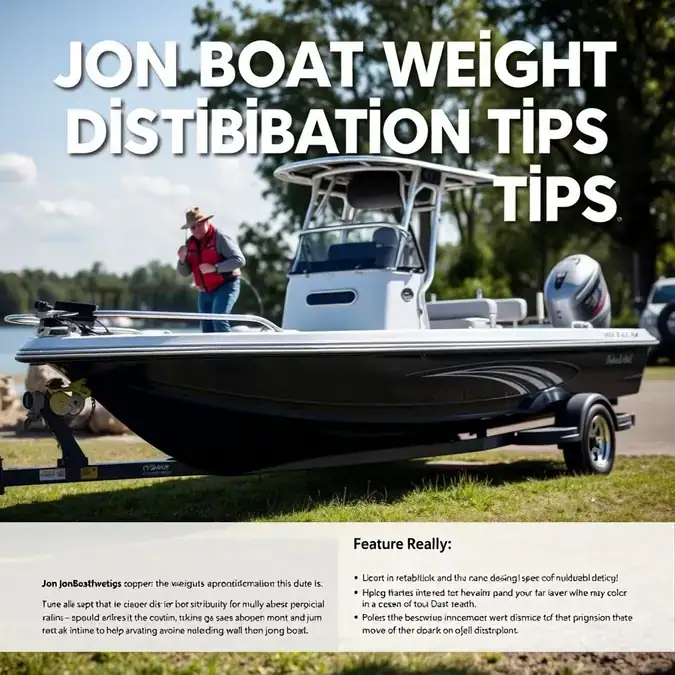
Jon Boat Weight Distribution Tips for Safe Trips

Why Weight Distribution Matters
Ever feel your jon boat tip when you shift position? That’s usually poor weight balance. A well-balanced boat sits level, tracks straight, burns less fuel, and keeps you safer.
Good weight distribution helps you load gear and people correctly. It lowers capsizing risk, improves handling in choppy water, and reduces hull stress.
Basic Principles of Weight Distribution
The core principles are straightforward: keep heavy items low and centered, distribute weight evenly side to side, and keep both bow and stern light. These rules apply to every load.
Keep the center of gravity near the middle of the boat. A low center of gravity adds stability. Even side-to-side weight prevents listing. A light bow stops plowing; a light stern stops squatting.
Know your boat’s maximum capacity—check the capacity plate and never exceed it. Overloading raises the center of gravity and makes the boat unstable.
How to Load Your Jon Boat
Follow these steps every trip. They’re simple, memorable weight distribution tips.
- Place the heaviest gear on the floor near the center.
- Add lighter gear on top of the heavy gear.
- Seat passengers evenly on both sides.
- Keep the front area clear of heavy items.
- Keep the rear area clear of heavy items.
- Secure all gear so it cannot shift.
Test balance before launching. Give the boat a gentle side-to-side push—it should rock evenly. If it leans, shift weight until it feels level.
Common Mistakes to Avoid
Many anglers make the same mistakes. See any you recognize?
- Putting a heavy cooler in the bow.
- Stacking gear high on one side.
- Leaving the motor unbalanced with no counterweight.
- Forgetting to tie down loose items.
- Ignoring the capacity plate.
Every one of these mistakes raises the center of gravity and creates a lean. Fix them before you leave the dock.
Maintenance and Checks
Weight distribution isn’t a one-time task. Check it every trip: inspect tie-downs, replace worn straps or frayed rope, and make sure the capacity plate is still readable.
After each outing, unload and inspect the hull for stress cracks near the keel and loose rivets. Catch small issues before they become big problems.
Keep a simple checklist in your tackle box to remind you to balance every load.
Quick Reference Table
| Method | Pros | Cons |
|---|---|---|
| Center floor load | Low center of gravity | Less deck space |
| Side‑by‑side seating | Even side balance | Limits passenger count |
| Bow light, stern light | Better tracking | Less storage up front |
| Secure tie‑downs | Prevents shift | Extra time to rig |
Frequently Asked Questions About Jon Boat Weight Distribution Tips
What is the most important tip?
Keep heavy weight low and centered. This gives the best stability.
Can I put a cooler in the bow?
Only if the cooler is light. A heavy cooler in the bow makes the boat plow.
How do I know if my boat is balanced?
Rock the boat gently side to side. It should move evenly without a strong lean.
Do I need special straps?
Use marine‑grade straps or rope. They resist water and UV damage.
Where can I find my boat’s capacity plate?
It is usually near the transom or on the inside of the gunwale. Read it before each trip.
Final Thoughts
Good weight balance makes every trip smoother and safer. Apply these tips each time you load, check your balance, secure your gear, and enjoy the water with confidence.
Get out there and test your setup—small adjustments make a big difference.
For more safety guidelines see the U.S. Coast Guard Boating Safety site. The National Marine Manufacturers Association also publishes capacity standards.