
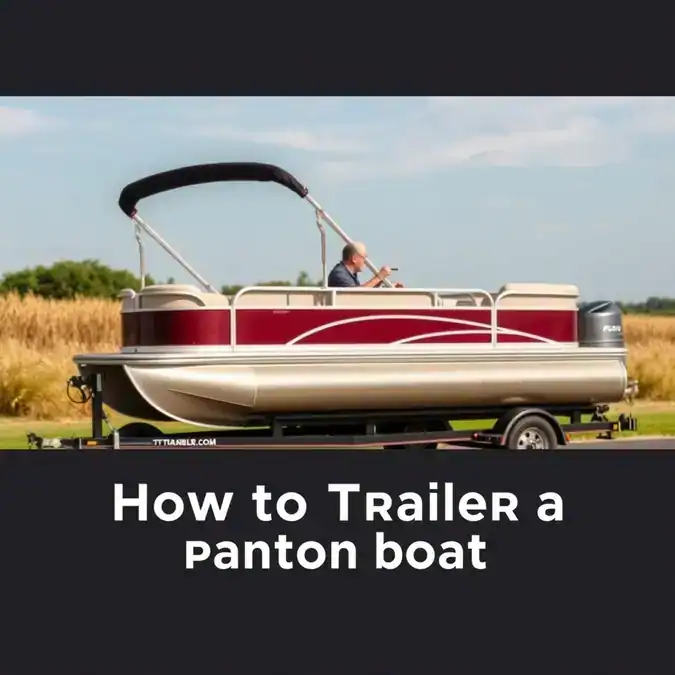
How to Trailer a Pontoon Boat Solo
I was struggling with launching my 22-foot pontoon alone at a crowded ramp last July — sweating, cursing, and blocking three other rigs while the wind pushed my bow into the dock. Then I discovered a solo trailering system that turned a two-person job into a calm, repeatable routine. If you’ve ever felt that ramp anxiety, this guide walks you through every step, gear choice, and pro trick so you can load, launch, and retrieve your pontoon single-handedly with confidence.
- Solo trailering is totally doable with the right trailer setup, a few affordable accessories, and a practiced routine.
- Key gear includes a drive-on trailer with guide-ons, a bow winch strap extension, transom tie-downs, and a wireless trailer light kit.
- Prep the night before — check tire pressure, lights, straps, and boat plug — so ramp time stays under 10 minutes.
- Use the wind and current to your advantage; approach the trailer downwind whenever possible.
- Practice in an empty lot before your first solo launch; muscle memory beats luck every time.
Why Use How to Trailer a Pontoon Boat Solo?

Freedom. That’s the short answer. When you can trailer a pontoon boat solo, you stop waiting for a buddy who cancels at 5 a.m. You stop paying marina storage fees. You gain the ability to chase fish on any lake, any weekday, any whim. The learning curve looks steep from the dock, but it’s mostly repetition and a handful of smart upgrades. Once the routine clicks, you’ll wonder why you ever needed a spotter.
Benefits of Using How to Trailer a Pontoon Boat Solo

- Total schedule control — launch at dawn, retrieve at dusk, no coordination required.
- Cost savings — skip $150–$300/month wet slips; a trailer in your driveway costs zero after purchase.
- Access to more water — explore remote ramps, hidden coves, and lakes without marinas.
- Skill confidence — mastering solo ops makes you a better, safer boater overall.
- Resale appeal — a well-maintained trailer package adds value when you upgrade boats.
Types of How to Trailer a Pontoon Boat Solo

Not every pontoon trailer is built for one-person loading. The main categories you’ll encounter:
- Bunk-style trailers — carpeted wooden bunks cradle the logs; simple but require precise alignment.
- Drive-on (roller) trailers — poly rollers let the boat self-center; easiest for solo drivers.
- Scissor-lift trailers — hydraulic lift raises the frame; great for shallow ramps but pricier.
- Float-on trailers — you back the trailer deep, float the boat on, then winch; minimal alignment skill needed.
Popular Types of How to Trailer a Pontoon Boat Solo

Most solo owners gravitate toward drive-on roller trailers with adjustable guide-ons. Brands like Load Rite, Karavan, and Shoreland’r dominate ramp lanes for a reason: their roller spacing matches standard 23–25″ pontoon logs, and the guide-ons funnel the bow straight without a second pair of eyes. If your ramp is steep or short, a float-on trailer with a long tongue extension saves your back and your nerves.
How to Choose How to Trailer a Pontoon Boat Solo
Match the trailer to your boat, your tow vehicle, and your local ramps.
- Weight capacity — add boat dry weight + fuel (6 lbs/gal) + gear + motor; stay 15% under trailer GVWR.
- Log length and diameter — measure center-to-center; 23″ and 25″ are common, but tri-toons need wider bunks.
- Brake requirement — most states mandate trailer brakes over 3,000 lbs GTW; electric-over-hydraulic is smoothest for solo work.
- Tongue length — longer tongues (12’+) let you back deeper without submerging taillights.
- Guide-on style — post-style with PVC sleeves > bare metal; they don’t scratch logs and self-center better.
Installation and Setup of How to Trailer a Pontoon Boat Solo
Before your first solo launch, spend an afternoon dialing in the trailer:
- Set bunk/roller spacing — center logs on rollers; 1″ clearance each side prevents rubbing.
- Adjust guide-ons — position so they kiss the outer log edges at the bow; tighten bolts.
- Install bow winch strap extension — 20′ of 2″ polyester webbing with a snap hook lets you hook from the helm.
- Mount transom tie-down points — stainless D-rings on each transom corner; use ratchet straps with soft loops.
- Wireless LED light kit — magnetic tow lights on the stern rails eliminate wiring hassles and work for any trailer.
- Add a trailer jack with wheel — swivel jack makes hitching/unhitching a one-person job.
- Check tire pressure — inflate to sidewall max COLD; carry a portable 12V compressor.
Step-by-Step Guide: How to Trailer a Pontoon Boat Solo
Night Before Checklist
- Verify boat plug is OUT (drain) and tethered to ignition key.
- Load gear, coolers, rods — weight centered over logs.
- Check trailer tire pressure, lug nuts, brake function, light sync.
- Prep truck: hitch pin, safety chains, brake controller gain set.
- Pack ramp kit: gloves, headlamp, zip ties, spare winch strap, drink water.
At the Ramp — Launch
- Stage in the prep lane — remove transom straps, unplug trailer lights, attach bow line to cleat.
- Back down slowly — stop when rear rollers are just submerged; set parking brake.
- Release winch brake — let gravity slide the boat back; guide with bow line if windy.
- Hop aboard — start engine, trim up slightly, idle off trailer.
- Park truck — pull forward, set brake, keys in pocket.
Retrieval — The Solo Dance
- Approach downwind — idle toward trailer centerline; use short bursts to steer.
- Nose into guide-ons — let the posts funnel the bow; kill engine when centered.
- Hook winch strap — reach from helm, snap extension to bow eye; no leaning over gunwale.
- Winch up — steady clicks; pause if boat skews, nudge with bow line.
- Secure transom straps — ratchet down each corner; double-check bow eye snug.
- Plug lights, pull forward — stop in staging area, re-attach safety chains, final walk-around.
Tips for Using “How to Trailer a Pontoon Boat Solo” Effectively
- Mark your sweet spot — wrap white tape on the trailer frame where the bow eye sits when perfectly loaded; visual target every time.
- Use a bow line leash — 15′ floating line clipped to bow cleat lets you control the boat from the dock if wind kicks up.
- Trim tabs down — lowers bow attitude, reduces windage during approach.
- Practice “power loading” bans — many lakes prohibit winching under power; know the rules.
- Keep a spare shear pin — if your prop hits a submerged roller, you’re not stranded.
- Lubricate rollers quarterly — marine grease prevents flat spots and squeals.
How It Works for Me
My setup: a 2021 Load Rite 24′ tandem-axle roller trailer behind a 2019 F-150 3.5 EcoBoost. I added Fulton XLT guide-ons, a 20′ winch strap extension, and Optronics wireless magnetic lights. The routine takes 8 minutes launch, 10 minutes retrieve — solo, every time. The wireless lights are the unsung hero; I clip them to the stern rails in 30 seconds, no wiring corrosion, no forgotten plug. On windy days, I idle the bow into the guide-ons at a 15° angle, let the posts straighten it, then winch. Zero drama.
What I Like
- Roller trailers self-center — no “left, right, left” shouting matches.
- Winch extension keeps me at the helm; no wet shoes, no strained back.
- Wireless lights work on any trailer — borrow a friend’s rig, lights still work.
- Guide-ons protect logs from dock rash during crosswind loads.
- Swivel jack means I hitch/unhitch without a second person.
What Could Be Better
- Roller trailers cost $800–$1,200 more than bunk models upfront.
- Wireless lights need battery recharge every 8–10 launches; I keep a USB bank in the console.
- Long tongues (14’+) make tight garage storage tricky; measure first.
- Electric-over-hydraulic brakes require a brake controller — extra $150–$200 if your truck lacks one.
My Personal Experience
First solo launch was a comedy of errors: forgot the boat plug, winch strap jammed, truck wheels spun on wet ramp algae. Second attempt — after practicing in an empty elementary-school parking lot with cones — felt like a different sport. The breakthrough was the bow-line leash. I clip it, back down, release winch, and the boat slides off while I’m still at the helm. No jumping, no slipping. Now I launch before sunrise on weekdays, fish the prime bite, and retrieve before the ski-boat crowd arrives. That freedom is worth every minute spent dialing in the gear.
Recommendation
Start with a drive-on roller trailer sized for your log centers. Add guide-ons, winch extension, wireless lights, and transom straps. Practice the full cycle — launch, retrieve, secure — in a parking lot three times before your first real ramp day. The muscle memory you build there pays off in calm confidence when the ramp is busy and the wind is howling.
How to Use How to Trailer a Pontoon Boat Solo Effectively
Effectiveness comes from routine. Build a laminated checklist (I use a grease-pencil on a plastic card) that lives in the truck console. Same order, every time: tires, lights, plug, straps, winch, safety chains, final walk-around. Skip a step once, and you’ll find the boat plug on the garage floor at 6 a.m. — ask me how I know. Keep a “ramp bag” with gloves, headlamp, zip ties, spare winch hook, and a 12V compressor. When the gear is staged, the mental load drops, and you focus on the water, not the hardware.
How to Trailer a Pontoon Boat Solo Alternatives
If a roller trailer isn’t in the budget, these workable alternatives exist:
- Bunk trailer + PVC guide posts — add 4″ PVC sleeves over metal posts; cheaper, still self-centers decently. Amazon link
- Float-on bunk trailer with long tongue — back deep, float on, winch; minimal alignment skill. Amazon link
- Manual trailer dolly + winch — for very light pontoons (<2,000 lbs), a Harbor Freight dolly lets you maneuver by hand. Harbor Freight link
My Personal Recommendation
For most owners, the Load Rite 24′ Tandem Drive-On Roller Trailer with Fulton XLT Guide-Ons hits the sweet spot: rugged frame, self-centering rollers, adjustable guides, and dealer support nationwide. Pair it with the Fulton 20′ Winch Strap Extension and Optronics Wireless Magnetic Light Kit. Total investment ~$4,200 installed, but you’ll recoup that in one season of avoided marina fees. Find a Load Rite dealer near you and schedule a test-fit with your pontoon — they’ll dial the roller spacing on the spot.
Quick Comparison Table
| Feature | Load Rite Roller + Guide-Ons | Bunk Trailer + PVC Guides | Float-On Bunk Trailer |
|---|---|---|---|
| Key Benefit | Self-centering, fastest solo load | Lowest cost, decent centering | Minimal alignment skill needed |
| Price Range | $3,800–$4,500 installed | $2,600–$3,200 installed | $3,200–$4,000 installed |
| Best For | Frequent solo boaters, windy ramps | Budget owners, calm ramps | Shallow/short ramps, beginners |
FAQs
Can I trailer a pontoon boat solo with a bunk trailer?
Yes. Add PVC guide posts and a long winch strap extension. Alignment takes more practice but works fine on calm ramps.
What size winch strap do I need for solo loading?
20 feet of 2-inch polyester webbing with a snap hook lets you reach the bow eye from the helm without leaning.
Do I need trailer brakes for a pontoon boat?
Most states require brakes over 3,000 lbs GTW. Electric-over-hydraulic provides the smoothest stops for solo towing.
How do I keep the boat from drifting sideways in crosswind?
Approach downwind, use guide-ons, and keep a bow line leash clipped to the cleat for micro-steering.
Are wireless trailer lights legal?
Yes, DOT-compliant wireless LED kits (like Optronics) meet visibility standards for all 50 states.
What tongue length is best for solo launching?
12–14 feet lets you back the rollers deep enough without submerging your truck’s taillights.
How often should I grease trailer rollers?
Every 3–4 months or 50 launches. Marine grease prevents flat spots and corrosion.
Can I use a weight-distribution hitch with a pontoon trailer?
Yes, and it’s recommended for tongue weights over 500 lbs. It restores front-axle load for stable steering.
Conclusion
Solo trailering a pontoon isn’t a stunt — it’s a learnable skill that pays dividends in freedom, savings, and fish caught. The gear is straightforward: a drive-on roller trailer, guide-ons, winch extension, wireless lights, and a few ratchet straps. The real magic is repetition. Practice the cycle in an empty lot until your hands know the moves without your brain directing them. Then hit the ramp at dawn, alone, and watch the sunrise from the best seat on the lake. You’ve earned it.