
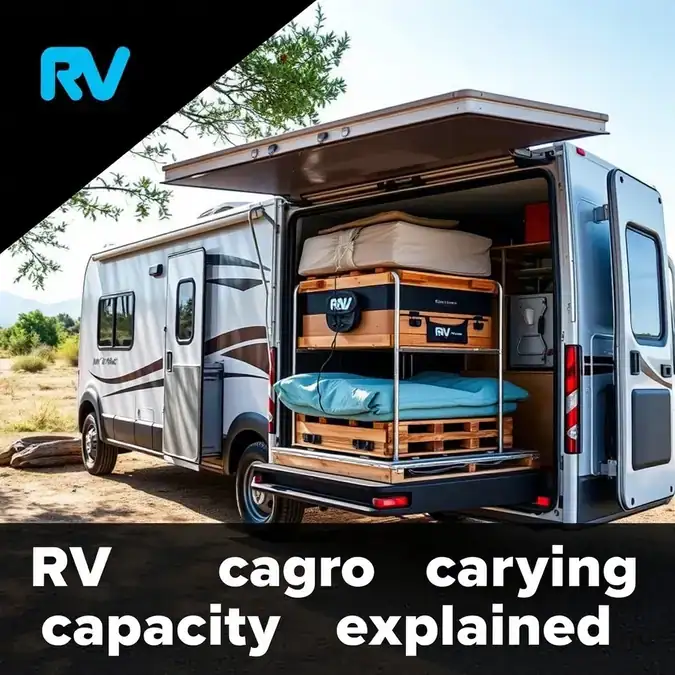
RV cargo carrying capacity explained: Simple Guide for Every RVer

Ever wonder how much gear you can really load into your RV? Knowing your RV cargo carrying capacity explained helps you stay safe and avoid fines. This guide breaks down the terms, shows how to find your limit, and gives easy tips to manage weight. You will learn what GVWR, UVW, and CCC mean, how to weigh your rig, and what happens if you go over. Let’s get started.
We will answer the top questions RVers ask about cargo weight, so you can pack with confidence.
Follow each step, and you’ll know exactly how much you can bring on every trip.
What is RV cargo carrying capacity explained?
RV cargo carrying capacity explained is the max weight you can add to your RV.
It includes people, food, gear, water, and fuel you bring.
It does not include the weight of the RV itself.
Think of it as the extra load you can safely put on board.
The number is set by the maker and shown on a sticker.
You will see it labeled as CCC or cargo capacity.
Knowing this helps you avoid overloading your rig.
Overloading can hurt brakes, tires, and handling.
Ask yourself: Do I know my RV’s CCC number?
Remember: CCC = safe extra weight you can carry.
How do I find my RV’s cargo carrying capacity?
Look for a white or yellow sticker inside the driver’s door.
It may also be near the entry step or inside a cabinet.
The sticker shows GVWR, UVW, and CCC.
CCC is the cargo carrying capacity you need.
If you cannot find the sticker, check the owner’s manual.
The manual lists the same numbers in the specs section.
Some makers post the info online under your model.
Write the number down so you can use it later.
Ask yourself: Did I locate the sticker today?
Tip: Keep a photo of the sticker on your phone for quick reference.
What do GVWR, UVW, and CCC mean?
GVWR stands for Gross Vehicle Weight Rating.
It is the heaviest your RV can safely be when fully loaded.
UVW means Unloaded Vehicle Weight.
UVW is the weight of the RV with no people, gear, or fluids.
CCC is Cargo Carrying Capacity.
CCC = GVWR minus UVW.
In simple terms: CCC is the weight you can add.
Example: GVWR 10,000 lb, UVW 7,000 lb → CCC 3,000 lb.
Ask yourself: Do I know how to subtract UVW from GVWR?
Remember: CCC tells you your safe loading limit.
Why does cargo carrying capacity matter for safety?
Too much weight makes brakes work harder.
It can increase stopping distance and risk of crash.
Overloaded tires can overheat and blow out.
Suspension parts may bend or break under excess load.
The frame can crack if weight is uneven.
Handling becomes sluggish, especially in wind or turns.
You may also get a ticket for exceeding weight limits.
Insurance might not cover damage from overload.
Ask yourself: Am I willing to risk safety for a few extra pounds?
Keep weight under CCC for a smooth, safe ride.
How do I weigh my RV to know the actual load?
Visit a public scale, often found at truck stops or moving companies.
Drive onto the scale with your RV fully loaded as you travel.
Get a weight ticket that shows total weight.
Subtract the UVW from that total to see your cargo weight.
If the cargo weight is less than CCC, you are safe.
If it is more, you need to remove some items.
Some RV dealers offer weighing services for a small fee.
Ask yourself: When was the last time I weighed my rig?
Tip: Weigh before a long trip and after adding big gear.
What items count toward my cargo weight?
People: each passenger adds their body weight.
Pets: include the weight of dogs or cats.
Food and drinks: cans, bottles, and fresh food.
Water in tanks: fresh water weighs about 8 lb per gallon.
Fuel: gasoline or diesel adds weight based on tank size.
Gear: chairs, tables, grills, bikes, and tools.
Clothing and personal bags: suitcases, backpacks, and shoes.
Accessories: awnings, solar panels, and extra batteries.
Ask yourself: Did I forget to count the water in my tank?
Tip: Keep a simple list and add weights as you pack.
How can I increase my RV’s cargo carrying capacity?
You cannot change the CCC set by the maker.
CCC is based on the frame, axle, and tire ratings.
What you can do is reduce the UVW.
Remove factory options you never use, like a spare tire.
Swap heavy parts for lighter ones, such as aluminum wheels.
Use lightweight gear, like titanium cookware or collapsible containers.
Empty water tanks before travel if you can refill later.
Travel with only the fuel you need for the leg.
Ask yourself: What heavy item can I leave at home?
Remember: Less base weight means more room for cargo.
What happens if I exceed the cargo carrying capacity?
Brakes may fail to stop you in time.
Tires can overheat and blow, especially on hot days.
Suspension may sag, causing uneven tire wear.
The frame could crack under stress over time.
Handling becomes poor, making steering feel loose.
You might get pulled over and fined for overweight.
Your warranty could be voided if damage results from overload.
Insurance may deny a claim if overload is proven.
Ask yourself: Is the extra weight worth the risk?
Stay within CCC to protect yourself and others.
What are easy tips to manage cargo weight on the road?
Weigh your rig before each long trip.
Keep a running total of what you add as you pack.
Place heavy items low and centered over the axles.
Use lightweight containers for food and clothes.
Refill water tanks at campsites instead of carrying full.
Travel with only the fuel you need for the next leg.
Remove junk that accumulates over time.
Check tire pressure often; proper pressure helps carry load.
Ask yourself: Did I check the weight distribution today?
Tip: A small notebook in the glove box makes tracking easy.
How often should I check my RV’s weight limits?
Check the sticker at the start of each season.
Re‑weigh after major changes, like adding a solar panel.
Weigh before any trip longer than two days.
If you notice the RV feels sluggish, weigh right away.
After a hard impact, like hitting a pothole, verify weight.
When you sell or buy a used RV, confirm the CCC.
Make it a habit: weight check equals safety check.
Ask yourself: When was my last weight check?
Staying on top of weight keeps adventures fun and safe.
Frequently Asked Questions About RV cargo carrying capacity explained
- What is the easiest way to find my CCC? Look for the white sticker inside the driver’s door; it shows CCC directly.
- Can I overload my RV just a little? No. Even a few hundred pounds over CCC can harm brakes, tires, and safety.
- Do I need to count propane in my cargo weight? Yes. Propane adds weight; include it when you calculate your load.
The most important tip is to know your CCC and keep your actual load below it. Weigh your rig, pack smart, and enjoy every mile with confidence.
Get out there, check your weight, and have a great adventure!