
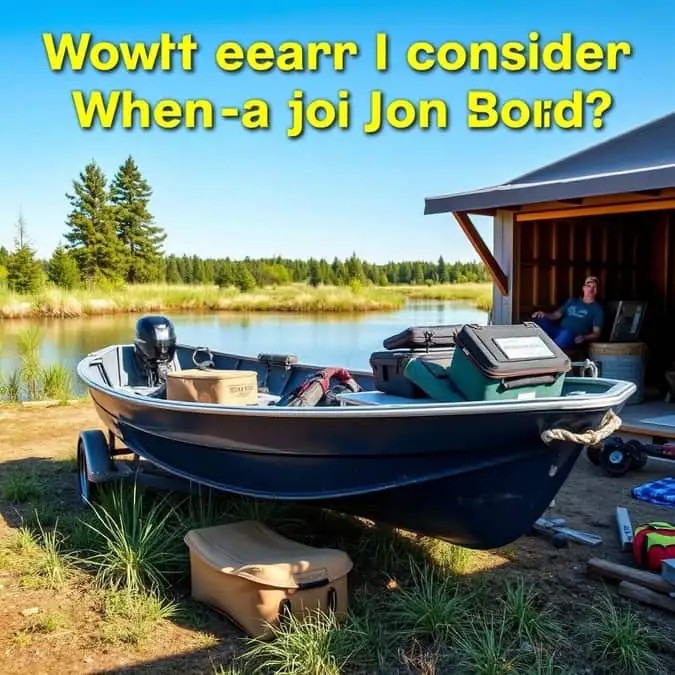
What Gear Should I Consider When Loading a Jon Boat? A Simple Guide

Have you ever stood at the ramp and wondered if you have the right stuff? Loading a jon boat can feel tricky the first few times. You want to be safe. You want to be legal. And you want to keep your boat in good shape. This guide walks through the key gear you need. We will cover safety items, trailer parts, tie-downs, and more. You will learn what to buy, what to check, and what to skip. Let us get started so you can hit the water with peace of mind.
What Safety Gear Do I Need When Loading a Jon Boat?
Safety comes first every time you load a boat. You need a life jacket for each person on board. The Coast Guard says they must fit right and be in good shape. Keep a throwable flotation device close by too. A fire extinguisher is a must for any boat with a motor or fuel tank. Make sure it is charged and easy to grab. A whistle or horn helps you signal for help. A first aid kit handles small cuts or stings. Pack a waterproof flashlight in case you load at dawn or dusk. Wear shoes that grip wet ramps. Slippery algae can knock you down fast. Do you have all these items in your truck or boat right now?
I always keep a spare life vest in my truck cab. You never know when a buddy shows up without one. A small bailer or sponge helps remove water fast. A knife on a lanyard cuts tangled lines in a pinch. Sun protection matters too. A hat, sunglasses, and sunscreen keep you safe from glare and burn. Check your gear before every trip. Replace worn straps, cracked jackets, or expired extinguishers. A quick look saves big trouble later. What is the oldest safety item in your kit?
Make a checklist and tape it to your tackle box. Check each item as you load. This habit takes one minute. It prevents the “I forgot the extinguisher” moment at the ramp. Keep the list simple. Use short words. Read it out loud. Do you use a checklist now?
State laws vary on required gear. Check your local wildlife agency website. Print the rules and keep them in your glove box. Some states want a paddle or oar on board. Others require a sound device for boats under 16 feet. Know the rules where you launch. Have you looked up your state rules lately?
I learned the hard way when a game warden checked my boat. I missed a current registration sticker. That cost me a fine and a ruined morning. Now I check stickers, numbers, and decals every spring. It takes two minutes. Save money and stress. When did you last verify your registration?
Weather changes fast on the water. Pack a compact rain jacket. A space blanket fits in a pocket and adds warmth if you get stuck. A fully charged phone in a dry bag lets you call for help. A portable weather radio gives alerts without cell service. Do you carry a way to get weather updates?
Traffic at the ramp can be heavy. Wear a bright vest so drivers see you. Use a headlamp if you load in the dark. Keep your keys on a float so they do not sink if dropped. Little things make a big difference. What bright gear do you own?
Teach your crew the safety plan. Show them where the extinguisher sits. Demo the life jacket fit. Practice a man overboard drill on land. Kids learn fast when it feels like a game. A prepared crew stays calm in real trouble. Have you practiced with your regular passengers?
Store safety gear in a dedicated tote. Label it. Keep it dry. Grab it and go. No hunting through random bags. A tidy boat is a safe boat. How do you organize your safety kit?
Bottom line: safety gear is not optional. It is the price of a good day on the water. Spend a little now. Save a lot later. What will you add to your kit this week?
How Do I Choose the Right Trailer for My Jon Boat?
The trailer carries your boat from home to water. It must fit your hull length and width. Measure your boat from bow to transom. Add a foot for the tongue. That is your minimum trailer length. Check the weight capacity. Add boat, motor, fuel, gear, and battery. The trailer rating should exceed that total by at least 15 percent. Do you know your boat’s full loaded weight?
Bunk trailers support the hull on carpeted boards. They work well for flat bottom jon boats. Roller trailers use spinning wheels. They make loading easier on steep ramps. But rollers can leave pressure points on thin aluminum. I prefer bunks for jon boats. They spread the load evenly. Which style fits your ramp best?
Galvanized steel frames resist rust better than painted steel. Aluminum frames are light and never rust. They cost more upfront. If you launch in salt water, pay for galvanized or aluminum. Fresh water only? Painted steel works if you rinse it well. Where do you launch most often?
Single axle trailers are light and easy to maneuver. Tandem axle trailers track straighter and handle blowouts better. For boats over 16 feet or 1,500 pounds, I suggest tandem axles. They cost more but tow smoother. What length is your jon boat?
Check the tire size and load rating. ST tires are made for trailers. Do not use car tires. They flex too much and fail. Keep a spare tire and jack that fits the trailer lug pattern. I mount my spare on the tongue for quick access. Do you have a trailer spare right now?
Lights must work every trip. LED lights last longer and shine brighter. Sealed units keep water out. Test brakes, turn signals, and running lights before you leave the driveway. A bad light gets you pulled over. When did you last test all trailer lights?
The coupler must match your hitch ball. Common sizes are 1-7/8, 2, and 2-5/16 inches. Lock the coupler and pin it. Cross safety chains under the tongue. They catch the trailer if it uncouples. I twist chains once to shorten them. They should not drag. Is your coupler size marked on the tongue?
Bunks or rollers need adjustment. The boat should sit level. The keel carries most weight. Side bunks just guide. Tighten bolts after the first 50 miles. Vibration loosens them. Carry a wrench for the bunk brackets. Do you check bunk bolts each season?
Register your trailer. Get a title if your state requires it. Keep the VIN plate clean and readable. Some states want annual inspections. Know the law. A legal trailer avoids tickets. Is your trailer paperwork current?
Buy the best trailer you can afford. A good one lasts decades. A cheap one bends, rusts, and fails. I have towed the same galvanized bunk trailer for 18 years. It paid for itself. What is your trailer budget?
What Tie-Down Straps Work Best for Securing a Jon Boat?
Straps hold your boat to the trailer. You need at least two rear straps and one bow strap. The bow strap stops forward shift. The rear straps stop side and back movement. Ratchet straps give tight, even tension. Cam buckles are faster but can slip. I use ratchets for every trip. What type do you use now?
Choose straps rated for at least 1,500 pounds working load. The break strength should be three times that. Look for the tag sewn into the webbing. No tag? Do not trust it. UV rays rot nylon over time. Replace straps every two to three seasons. How old are your current straps?
Run rear straps over the gunwales or through transom eyes. Pull them down and forward at a 45 degree angle. This locks the boat down and back. The bow strap goes from the bow eye to the trailer winch post. Keep it tight but do not crush the hull. Can you see the angle of your straps?
Protect the hull where straps cross. Use foam pads or cut pool noodles. Aluminum dents easy. A $2 noodle saves a $200 repair. I slit a noodle lengthwise and slip it over the strap. Fast and cheap. Do you pad your strap contact points?
Check strap tension after the first 10 miles. Vibration settles the boat. Straps loosen. Retighten at every fuel stop. A loose strap lets the boat bounce. That cracks rivets and bends the transom. Do you stop and check straps on long hauls?
Store straps dry and coiled. Mice chew webbing in winter. Sun bakes it in summer. A plastic tote in the garage works great. Label the tote. Grab it fast. How do you store your tie-downs?
Never use rope instead of straps. Rope stretches. Knots slip. Wet rope rots. Straps are made for this job. Spend the extra $10. Your boat is worth more. Have you ever tried rope in a pinch?
Carry a spare strap. One can fail or get cut. A spare gets you home. I keep a short ratchet strap in my truck tool bag. It has saved me twice. What spare gear rides in your truck?
Learn the finger test. Push the strap with one finger. It should deflect less than an inch. If it waves like a guitar string, it is too loose. If you cannot push it at all, it may be too tight. Practice at home. Do you test tension by feel?
Straps are cheap insurance. Buy quality. Inspect often. Replace on schedule. Your boat arrives intact. That is the goal. When will you inspect your straps next?
Do I Need a Winch to Load My Jon Boat?
A winch pulls the boat onto the trailer. Most jon boats need one. Hand winches are cheap and reliable. Electric winches cost more but save your back. If you boat alone, electric is worth it. Do you usually load solo or with help?
Match the winch capacity to your boat weight. A 1,200 pound boat needs at least a 1,500 pound winch. Check the rating on the winch housing. Undersized winches strip gears or snap cables. I run a 2,500 pound hand winch on my 14 footer. It has plenty of margin. What is your winch rating?
Steel cable is strong but kinks and frays. Synthetic rope is lighter, safer, and does not store energy. If it breaks, it falls flat. Steel cable whips and cuts. I switched to synthetic five years ago. Best upgrade I made. What runs on your winch drum?
Keep the winch strap or rope in good shape. Frayed fibers fail under load. Rinse salt off after every use. Lubricate the gears with marine grease once a year. Turn the handle through full cycles to spread grease. When did you last service your winch?
The bow eye must be solid. Check the bolts and backing plate. A pulled bow eye ruins a day. I back my bow eye with a stainless washer plate. It spreads the load. Is your bow eye bolted through with a backing plate?
Center the boat on the bunks before winching. Crooked loads twist the trailer. Use guide poles or PVC pipes on the rear bunks. They help you see alignment in the mirror. Do you use guide poles?
Winch in short bursts. Pause. Check alignment. Winch more. Never stand in line with the cable. If it snaps, it flies back fast. Stand to the side. Teach your crew this rule. Where do you stand when winching?
A winch strap hook needs a safety latch. Open hooks unhook on a bounce. A latch keeps it locked. Replace the hook if the latch spring is weak. Costs $5. Saves your boat. Does your hook have a working latch?
Carry a spare winch handle. They bend or get lost. A 1/2 inch drive ratchet works in a pinch. I keep a short handle in the winch box. Ready when the main one disappears. Do you have a backup handle?
If you skip the winch, you need a very gentle ramp and strong friends. Not reliable. A winch gives control. Control prevents damage. Get a winch. Use it right. When will you install or upgrade yours?
What Lighting Does My Jon Boat Trailer Need?
Trailer lights are the law. They keep you visible. You need tail lights, brake lights, turn signals, and side markers. A license plate light is required too. LED lights are standard now. They draw less power and last years. Are all your lights working today?
Submersible lights handle dunking at the ramp. Non-submersible lights fail when wet. Check the label. If you back into water, you need submersible. I only buy submersible. One less worry. Do your lights say submersible?
Wire the trailer with a 4-pin or 5-pin plug. 4-pin runs basic lights. 5-pin adds a ground or reverse light. Match your truck plug. Adapters work but add failure points. Clean the pins with a wire brush each spring. Dielectric grease keeps corrosion out. When did you last clean your plug?
Run wires inside the frame tubing. Protected wires do not snag or chafe. Use grommets where wires exit holes. Zip tie wires every 12 inches. Loose wires hang and tear. I check wire routing every spring. How are your wires routed?
Side markers show your width at night. Amber front. Red rear. They must be visible from the side. Mount them high on the fenders or frame. Mud covers low lights. Are your side markers clean and bright?
Test lights with a helper or a trailer light tester. Plug in. Walk around. Check each function. Brake. Left turn. Right turn. Running lights. Reverse if wired. Fix any dim or dead bulb before you leave. Do you own a trailer light tester?
Carry spare bulbs and fuses. LEDs rarely burn but connections corrode. A $5 tester and $3 fuse kit fit in a glove box. I keep them in my trailer tool bag. What spares do you carry?
Reflective tape adds visibility. DOT white on the front corners. Red on the rear corners. Silver on the sides. It glows when headlights hit it. No power needed. Cheap insurance. Is your trailer taped?
Check lights at night once a month. Daylight hides weak bulbs. Night shows the truth. A dim brake light gets you rear ended. Fix it before it fails. When is your next night check?
Good lights are cheap. Bad tickets are expensive. Worse, bad lights cause crashes. Spend 10 minutes a month. Stay legal. Stay safe. What light will you check first?
How Do I Protect My Jon Boat During Transport?
Road vibration shakes bolts loose. It cracks paint. It fatigues rivets. A few simple steps cut damage big time. Start with a tight cover. A fitted trailer cover beats a loose tarp. Tarps flap and abrade the finish. A cover snaps down and stays put. Do you use a cover or a tarp?
Pad the bunk contact points. Carpet wears thin. Add foam strips or rubber mats. They cushion the hull. I glue closed cell foam to my bunks. It lasts years. Check for grit trapped under the boat. Sand acts like sandpaper. Do you pad your bunks?
Secure loose gear inside the boat. Tackle boxes, seats, coolers become missiles in a sudden stop. Strap them down or remove them. I run a bungee net across the gunwales. Everything stays put. What loose items ride in your boat?
Remove the drain plug. Water trapped in the hull sloshes. That weight shifts and stresses the transom. Rain adds more. Pull the plug. Store it in the console so you do not lose it. Do you pull the plug every haul?
Motor support bar saves the transom. The motor hangs heavy on the back. Bouncing cracks the transom knees. A $30 support bar bolts to the trailer and cradles the lower unit. I never tow without mine. Do you use a motor support?
Check tire pressure cold. Low tires overheat and blow. High tires bounce the boat. Find the psi on the tire sidewall. Inflate to max cold pressure. Check before every trip. A $5 gauge saves a $200 tire. When did you last check pressure?
Grease wheel bearings annually. Dry bearings seize. Seized bearings lock the wheel. Locked wheel flips the trailer. Pack bearings with marine grease. Replace seals if they weep. I do mine every spring. It takes an hour. When is your bearing service due?
Inspect the frame for cracks. Stress cracks show near the axle and tongue. Rust bubbles hide cracks. Wire brush and paint touch up stops spread. A cracked frame fails catastrophically. Do you inspect your frame each year?
Drive smooth. Slow over bumps. Wide turns. No hard brakes. Your boat feels every jolt. Gentle driving extends boat and trailer life. How do you drive when towing?
Protection is a system. Cover. Pad. Secure. Drain. Support. Maintain. Drive smart. Each part matters. Skip one and the rest work less. Which step will you add this season?
What Tools Should I Keep for Jon Boat Trailer Maintenance?
A small tool bag lives in my truck. It handles 90 percent of roadside fixes. You do not need a shop. You need the right basics. Start with a lug wrench that fits your trailer bolts. The factory wrench is often too short. Buy a 4-way or a breaker bar. Do you have a lug wrench that works?
Carry a jack rated for your trailer weight. A 2-ton bottle jack is cheap and strong. A scissor jack from a car is too weak. Test the jack at home. Know the jack points on your frame. Lift wrong and you bend the frame. Where are your jack points?
A torque wrench ensures lug nuts are tight but not stripped. 80 to 90 ft-lbs is common. Check your manual. Over tight stretches studs. Under tight loses wheels. A click torque wrench costs $30. Worth every penny. Do you torque your lug nuts?
Bearing grease and a grease gun. Marine grease resists water. Pump grease until it oozes from the front seal. Wipe excess. Do this every spring. A grease gun and two tubes cost $25. How often do you grease bearings?
Wire brush, dielectric grease, and electrical tape. Clean corroded pins. Coat with grease. Tape damaged insulation. Lights work. You stay legal. A small roll of each fits in a sandwich bag. Is your light plug clean?
Spare fuses for your truck and trailer. Mini, ATO, and maxi sizes. A blown fuse kills lights or brakes. Swap in 30 seconds. A $5 assortment covers all. Where are your spare fuses?
Adjustable wrench, pliers, and screwdrivers. Tighten bunk bolts. Fix a loose guide pole. Cut a zip tie. Multi-tools work but dedicated tools grip better. I carry a 10-inch adjustable and linesman pliers. What fits in your bag?
Duct tape and zip ties. MacGyver fixes. Hold a torn fender. Secure a flapping wire. Patch a cover tear. Get you home. A partial roll of tape and 20 ties weigh nothing. Do you carry tape and ties?
Trailer light tester. Plug it in. Lights show function. No helper needed. $15 at any auto store. I test before every trip. Takes 30 seconds. Do you test before you tow?
Keep the bag organized. Pouches or zip bags. Label them. Find tools in the dark. A messy bag wastes time. Time at the ramp annoys everyone. How is your tool bag organized?
How Do I Balance the Load on My Jon Boat Trailer?
Tongue weight controls sway. Too light and the trailer fishtails. Too heavy and the truck squats. Aim for 10 to 15 percent of total weight on the tongue. A 2,000 pound rig needs 200 to 300 pounds on the hitch. Do you know your tongue weight?
Use a bathroom scale and a block of wood. Place the scale on the block. Lower the coupler onto the scale. Read the weight. Adjust the boat forward or back on the bunks. Move it an inch. Recheck. Repeat until in range. Have you ever measured tongue weight?
The boat should sit centered side to side. Uneven load wears tires fast. It pulls the truck to one side. Check tire wear patterns. Feathered edges mean alignment or load issues. Are your tires wearing even?
Heavy gear goes low and centered. Batteries, fuel tanks, coolers. Keep them over the axle line. High weight raises the center of gravity. The rig becomes tippy in crosswinds. Where do you store your heavy items?
Distribute weight fore and aft. The motor is heavy aft. Move the battery forward if you can. Balance the load. A level trailer tows best. Use a level on the frame. Is your trailer level when hitched?
Check the truck rear sag. The bumper should drop 1 to 2 inches. More than that means too much tongue weight or weak springs. Air bags or helper springs fix sag. They keep the truck level. Does your truck sag when hitched?
Sway control hitches help big rigs. For small jon boats, proper load balance usually works alone. If you feel sway, slow down. Check load. Add a friction sway bar if needed. They cost $50. Have you ever felt trailer sway?
Load the same way every time. Mark the bunk position with tape or paint. The boat parks in the same spot. Consistency removes guesswork. I have a yellow line on my bunks. Boat bow touches it. Done. Do you have a reference mark?
Weigh the full rig at a CAT scale once a year. $12 tells you axle weights and total. Verify you are under ratings. Adjust if needed. Knowledge beats guessing. When did you last scale your rig?
Balance is not magic. It is math and habit. Measure. Adjust. Mark. Repeat. Your truck, trailer, and boat last longer. You arrive relaxed. What will you measure this weekend?
What Gear Helps with Solo Loading of a Jon Boat?
Loading alone is common. The right gear makes it easy. A bow line long enough to reach the dock from the driver seat is key. Tie it to the bow cleat. Keep the bitter end in hand. You control the boat from the truck. Do you have a long bow line?
Guide poles on the rear bunks show the center. PVC pipe on rebar stakes works. They glow with reflective tape. You see them in the mirror. No guessing. I built mine for $12. Do you use guide poles?
A remote winch switch lets you winch from the driver seat. Plug it into the winch. Run the cord to the window. You watch the boat align while you crank. No running back and forth. Worth $40. Would a remote help you?
Trailer a step or two into the water. The boat floats free. Winch it up. No pushing. No slipping on algae. Know your ramp depth. Do not submerge the bearings. How deep is your favorite ramp?
Wear chest waders or tall boots. Stay dry. Stay warm. You can step off the trailer to guide the keel. Wet feet ruin a morning. I keep waders in the truck all season. Do you have waterproof footwear?
A handheld VHF radio lets you call for help if the truck stalls or the winch fails. Channel 16 is monitored. A $80 radio fits in a pocket. Peace of mind. Do you carry a radio?
Practice solo loading on a quiet weekday. Low pressure. Learn the rhythm. Find the problems. Fix them before a busy Saturday. When can you practice?
Keep a spare key on a magnetic hide-a-key under the bumper. Locked keys with the boat half loaded is a nightmare. A $5 box saves hours. Where is your spare key?
Solo loading is a skill. Gear helps. Practice cements it. You will load smooth and fast. Others will ask your secret. What is your biggest solo loading challenge?
You can do this. Thousands of anglers load alone every day. Gear plus practice equals confidence. Get out there. When is your next solo trip?
What Are the Legal Requirements for Towing a Jon Boat?
Laws vary by state. Know the rules where you drive. Start with registration. Most states register trailers by weight. Some exempt light trailers. Check your DMV site. Is your trailer tagged?
Lights are federal law. Tail, brake, turn, side markers, plate light. All must work. DOT approved. No exceptions. A broken light is a primary stop. Are all your lights DOT legal?
Safety chains are required. Cross them under the tongue. They must be rated for the trailer weight. Twist to shorten. No dragging. Attach to the truck frame, not the hitch ball. Are your chains crossed and rated?
Breakaway switch and battery on trailers over 3,000 pounds in most states. The switch pulls a pin if the trailer separates. Brakes lock. Battery must be charged. Test it yearly. Do you have a breakaway system?
Brakes required on trailers over 3,000 pounds in many states. Some say 1,500. Electric or surge. Both work. Maintain them. Adjust shoes annually. Does your trailer have brakes?
Width limit is 8 feet 6 inches in most states. Wide jon boats on wide trailers can exceed this. Measure. Permits exist for oversize. Plan your route. Is your rig within width limits?
Height limit is 13 feet 6 inches typically. Add boat, motor, and trailer. Measure at the highest point. Low bridges eat tall rigs. Know your height. What is your loaded height?
Speed limits for trailers differ. Some states 55. Others 65. Some match traffic. Check each state you cross. A ticket ruins a trip. What is your state trailer speed limit?
Insurance covers liability. Your auto policy may extend. Call your agent. Confirm coverage for trailer and boat. Uninsured towing risks everything. Is your rig insured?
Carry registration, insurance, and driver license. Keep them in a waterproof pouch in the truck. Produce them fast. A tidy stop ends fast. Where are your papers?
How Do I Launch and Retrieve a Jon Boat Efficiently?
Prep in the staging area. Not on the ramp. Load gear. Remove straps. Insert plug. Put on life jackets. Start motor. Check tilt. Do it all before you block the lane. Do you prep before the ramp?
Back straight. Use mirrors. Go slow. Small corrections. A spotter helps. Agree on hand signals. Stop at the waterline. Set parking brake. Chock wheels. How straight can you back?
Release the winch. Hold the bow line. Let the boat float off. Guide it to the dock. Tie off. Park the truck. Enjoy the water. Can you float off without pushing?
Retrieve is reverse. Back the trailer to the same depth. Drive or float the boat on. Center it. Winch up. Bow strap tight. Pull forward. Clear the ramp. Strap down in the parking lot. Do you clear the ramp fast?
Practice backing in an empty lot. Cones or water jugs. Learn the pivot point. The trailer turns opposite the wheel. Muscle memory saves stress. When did you last practice backing?
Ramp etiquette matters. Be ready. Be quick. Be polite. Help others if you can. Good karma floats. What is your ramp pet peeve?
Wind and current change everything. Approach into the wind when possible. Use short bursts of power. Let the elements help. Fight them and you lose. How do you handle wind at the ramp?
Solo retrieve uses the bow line. Tie it long. Walk the boat on. Winch from the tongue. Or use the remote. Secure. Drive up. Strap. Done. Have you retrieved solo?
Night launches need lights. Headlamp. Trailer lights. Dock lights. Go slower. Double check the plug. Night mistakes are wet. Do you launch at night?
Efficiency is a habit. Same steps every time. Same order. Same result. Smooth is fast. Fast is fun. What step will you standardize this week?
What Maintenance Schedule Keeps My Jon Boat Trailer Ready?
Before every trip: lights, tires, coupler, chains, straps, winch, bearings feel cool. Two minute walk around. Catches 90 percent of issues. Do you walk around before you tow?
Monthly: tire pressure cold, lug nut torque, light function at night, brake test, frame inspection, bunk condition, roller spin. Thirty minutes. Prevents breakdowns. When is your monthly check?
Annually: repack wheel bearings, replace seals, inspect brake shoes, adjust brakes, grease winch, check bow eye bolts, paint touch up, test breakaway battery. Half a day. Saves thousands. When is your annual service?
Every two years: replace tires regardless of tread. Trailer tires age out. UV kills them. Date code on sidewall. Four years max. I replace at three. How old are your tires?
Every three years: replace winch strap or rope. Inspect bunks and carpet. Rewire if insulation cracks. Update registration. Check state law changes. What is due on your three year list?
Keep a log. Date. Task. Notes. Mileage. Proof of care. Helps resale. Helps warranty. A notebook in the glove box works. Do you keep a maintenance log?
Use a checklist. Laminate it. Dry erase marker. Check off each item. No memory required. I have one for pre-trip, monthly, annual. They live in the truck. Do you use checklists?
Buy quality parts. Bearings, seals, tires, lights. Cheap parts fail fast. Name brands cost 20 percent more. Last 300 percent longer. Math is easy. What brand tires do you run?
Learn one new skill each year. Bearing repack. Brake adjust. Wire splice. You save labor. You know it is right. YouTube and a manual teach plenty. What skill will you learn this year?
Maintenance is not a chore. It is respect for your gear. Your boat, trailer, and truck thank you. They repay you with reliability. When does your next check happen?
Frequently Asked Questions About Loading a Jon Boat
What is the most important gear for loading a jon boat?
A working winch, rated tie-down straps, and a spare tire are the top three. Without them you cannot load, secure, or recover from a flat.
Can I load a jon boat without a winch?
Only on a very shallow ramp with strong help. A winch gives control and prevents damage. Get one.
How tight should trailer straps be?
Tight enough that the boat does not move. Press with one finger. Less than one inch deflection. Check after 10 miles.
Do I need trailer brakes for a small jon boat?
If the loaded trailer weighs over 1,500 to 3,000 pounds, check your state law. Many require brakes at 3,000 pounds.
How often should I replace trailer tires?
Every three to four years regardless of tread. UV and sitting rot the rubber. Check the date code on the sidewall.
Final Thoughts
Loading a jon boat is a system. Safety gear. Good trailer. Strong straps. Working winch. Legal lights. Protected hull. Balanced load. Right tools. Solo tricks. Known laws. Smooth launch. Steady maintenance. Each piece supports the next. Miss one and the chain weakens. You now have the map. Walk the steps. Build your kit. Practice the moves. The ramp will feel easy. The water will call. Answer it. Go catch fish. Go make memories. Go be safe. What is the first item you will check on your trailer today?