
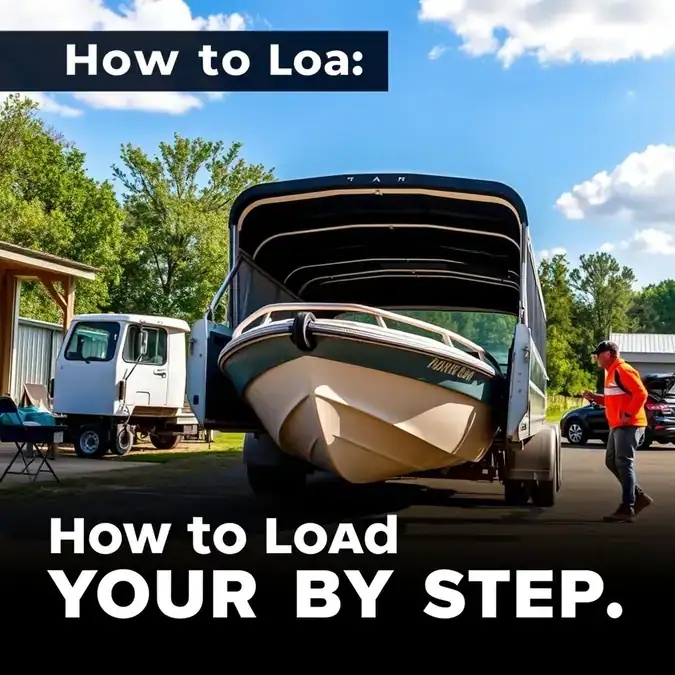
How to Load Your Boat Step by Step: A Step-by-Step Guide

Loading your boat onto a trailer is a basic skill every boater needs. Doing it right saves time, keeps your gear safe, and avoids damage to the hull or trailer. This guide shows each move in clear, simple steps. You will learn how to prep the trailer, align the boat, winch it on, and secure it for the road.
Estimated Time: 20‑30 minutes. Difficulty: Easy. Primary Objective: Load the boat safely and securely.
Ready to get started? Let’s gather what you need first.
Before You Start: Tools, Gear & Preparation
| Item / Tool | Purpose | Optional / Required |
|---|---|---|
| Trailer with winch | Pulls the boat onto the bunks | Required |
| Boat tie‑down straps | Holds the boat tight after loading | Required |
| Wheel chocks | Stops the trailer from rolling | Required |
| Gloves | Protects your hands | Optional |
| Boat hook | Helps guide the boat | Optional |
| Water hose | Rinse off debris before loading | Optional |
Make sure the trailer sits on flat ground. Set the parking brake on your tow vehicle. Disconnect any shore power if the boat has electrical systems. Check that the winch cable is not frayed and the strap hooks are solid.
Notice any rust on the winch or bunk brackets? If you see rust, clean it now or plan to replace the part later.
Step 1: Position the Trailer
Back the tow vehicle straight toward the boat ramp or dock. Keep the trailer wheels aligned with the boat’s center line.
Put the wheel chocks snug against both sides of the trailer tires. This stops the trailer from rolling when you winch.
Lower the trailer jack until the trailer sits level. Use a bubble level on the tongue if you have one.
Captain’s Note: If the ground is soft, place a piece of plywood under the jack foot to stop it from sinking.
Step 2: Prepare the Boat
If the boat is in the water, drive it slowly to the shallow area near the trailer. Keep the engine trimmed up so the prop does not hit the bottom.
Turn off the engine and raise the outboard or sterndrive to the up position. This protects the lower unit.
Attach the boat hook to the bow eye if you need extra reach. Keep a glove on your hand for grip.
Check that the bow eye and stern eyes are clean and free of debris.
Step 3: Attach the Winch Cable
Pull the winch cable out far enough to reach the boat’s bow eye. Hook the cable securely to the bow eye.
Make sure the hook latch is closed and the cable is not twisted.
Give the cable a light tug to confirm it is seated.
If your boat has a bow roller, guide the cable onto it to reduce wear.
Step 4: Winch the Boat Onto the Trailer
Begin cranking the winch handle slowly. Watch the boat move straight onto the bunks.
Keep your eyes on the boat’s sides. If it starts to drift left or right, stop and realign with the boat hook.
Crank until the boat’s bow touches the bow stop on the trailer.
Safety Alert: Keep hands and clothing clear of the winch cable and moving parts.
Step 5: Secure the Boat
Once the boat is snug on the bunks, attach the tie‑down straps. Loop each strap over the gunwale and through the trailer’s D‑ring or buckle.
Tighten the straps until the boat does not shift when you push on it.
Double‑check that the winch cable is still tight; you can leave it engaged as a backup.
Give the boat a firm shake. If it moves, re‑tighten the straps.
Step 6: Final Checks and Launch Prep
Raise the trailer jack fully and stow it. Remove the wheel chocks.
Connect the trailer lights to your tow vehicle and test brake lights, turn signals, and running lights.
Walk around the trailer and boat. Look for loose straps, dangling cables, or anything that could hit the road.
You are now ready to drive to the launch ramp or store the boat.
Common Mistakes & Troubleshooting
Problem: Boat Drifts Sideways While Winching
Cause: The trailer is not centered or the boat’s bow eye is off‑line.
Fix: Stop cranking. Realign the trailer so the keel sits straight on the bunks. Use the boat hook to guide the bow eye back to center.
Problem: Winch Cable Slips or Won’t Tighten
Cause: The cable is frayed, the hook latch is open, or the winch gear is dirty.
Fix: Inspect the cable for wear. Replace if damaged. Clean the winch gear with a rag and light oil. Make sure the hook latch clicks shut.
Problem: Straps Come Loose After a Short Drive
Cause: Straps were not tight enough or the boat shifted on the bunks.
Fix: Pull over safely. Re‑tighten the straps. Check that the bunks are not wet or slick; dry them if needed.
Frequently Asked Questions About How to Load Your Boat Step by Step
How long should I wait after loading before driving?
Wait a minute or two after the final strap check. This lets any settling happen. Then give the boat a quick push to confirm it is solid.
Can I load the boat alone?
Yes, if the boat is light and the winch works well. For boats over 2,000 lb, have a friend help guide the bow and watch the straps.
What if the trailer bunks are damaged?
Damaged bunks can scratch the hull. Replace cracked or rotted bunks before you load again. Use marine‑grade lumber or composite bunk material.
Do I need to rinse the boat before loading?
Rinsing removes mud, sand, or salt that could scratch the bunks. A quick hose down is good practice, especially after a salty day.
How often should I inspect the winch and straps?
Check the winch cable, hook, and straps before every trip. Look for frays, cuts, or UV damage. Replace any part that shows wear.
When everything is tight and the lights work, you are set for a smooth ride to the water.
Enjoy the launch and have a great day on the water!