
Measure Battery Voltage With a Multimeter: What a Healthy 12V Battery Should Read
Your battery is dead. Or is it? You grab a multimeter, touch the probes to the terminals, and stare at the number. Is 12.4V good or bad? Should it read higher? Before you spend money on a new battery or a jump start, learn what your voltage reading actually means. This guide shows you how to measure battery voltage with a multimeter, what the numbers really tell you, and when to worry.
A 12V battery should read between 12.4 and 12.7 volts when fully charged and rested. A reading of 12.4V means your battery is at about 75% charge. Anything below 12.0V usually means the battery is deeply discharged and may need charging or replacement.
How to Measure Battery Voltage With a Multimeter
Testing takes less than a minute once you know the steps. Here is what to do.
What You Need
- A digital multimeter
- A 12V battery (car, marine, RV, or deep-cycle)
- Safety glasses and gloves
Step-by-Step Instructions
- Turn off the battery and any device it powers. Let the battery sit unused for at least a few hours. A surface-charge reading right after driving or charging can fool you.
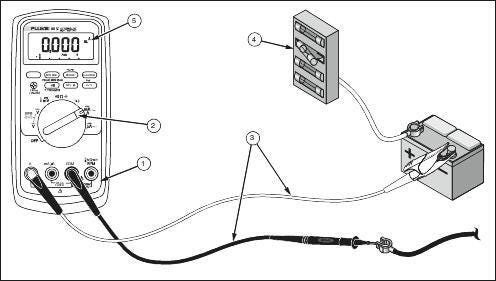
- Set your multimeter to DC voltage. Look for the symbol “V⎓” or “DCV.” Choose the 20V range if your meter is not auto-ranging.
- Connect the red probe to the positive (+) terminal.
- Connect the black probe to the negative (−) terminal.
- Read the number on the screen. That is your battery voltage.
Polarity matters. If you reverse the probes, the meter will show a negative number. The reading is still correct, just reversed.
What Your Voltage Reading Means
Voltage tells you the state of charge (SOC), but only when the battery is at rest. “Resting voltage” means no charge going in and no load pulling power out.
12V Battery Voltage Chart (Resting)
| Voltage | State of Charge | Condition |
|---|---|---|
| 12.6V – 12.7V | 100% | Fully charged, healthy |
| 12.4V | About 75% | Good, but not full |
| 12.2V | About 50% | Half charged, use soon |
| 12.0V | About 25% | Low, recharge needed |
| 11.9V or below | Discharged | Dead or damaged |
If your battery reads 12.4V or higher when rested, it has usable charge. A reading around 12.6V to 12.7V is ideal. Numbers below 12.4V suggest the battery needs charging. Numbers below 12.0V mean deep discharge and possible damage.
Why Resting Voltage Matters
Voltage right after charging or driving reads higher than true SOC. The surface charge fades after a few hours. For the most accurate reading, let the battery sit unused for at least 4 to 12 hours. Overnight is even better.
Can a Battery Have 12.4 Volts and Still Be Bad?
Yes. Voltage alone does not tell the whole story. A battery can show 12.4V at rest and still fail under load. Age, sulfation, and internal damage can hold voltage at the surface while the battery cannot deliver current.
A load test gives a clearer picture. Many auto parts stores will load-test your battery for free. You can also use a handheld load tester. If voltage drops sharply under load, the battery is weak even if it reads fine at rest.
Signs of a Bad Battery at 12.4V
- Slow cranking when starting
- Dim lights at idle
- Battery is more than 4 to 5 years old
- Voltage drops fast while sitting unused
Will a Battery at 12.3 Volts Start a Car?
Usually yes, in mild weather. Most engines need at least 10.5V during cranking to start. A rested reading of 12.3V gives enough headroom to stay above that during the start cycle. In cold weather, however, a weak battery struggles more. At 0°F, available cranking power drops sharply. A 12.3V battery that works in summer may fail in winter.
If your battery reads below 12.3V, charge it before relying on it. Repeated deep discharges shorten battery life.
At What Voltage Is a 12V Battery Considered Dead?
Most lead-acid batteries are considered fully discharged at 10.5V under load or 11.9V at rest. Below this level, sulfation builds up quickly and the battery may not recover. Deep-cycle batteries can handle deeper discharges than starter batteries, but no 12V lead-acid battery should sit below 11.9V for long.
Lithium batteries have different voltage ranges and should not be charged below their rated cutoff. Always check the maker’s specs before testing a lithium pack.
Common Mistakes When Measuring Battery Voltage
A wrong reading leads to wrong decisions. Avoid these common errors.
Testing While the Engine Is Running
If the engine is on, the alternator is charging the battery. You will see 13.7V to 14.7V. That is normal during charging, not a resting reading.
Testing Right After Driving or Charging
Surface charge inflates the number. Let the battery rest for a few hours first.
Testing With Corroded Terminals
Corrosion blocks the connection. Clean the terminals with a wire brush before testing for an accurate reading.
Using the Wrong Meter Setting
AC voltage gives a different reading than DC. Always use DC voltage for batteries.
Touching Both Probes to One Terminal
This causes a short or a zero reading. Make sure each probe touches a separate terminal.
How to Test Your Charging System With a Multimeter
A healthy battery needs a healthy charging system. You can check the alternator or converter with the same multimeter.
Alternator Test (Vehicles)
- Start the engine and let it idle.
- Set the multimeter to DC voltage.
- Touch the red probe to the positive terminal and the black probe to the negative terminal.
- Read the voltage while the engine runs.
A working alternator should show 13.7V to 14.7V at idle. Above 15V means the regulator may be overcharging. Below 13.5V means the alternator may not be charging enough.
RV and Marine Converter Test
RV and boat shore-power converters work the same way. With shore power connected and the battery at rest, the converter should bring voltage to 13.6V to 14.4V. If it stays at 12.4V or below, the converter may not be charging the battery.
When to Charge vs. Replace a Battery
Voltage guides the next step, but age and condition matter too.
Charge the Battery If:
- Voltage reads 12.0V to 12.4V at rest
- The battery is less than 3 years old
- It held a charge fine before
Replace the Battery If:
- Voltage stays below 12.0V after a full charge
- The battery is more than 4 to 5 years old
- Voltage drops fast under load
- The case is swollen, leaking, or cracked
Safety Tips for Testing Batteries
- Wear safety glasses. Batteries can release hydrogen gas and acid.
- Work in a ventilated area.
- Never smoke or use sparks near a battery.
- Keep metal tools away from the terminals to avoid short circuits.
- If acid spills, clean it with baking soda and water.
Quick Reference: Voltage vs. Condition
| Reading (Rested) | Action Needed |
|---|---|
| 12.6V – 12.7V | No action. Battery is full. |
| 12.4V | Good. Recharge at your convenience. |
| 12.2V | Recharge soon. |
| 12.0V | Recharge now. Risk of damage. |
| 11.9V or lower | Deeply discharged. May need replacement. |
Frequently Asked Questions
How accurate are cheap multimeters for battery testing?
Most digital multimeters are accurate within 0.1V, which is enough for battery testing. A $20 meter works fine for home and outdoor use.
Do I need to remove the battery to test it?
No. You can test in place as long as the vehicle or device is off. Just make sure the surface charge has settled.
What is the difference between voltage and state of health?
Voltage shows current charge level. State of health shows long-term condition. A load test or conductance tester gives state of health.
Can cold weather affect battery voltage readings?
Yes. Cold slows chemical reactions inside the battery, so voltage reads lower than in warm weather. A battery that reads 12.4V at 70°F may read 12.1V at 20°F.
Should I test lithium batteries the same way?
Lithium batteries use different voltage ranges and should never drop below the maker’s cutoff. Check the specs before testing. A standard 12V lithium battery often reads 13.3V to 13.4V at full charge, not 12.6V like lead-acid.
Why does my battery read 12.4V but my lights still dim?
Voltage can look fine while the battery cannot deliver current under load. The battery may have a bad cell or heavy sulfation. A load test will confirm.
Final Thoughts
A multimeter is one of the simplest tools in your kit, and it tells you more about your battery than most people realize. Measure battery voltage with a multimeter, and 12.4V or higher when fully charged means you are in good shape. Below 12.0V means trouble. For the most accurate reading, test a rested battery, check the terminals, and use the DC voltage setting. Pair the voltage check with a load test if you suspect weakness, and always test the charging system if the battery keeps losing charge.
Keep these numbers in mind, and you will know exactly when to charge, when to test deeper, and when to replace.
2 thoughts on “Measure battery voltage with a multimeter – should read 12.4V or higher when fully charged”