
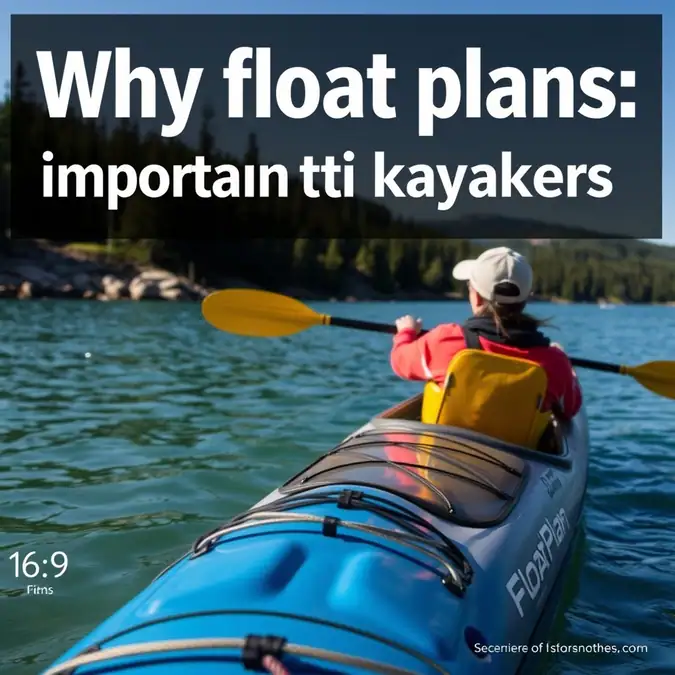
Why Float Plans Are Important For Kayakers: A Simple Safety Guide

Ever paddled out alone and wondered what would happen if you didn’t make it back? A float plan can save your life. This guide covers why float plans are important for kayakers and how to create one quickly. You’ll learn what to include, who to share it with, and when to file it. Let’s dive in.
What Is A Float Plan For Kayaking
A float plan is simply a note telling others where you’re going. It lists your launch point and take-out, departure and expected return times, and describes your kayak and gear. You give this note to a friend or family member who holds onto it while you’re on the water. If you’re late, they call for help. This simple step makes a huge difference. Ever written one before?
Think of it as a trail map for water. It shows your route on a lake, river, or coastline, marks planned rest stops or campsites, and notes any portages or tricky sections. Rescuers use this map to find you fast. Without it, they’re searching a massive area. With it, they know exactly where to look first. Every minute counts in cold water, and a float plan buys you those minutes. See how it works?
You don’t need fancy forms. A text message works. A scribbled note on a napkin works too. The key is that someone else has it, knows when to worry, who to call, and what you look like on the water. That’s the core of why float plans are important for kayakers. It turns hope into a plan. Hope isn’t a strategy. A plan is. Will you make one next time?
Many paddlers skip this step. They think it’s only for big trips, that it takes too long, or that they know the water well enough. But weather changes fast. Gear fails. Bodies get tired. A float plan covers all these risks. It’s your backup voice when you can’t speak, speaking for you when you’re missing. That’s its power. Will you give it a try?
Here’s what a basic float plan needs:
- Your name and phone number
- Kayak type and color
- Launch site and take-out site
- Planned route and stops
- Departure time and return time
- Emergency contact name and number
Keep it short and clear. Update it if plans change—just text the update to your contact. This keeps the plan alive. A stale plan helps no one. A live plan saves lives. Got your phone handy?
Some paddlers use apps, others prefer paper. Both work if someone actually reads them. Paper doesn’t need batteries. Apps can share your location live. Pick what fits your style. The best plan is the one you’ll actually use. I keep a waterproof notebook in my deck bag—it never dies. What will you use?
File the plan before you launch. Hand it to your contact in person, or send it by text or email. Confirm they got it. Ask them to read it back. Takes two minutes. Two minutes can save hours of search time. It’s the best return on effort in paddling. Will you spare two minutes?
If you’re paddling with a group, one plan covers everyone. List every paddler’s name and boat. Note the slowest pace and plan for the weakest member. Share it with a shore contact. Group plans work the same way—just more names. Safety scales up. Does your group do this?
Solo paddlers need plans most. No one sees you flip. No one hears you call. Your plan is your only witness. It tells the world you’re out there and gives rescuers a starting point. Without it, you’re a ghost. With it, you’re a search target. Targets get found. Ghosts don’t. Are you a solo paddler?
Make it a habit—like putting on a PFD, checking the forecast, or packing water. Do it every trip, no exceptions. Habits stick when they’re simple, and this one’s very simple. Write. Send. Go. Three steps for peace of mind. Will you build this habit?
Why Do Kayakers Need A Float Plan
Water hides trouble. You might look fine from shore, but underneath, things go wrong fast. A leaky hatch fills the boat. A cramp locks your legs. Fog rolls in and you lose the shoreline. Wind pushes you off course. Cold water steals strength in minutes. A float plan doesn’t prevent these things, but it starts the rescue clock early. Early rescue means survival. Late rescue means tragedy. Do you want early help?
Search teams need a place to start. Lakes look huge from a boat. Rivers twist and hide. Coasts stretch for miles. Without a plan, they search everywhere. With a plan, they search your route first. That cuts search time by hours. Hours matter in cold water, when you’re injured, or when darkness falls. Your plan gives them the gift of time. Will you give that gift?
Your family waits at home. They wonder why you’re late. They worry. They call 911. But 911 asks: Where did they go? When did they leave? What boat? What color? Without answers, 911 waits. With a plan, 911 acts fast. Your contact reads the plan and gives exact details. Rescuers launch in minutes. Your family feels relief sooner. Do you care about their peace of mind?
Insurance and liability can matter too. Some parks require float plans. Some outfitters demand them. Some clubs make them policy. A filed plan shows you took care and planned ahead. It can protect you legally and demonstrates good judgment—and good judgment is a paddler’s best trait. Do you want to show good judgment?
Weather forecasts aren’t promises. They’re guesses. A sunny morning can turn stormy by noon. Wind builds waves fast. Temperature can drop ten degrees. A float plan lets someone track you. They see the weather turn. They know you’re out there. They can call you or send help. You might not see the storm coming. They can. Will you let them watch?
Gear fails at the worst time. A rudder cable snaps. A paddle breaks. A dry bag leaks. A seat strap tears. You might fix it. You might not. If you can’t, you drift into danger. Your plan says where you drifted from. Rescuers track your drift line and find you downwind. Without a plan, they guess. Guessing fails. Do you trust guesses?
Fatigue sneaks up. Paddling looks easy. Hours later, arms fail. Core gives out. Mind wanders. Mistakes happen. Capsize risk rises. A float plan sets a return time. Miss it, and the alarm sounds. Someone checks on you. They might find you tired but safe. They might find you in trouble. Either way, you’re not alone. Do you paddle until exhausted?
Wildlife encounters happen. Sharks in saltwater. Gators in freshwater. Bears on shore. Snakes in the brush. Most ignore you. Some investigate. A few attack. If you’re hurt, you need help fast. Your plan brings help to your last known spot and narrows the search zone. Narrow zones get searched fast. Wide zones take days. Do you paddle in wild places?
Night falls fast on water. Shadows grow long. Landmarks vanish. Lights confuse. You can get lost close to home. A float plan has your return time. Miss it, and search starts before dark. Daylight search is easy. Night search is hard—dangerous for rescuers too. Your plan keeps them safe. It keeps you safe. Win-win. Do you ever lose track of time?
The cost is zero. The effort is tiny. The reward is massive. Why float plans are important for kayakers comes down to one word: insurance. Not the paper kind. The real kind—the kind that brings you home. Every pro paddler uses them. Every guide teaches them. Every survivor credits them. You’re not too good for a float plan. You’re too smart to skip it. Will you join the smart ones?
What Should A Kayak Float Plan Include
Start with the basics. Who are you? Name and phone. Who’s your emergency contact? Name and phone. What boat? Kayak type, color, length. Any stickers or distinguishing marks? These details help spot you. A red boat is easy to see. A camo boat isn’t. Bright colors win. What color is your kayak?
Where do you launch? Name the ramp, beach, or dock. Give the address or GPS coordinates. Where do you take out? Same detail. If they differ, say so. Some trips are one-way. Some are loops. Some are out-and-back. Be clear. Rescuers go to the launch first, then trace your route. Is your launch easy to find?
When do you leave? Exact time. When do you return? Exact time. Add a buffer—say 2 PM return, mean 3 PM latest. This covers slow paddling, photo stops, a swim break. It prevents false alarms. But don’t make it too wide, or you delay help. Two hours is a good max buffer. What’s your usual pace?
What’s your route? Draw a line on a map. Note key points: islands, points, channels, campsites, portages, hazards, dams, rapids, tide gates. More detail is better, but keep it readable. A messy map helps no one. A clean line with labels works. Can you sketch your route?
Who’s paddling with you? List every name, every boat, every skill level. Note medical issues—allergies, medications, conditions. This helps medics prepare and rescuers plan. A diabetic paddler needs different care. An epileptic paddler needs watching. Share what matters. Privacy matters less than life. Will you share what counts?
What gear do you carry? PFD type. Radio channel. Phone in dry bag. PLB or satellite messenger. Flares. Lights. First aid kit. Repair kit. Food and water. Shelter. Fire starter. List the big items. Rescuers know what you can do—signal, wait, treat wounds. This changes their approach. What’s in your deck bag?
What’s your experience? Beginner. Intermediate. Expert. Certifications. Training. This sets expectations. Experts get more time. Beginners get faster response. Honesty saves you. Don’t inflate skills. Rescuers check logs. They know. Be real. Are you honest about your level?
Add special notes. Dog on board. Child on board. Camera gear. Fishing gear. Photography plans. Bird-watching stops. These explain delays and route changes. They explain why you linger. Context prevents panic. A stopped kayak might be fishing—or it might be sinking. Notes tell the difference. Do you fish from your kayak?
Include a check-in plan. Text at launch. Text at midpoint. Text at return. Or use a tracker. Set intervals—every hour, every two hours. Missed check-in triggers alarm. This beats just a return time. It catches trouble mid-trip and gives real-time location. Do you have a way to check in?
Sign and date it. Your contact signs too. Both keep a copy. Photo it on your phone. Store it in the cloud. Print it for the car dash. Redundancy works. If one copy fails, another survives. Water eats paper. Phones die. Cloud needs signal. Cover all bases. Do you have a backup plan for your plan?
When Should You File A Float Plan
Every time you launch. No exceptions. Short trip? File it. Long trip? File it. Familiar water? File it. New water? File it. Group? File it. Solo? File it twice. The habit protects you when you forget. The one time you skip is the one time you need it. Murphy loves paddlers. Don’t tempt him. Will you file every time?
File before you load the car. Do it at home—calm, dry, connected. You think clearly. You have all the info. You can text, email, or print. At the launch, you rush. You forget. You get distracted. You skip. Home filing wins. Do you prep at home?
Update if plans change. Wind shifts. You change launch. You add a paddler. You drop a stop. Text the update with a date and time stamp. Your contact replaces the old plan. Old plans mislead. New plans guide. Keep it current. Do you update on the fly?
File for night paddles. Dark adds risk. Lights fail. Batteries die. Vision drops. Navigation gets hard. A plan with lights listed helps—rescuers know what to look for. Red, green, white. Strobe. Headlamp. Glow sticks. List them all. Do you paddle at night?
File for winter paddles. Cold water kills fast. 50-degree water gives 15 minutes of dexterity. 40-degree gives 5. A plan with a return time triggers early search. Early search finds you alive. Late search finds you cold. Winter demands a plan. No debate. Do you paddle in winter?
File for remote trips. No cell service. No other paddlers. No quick exit. Help is hours away. Your plan is your lifeline. It tells them where to fly, where to boat, where to hike. Coordinates matter most here. GPS coordinates save days. Do you go remote?
File for tide-dependent trips. Tides trap. Tides strand. Tides flip. A plan with tide times helps. Rescuers know the water level, the current, the window. They plan the pickup. You avoid the mud. You avoid the race. Do you watch tides?
File for crossing trips. Open water. Shipping lanes. Ferry routes. Wind exposure. Current exposure. A plan with compass bearings helps. Rescuers plot your line and search the corridor. They find you fast. Crossings need precision. Guessing kills. Do you cross open water?
File for surf launches. Surf dumps you. Surf breaks boats. Surf separates gear. A plan with the beach name helps. Rescuers know the break, the rip, the exit. They come ready. Surf zones eat the unprepared. Are you surf ready?
File right now. Before your next paddle. Make a template. Save it. Fill in the blanks each trip. Send. Go. Done. The template makes it fast—no thinking needed. Just fill and send. Two minutes. Every time. Will you make a template today?
Who Should You Share Your Float Plan With
Pick a reliable adult. Someone who answers the phone. Someone who stays calm. Someone who knows the area and who to call. Not a child. Not a flaky friend. Not someone who sleeps early. Choose wisely. Your life may depend on them. Who’s your go-to person?
A spouse or partner works well. They know your habits, your gear, your pace. They notice when you’re late. They have the strongest motive. They make the best contacts. But they worry most. Give them a clear plan—it reduces their fear. Do you share with a partner?
A paddling buddy on shore works too. They know the water and conditions. They can launch a search boat, guide rescuers, speak the language. They make great contacts. But they might paddle too. Have a backup. Do you have a shore buddy?
A family member at home is classic. Mom. Dad. Sibling. Adult child. They wait anyway. Give them the plan. They call 911 with facts, not guesses. Facts speed response. Guesses slow it. Make it easy for them. Do you tell family?
Marina or livery staff can hold it. They’re on site. They see you launch and return. They notice empty racks. They call it in. But they change shifts. They get busy. They might forget. Confirm with a name. Get a shift lead. Do you launch from a marina?
A park ranger station is official. They log it. They patrol. They have radios. They coordinate. But they close at dark. They cover huge areas. They’re not dedicated to you. Use them as a layer, not the only layer. Do you paddle in parks?
A satellite messenger contact is modern. The device sends your location. Your contact gets a map link. They see you move. They see you stop. They see the SOS button. This is the gold standard. It costs money and needs a subscription. But it works off-grid. Do you carry a messenger?
App-based sharing works for tech fans. Apps like Paddle Logger or Float Plan apps auto-share, track GPS, alert on delay. But phones die. Signal drops. Apps crash. Don’t rely on just one. Layer it. Do you use paddle apps?
Tell your contact what to do. Write it down. Call 911 at this time. Give this info. Call this marina. Call this ranger. Call this friend. Script it. Stress makes minds blank. A script works. Practice it once. Do you have a script?
Two contacts are better than one. Primary and backup. Primary gets the plan. Backup gets copied. If primary fails, backup acts. Redundancy saves. It’s simple. Add one more name. Two minutes more. Worth it. Will you add a backup?
Confirm they agree. Ask them: “Will you be my float contact?” Explain the job. It’s easy—hold the plan, watch the clock, call if late. That’s it. Most say yes. Some say no. Respect the no. Find a yes. Do you have a yes?
How Do You Create A Simple Float Plan
Grab a pen and paper, or open notes on your phone. Write the header: Float Plan. Date. Your name. Phone. Emergency contact. Phone. Boat: Kayak. Color. Length. Brand. Launch: Name. Address. Time. Return: Name. Address. Time. Route: List points. That’s it. Done. Can you write that now?
Use a template. Save time. Reduce errors. Make one in your notes app. Copy it each trip. Change the details—launch, return, route, time. Send. I’ve used the same template for years. It never fails. Templates win. Will you make one?
Text it to your contact. Copy-paste from the template. Hit send. Wait for the reply: “Got it.” That’s the confirmation. No reply? Call. Make sure. Unconfirmed plans are wishes. Confirmed plans are safety. Do you wait for confirmation?
Photo the paper plan. Put it on the dash. Rescuers check cars. They see the plan. They know the route. They know the time. They start smart. Paper on the dash is free insurance. Do you leave a note in the car?
Use a waterproof notebook. Keep it in your PFD pocket. Write the plan on page one. Tear it out. Hand to contact. Or photo and send. Notebook survives dunking. Paper in pocket survives you. Cheap. Reliable. Always ready. Do you carry a notebook?
Apps make it pretty. Paddle Ready. Float Plan One. BoatUS. They format nicely, email pretty PDFs, store history. But they need a phone, charge, and signal. Use them as backup. Not primary. Do you trust apps?
Include a map screenshot. Drop pins—launch, return, waypoints. Send the image with your text. Visuals beat words. Rescuers see the line, the scale, the hazards. A picture is worth a thousand words. Can you screenshot a map?
Add a selfie in gear. Wear your PFD. Hold your paddle. Show your boat. Send with the plan. Rescuers know exactly what to spot—red hat, blue PFD, yellow boat. Visual ID cuts search time. Do you wear bright colors?
Set a calendar reminder. Return time alarm on your phone and your contact’s phone. Double alarm. If you miss it, they know. If they miss it, you know. Alarms beat memory. Memory fails. Alarms work. Do you use alarms?
Practice once. Do a dry run. File a plan for a short paddle. Have your contact execute the alarm. See how it feels. See how fast it works. Fix gaps. Then real trips go smooth. Practice builds trust. Trust saves lives. Will you practice this week?
What Happens If You Don’t Use A Float Plan
You vanish silently. No one knows you’re gone. Hours pass. Maybe days. Your car sits at the ramp. No one connects it to you. The ramp has no camera. No witness. You’re a ghost. Ghosts are hard to find. Do you want to be a ghost?
Search starts late. Family waits. They hope. They call friends. Friends don’t know. They call police. Police ask questions: Where? When? Who? What boat? No answers. Police wait. Policy says wait 24 hours for adults. 24 hours in cold water is death. Do you know the 24-hour rule?
Search area is huge. Lake is five miles wide. River is 20 miles long. Coast is infinite. Boats search grids. Helicopters fly patterns. Divers check spots. Costs mount—thousands per hour. Taxpayers pay. Volunteers risk. All because no note. A note costs zero. Do you see the waste?
Rescuers search wrong places. They check popular spots. They check easy access. You’re in the hard spot—the hidden cove, the back channel, the wind shadow. They find you last. Or not at all. Your plan puts them on you first. First finds live. Last finds lost. Do you want to be found first?
Your family suffers. Not knowing is torture. Hope hurts. Fear paralyzes. They imagine the worst. They blame themselves. They blame each other. A plan gives them action. Action reduces pain. They call. They wait. They know. Knowing is better. Do you care about their pain?
Your gear is lost. Kayak drifts. Paddle sinks. Electronics die. Gear costs thousands. A plan gets you back fast. You recover gear. You repair the boat. You paddle again. No plan means lost gear, lost money, lost memories. Do you value your gear?
You set a bad example. New paddlers watch. They see you skip. They skip too. They get in trouble. They vanish. The cycle spreads. Be the one who plans. Be the one who teaches. Culture changes one person at a time. Will you lead?
You lose access. Parks ban careless paddlers. Marinas revoke permits. Clubs expel members. Insurance denies claims. A missing paddler hurts the community. Rules tighten. Freedom shrinks. Your skip hurts everyone. Do you want less freedom?
You might survive but suffer. Hypothermia. Dehydration. Exposure. Injury. Days alone. Permanent damage. A plan brings help in hours. Hours save fingers. Hours save kidneys. Hours save brain. Hours save life. Do you want to survive whole?
The regret lasts forever. If you live. If they find you. You know. You knew better. You chose not to. That knowing haunts. Survivors say: “I’ll never skip again.” Don’t be a survivor who wishes. Be a paddler who plans. Will you choose the plan?
Can You Use A Float Plan App For Kayaking
Yes. Apps exist. Many are free. Some cost a few dollars. They work on iPhone and Android. They guide you through fields, make a nice PDF, email or text it, store old plans, track GPS, alert contacts. Technology helps. Do you like apps?
Paddle Logger is popular. It logs trips, makes float plans, shares live location, works with Apple Watch, exports GPX. Free version available. Pro adds features. Many paddlers swear by it. I’ve used it. It works well. Heard of it?
Float Plan One is simple. Built for this one job. Fill blanks. Hit send. Done. No extra fluff. Free. Ad-supported. Good for quick plans. Doesn’t track live—just sends the plan. Sometimes simple wins. Do you want simple?
BoatUS app is official—from the big tow company. Free. Float plan plus weather, tides, NOAA charts, towing info. One app does many things. Good if you boat too. Do you have BoatUS?
Garmin Explore pairs with inReach. Satellite messenger. Works off-grid. Sends location anywhere. SOS button calls GEOS. GEOS calls 911. Global coverage. Costs monthly. Hardware costs hundreds. But it works when nothing else does. Do you go off-grid?
Zoleo is another messenger. Similar to inReach. Different hardware. Different plans. Check coverage maps. Check costs. Read reviews. Both save lives. Pick one if you go remote. Do you need satellite?
Apps need phone charge. Cold kills batteries. Water kills phones. Drops kill screens. A dead phone is a dead app. Always carry paper backup. Paper works wet. Paper works cold. Paper works dead. Do you carry a power bank?
Signal isn’t everywhere. Mountains block it. Canyons block it. Remote lakes block it. Ocean blocks it far out. App plans need signal to send. Send before you lose bars. Or use satellite. Know your gaps. Test your zone. Do you know your dead zones?
Privacy matters. Apps collect data—location, trips, personal info. Read terms. Choose trusted brands. Delete old trips. Turn off tracking when done. Your data is yours. Protect it. Do you read privacy policies?
Best practice: App plus paper. App for pretty. Paper for sure. App for tracking. Paper for dash. App for history. Paper for now. Layers win. Single points fail. Two is one. One is none. Will you layer your safety?
How Detailed Should A Kayak Float Plan Be
Match detail to risk. High risk needs high detail. Low risk needs low detail. Solo winter crossing? Maximum detail. Group summer pond? Minimum detail. Scale it. Think: what would rescuers need? Give them that. No more. No less. Do you assess risk before launch?
Solo trips need max detail. You’re the only witness. Your plan is the only clue. Every waypoint matters. Every hazard matters. Every gear item matters. Medical info matters. Experience level matters. Contact scripts matter. Leave nothing out. Are you solo often?
Group trips can share detail. One plan covers all. But list each person, each boat, each skill, each medical issue. Group dynamics matter. Slowest sets pace. Weakest sets margin. Plan for the weakest. That’s the group plan. Do you paddle in groups?
Remote trips need coordinates. Lat/long for launch. Lat/long for return. Lat/long for camps. Lat/long for exit points. Rescuers fly GPS. They boat GPS. They hike GPS. Coordinates are universal. Addresses fail in woods. Coordinates win. Can you read GPS coordinates?
Complex routes need step-by-step. Turn by turn. Mile by mile. Landmark by landmark. “Paddle to red buoy. Cross channel. Enter creek. Follow to falls. Portage left. Continue to lake.” Clear. Actionable. Searchable. Vague plans fail. “Paddle around lake” fails. Will you write turn-by-turn?
Simple routes need less. Out-and-back on a creek. Launch at bridge. Turn at falls. Return by dark. That might be enough. But still give time. Still give boat. Still give contact. Basics never hurt. Extras help when things go wrong. Do you keep it simple?
Multi-day trips need daily plans. Day 1: Launch to Camp A. Day 2: Camp A to Camp B. Day 3: Camp B to Takeout. Each day has its own return time. Miss day 1 check-in, search starts. Miss day 2, search expands. Daily granularity saves multi-day trips. Do you camp from your kayak?
Hazard areas need extra notes. Dam at mile 3. Rapid at mile 5. Shipping lane at mile 7. Tide rip at the point. Wind tunnel at the gap. Mark them. Warn rescuers. Warn yourself. Knowledge prevents surprise. Surprise causes accidents. Do you mark hazards?
Weather-dependent plans need options. Plan A: Good weather route. Plan B: Bad weather bailout. Plan C: Emergency exit. Share all three. Your contact knows you adapt. Rescuers know where you might be. Flexibility with structure. That’s pro level. Do you have bailout plans?
When in doubt, add detail. Extra words cost nothing. Extra seconds to read. But they might save hours. They might save you. Err on the side of more. You can always say “see attached map.” Maps hold infinite detail. Will you err on more?
Do You Need A Float Plan For Short Kayak Trips
Yes. Short trips kill too. One-hour paddle. Close to shore. Familiar water. Sunny day. Calm wind. You flip. You hit your head. You can’t climb back. Drift starts. Cold seeps in. Hour passes. Two. Three. No one knows. Short trip. Long tragedy. Do you think short means safe?
Most accidents happen close. Close to launch. Close to shore. Close to help. But help doesn’t know. Familiarity breeds complacency. “I know this pond.” “I’ve done it a hundred times.” The hundred-and-first is different. The log is new. The wind is new. You are new. Do you get complacent?
Short trips are when you skip. “It’s just 30 minutes.” “I’ll be right back.” “No need for paperwork.” That 30 minutes stretches. You explore a cove. You chase a fish. You watch an eagle. Time flies. Dark falls. You’re late. No plan. No alarm. Do you lose track of time?
Quick paddles need quick plans. Text takes 30 seconds. “Launching Cedar Dock 10 AM. Red kayak. Back 11 AM. Call 911 if not back 11:30. Thanks.” Done. Sent. Safe. Thirty seconds for peace of mind. Best deal in paddling. Can you spare 30 seconds?
Even pool sessions matter. Practice rolls. Practice rescues. Practice entries. Things go wrong in practice too. Head strike. Shoulder pop. Panic breath. A plan brings pool staff fast. They have gear. They have training. They save you. Do you practice in pools?
Kids on short trips need plans most. Kids tire fast. Kids get cold fast. Kids wander. Kids capsize. A plan with kid details helps—age, weight, swimming ability, PFD type, meds, allergies. Rescuers prepare for kids. Kids need special care. Do you paddle with kids?
Rental boats need plans too. You don’t know the boat. It might leak. It might not track. It might fit poorly. You don’t know the water. Rental staff should ask. But they might not. You file anyway. You protect yourself. Do you rent kayaks?
New water needs a plan. Even short. You don’t know the currents, the hazards, the exits, the wind shadows, the tide turns. A plan forces you to look, to think, to prepare. The act of planning makes you safer. Planning is protection. Do you scout new water?
Health issues demand plans. Heart condition. Asthma. Diabetes. Seizures. Allergies. Any condition. Short trip or long. A plan with medical info saves you. Medics arrive ready. They know your meds. They know your history. They treat fast. Fast treatment saves. Do you have a condition?
Make it automatic. Short trip? Plan. Long trip? Plan. Every trip? Plan. No decision needed. No debate. No “should I?” Just do. The habit owns you. You don’t own the habit. That’s how safety works. Will you make it automatic?
Frequently Asked Questions About Why Float Plans Are Important For Kayakers
What is the most important part of a float plan?
The return time and emergency contact. These trigger the rescue. Without them, no one knows when to search