
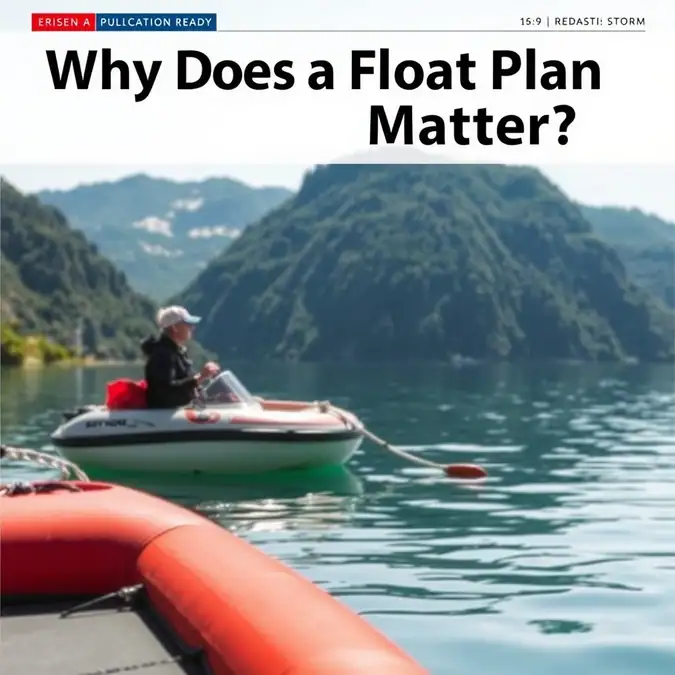
Why Does a Float Plan Matter? A Simple Guide for Safe Boating

Ever left the dock without letting anyone know where you’re headed? I have, and it felt fine—until the wind suddenly shifted. A float plan is a brief note that tells a friend or family member where you’ll be boating and when you expect to return. It can literally save your life. This guide explains why a float plan matters, how to write one, and the common pitfalls to avoid. Let’s dive in.
What Is a Float Plan?
A float plan is a simple note you leave with a trusted person. It lists where you’ll boat, when you’ll depart, when you’ll return, who’s on board, and the key details of your vessel. It isn’t a legal form—it’s a safety tool. You can scribble it on paper, send it by text, or use an app. The point is that someone on shore knows your intentions; if you’re late, they can call for help.
Think of it like a trail map for hikers. Hikers tell rangers their route; boaters tell a contact theirs. It takes about five minutes, costs nothing, and gives peace of mind. Ever written one? If not, today’s a great day to start. Keep a blank template in your glove box, fill it out before every trip, and make it a habit—just like checking fuel.
I keep a waterproof notebook on my console. I jot the basics fast: date, time out, time back, names, boat color, motor size. Then I text a photo to my wife. She knows my routine and when to worry. No fancy forms required—just clear facts. Got a notebook handy? Grab one next time you’re at the store.
A float plan works for kayaks, paddle boards, and big cruisers alike. Any craft that leaves shore needs a plan. The water doesn’t care about boat size; weather changes fast, engines fail, people get hurt. A plan covers all of it. Ever paddled far from shore? Tell someone where you’re going.
Some think float plans are only for long trips. That’s wrong. A short outing can go sideways in minutes—a sudden storm, a prop strike, a drift that carries you miles. File a plan for every trip, even a two‑hour run or a sunset cruise. The habit keeps you safe, whether you’re on a lake or the ocean.
The Coast Guard doesn’t require float plans by law, but they strongly recommend them. They see the tragic outcomes when no plan exists—search teams waste hours guessing where to look. A plan can cut search time in half, meaning faster rescue and lives saved. Seen a search on the news? It’s hard to watch. A plan helps avoid that scenario.
You can make your own form on a blank sheet. Write the key facts, leave it with a spouse, a dock mate, or the marina office—just be sure someone has it and knows what to do if you’re overdue. Got a person you trust? Pick one today and ask them to be your shore contact.
Digital plans are great, too. Apps can send alerts, track GPS, and auto‑notify if you’re overdue. But a paper backup is smart—phones die, signals drop, water ruins electronics. Paper never fails. Carry a phone? Good. Carry paper as well. Two ways are better than one.
Float plans are free insurance. You pay with a few minutes of time and get a safety net in return—no premium, no deductible, just a smart habit. I’ve boated for thirty years and file a plan every single time, even for a quick fish near the ramp. It’s muscle memory now. Can you make it a habit? Start this weekend.
To sum up: a float plan is a simple note that tells who, what, where, and when. It stays on shore with a friend, triggers help if you’re late, works for any boat and any trip, costs zero dollars, and takes five minutes. Why skip it? There’s no good reason. Ready to learn why it matters so much?
Why Does a Float Plan Matter for Safety?
A float plan turns guesswork into facts. Without one, rescuers search a massive area; with one, they search a tight box. Time saved equals lives saved. Cold water kills fast—hypothermia sets in quickly. Every minute counts, and a plan buys you those minutes. Ever felt cold‑water shock? It steals your breath instantly.
I once broke down twenty miles out—radio dead, phone dead, drifting toward shipping lanes. My wife had my plan; she called the Coast Guard at my overdue time. They knew my route and found me in forty minutes. Without the plan they’d have searched all night. I was cold but safe. That plan saved me. Do you carry a radio? Good—but a plan is your backup.
Weather can turn without warning. A sunny morning can become ugly by noon; wind builds waves fast, lightning strikes the highest point—often your boat. A plan lets shore contacts track storms, call you early, and tell you to run for cover. Do you watch the sky? A plan gives you an extra set of eyes on shore.
Medical emergencies happen on the water—heart attacks, strokes, severe cuts, allergic reactions. If you can’t call, your shore contact can. They know your location from the plan and can guide medics straight to you. Fast medical response saves lives. Got a first‑aid kit? Great. A plan gets the pros to you faster.
Man overboard is a nightmare. If you fall off alone, the boat keeps going and you’re left in the water. A plan tells someone you’re solo, gives your route, and alerts rescuers fast. They search along your track, narrowing the area dramatically. Ever boat alone? A plan is vital then.
Fire on board spreads in seconds—fuel, propane, electrical shorts. You may have only moments to abandon ship. A plan tells rescuers your last known spot so they find the life raft and survivors quicker. Got a fire extinguisher? Check it monthly. A plan complements your gear.
Mechanical failure leaves you adrift—engines quit, steering breaks, anchors drag. You drift with wind and current. A plan shows your start point and course, letting rescuers calculate drift and intercept you. Without it, you’re a needle in a haystack. Maintain your engine well, but stuff still breaks.
Night falls fast on the water. Landmarks vanish, lights confuse, and you can get lost near home. A plan with GPS waypoints helps you navigate back and helps rescuers locate you if you can’t. Chartplotter batteries die, screens crack—paper works every time.
Family worry is real. Kids wait at the dock, spouses watch the clock. A plan gives them a set time; if you’re late they act calmly, call the right number, and give the right info. That calm action saves lives. Got people waiting for you? Give them the gift of a plan.
Bottom line: a float plan is your voice when you can’t speak. It speaks for you when you’re hurt, lost, broken, or dead in the water. It’s the cheapest safety gear you own—weightless, minutes to complete. Why does a float plan matter? Because you matter. Your crew matters. Your family matters. Let’s talk about who needs one.
Who Should File a Float Plan?
Every boater should file a float plan—no exceptions. Kayakers, paddle‑boarders, jet‑ski riders, bass‑boat anglers, pontoon cruisers, sailors, yacht owners. If you leave shore, you file a plan. The water doesn’t check boat size; danger finds everyone. Think you’re too experienced? Experience doesn’t stop storms.
Solo boaters need it most. No one aboard to call for help or render aid. You’re the only link to shore; a plan is your lifeline. I fish alone often—my plan is my partner, watching my back. Ever go out alone? Promise me you’ll file a plan every time.
New boaters need it badly. They don’t know local hazards, can’t read weather well, and may not handle rough water. A plan gets them help fast when they get in over their heads. Were you once a new boater? We all were. A plan covers the learning curve.
Night boaters need it. Darkness hides everything—channel markers look different, shore lights blind you, fatigue sets in. A plan with lighted waypoints guides you home and guides rescuers to you. Boat at night? A plan isn’t optional; it’s essential.
Offshore anglers need it. You run far, cross inlets, face big seas, and help is far away. A plan with coordinates gets the right assets launched—helicopters, cutters, nearby ships. Fish the canyons? File a detailed plan and update it if you move spots.
Rental boaters need it. You don’t know the boat’s quirks or the area, and you may lack a radio. The rental company should require a plan; if they don’t, write one anyway and leave it with the desk clerk. Rent boats on vacation? Take your safety seriously.
Paddlers need it. Kayaks capsize, paddle boards drift, and you’re low in the water—hard to see. A bright plan on shore makes you visible, tells rescuers your paddle route and skill level. Paddle rivers or coasts? A plan is as vital as your PFD.
Kids and teens need it. They take the family boat out while parents stay home. The plan lets parents track the trip, sets clear boundaries and a hard return time, and teaches responsibility. Have young boaters? Make the plan a rule—no plan, no keys.
Commercial guides need it. They carry paying clients and have a duty of care. A plan shows professionalism, protects the captain and the business, and is often required by insurance. Are you a guide? Make plans standard operating procedure—your clients deserve it.
Even dock walkers should know the plan. If you see a boat overdue, you can alert the contact. You become part of the safety net. A community that shares plans watches each other. Know your dock neighbors? Share your plan with them and ask for theirs. We’re safer together.
When Should You File a Float Plan?
File a float plan before every single trip—no exceptions. Before you start the engine, before you push off the dock, before you untie the kayak. Make it step one of your pre‑departure checklist: check fuel, battery, safety gear, file plan, then go. Got a checklist? Add the plan to it now.
File it even for short trips—a quick run to the sandbar, a sunset spin around the harbor, a morning troll near the inlet. Things go wrong close to home, too; most accidents happen near shore. Complacency kills. Skip the plan for short hops? Stop that habit today.
File it when plans change. You decide to run farther, find fish in a new spot, weather forces a detour—update your shore contact with a quick text: new location, new return time. Takes thirty seconds. Update people when plans shift? Make it automatic.
File it for multi‑day trips. Each day needs a plan; each leg needs a check‑in—morning departure, midday position, evening anchor. Shore contact tracks progress and knows if a check‑in is missed. Cruise for days? Set daily alarms to check in.
File it before night falls. If you might be out after dark, file before you leave. Night adds risk—visibility drops, fatigue rises, navigation gets harder. A plan filed in daylight is clearer. Ever get caught out late? Plan for it anyway.
File it when boating in new waters. You don’t know the hazards, currents, or weather patterns. A plan forces you to study the chart and pick safe routes. Explore new lakes? A plan makes you prepare.
File it when weather is iffy—small‑craft advisory, building seas, thunderstorm watch. A plan tells shore you’re aware, lists your bailout points and safe harbors. Check the forecast? Good. File the plan based on it.
File it when boating with guests. They may not know the boat, the area, or how to swim. A plan lists their names, medical issues, and emergency contacts. Take friends out? Protect them with a plan.
File it when fishing tournaments run. High‑speed runs, crowded waters, competitive pressure—risks go up. A plan covers the whole fleet if organizers collect them. Fish tournaments? Ask the director about float‑plan policy; push for it if they lack one.
File it right now if you never have. Start today—next trip, every trip. It becomes a habit in three weeks; then you feel naked without it, like forgetting your PFD. Want that peace of mind? Start the habit this weekend. Let’s cover what goes in the plan.
What Information Goes in a Float Plan?
A solid float plan has seven key parts. Write them clearly, use big letters, a waterproof pen, or type and print. Keep a blank form on board and fill it fresh each trip—don’t reuse old ones; details change. Got a template? Make one today.
First: boat description—name, registration number, color, length, type, make, model, hull ID, motor type, horsepower, fuel capacity, distinctive features (red stripe, tower, dodger). Rescuers spot you faster with details. Know your hull ID? Find it and write it down.
Second: people on board—full names, ages, weight, swimming ability, medical conditions, medications, allergies, emergency contact for each, phone numbers. Helps medics prepare and rescuers count heads. Know your crew’s medical info? Ask them and write it down.
Third: safety gear carried—life‑jacket count and type, flares, radio, EPIRB, PLB, radar reflector, anchor, bilge pump, fire extinguisher, first‑aid kit, water, food. Tells rescuers your survival capacity. Inventory gear monthly and update the plan.
Fourth: trip itinerary—departure point, time out, route waypoints, fishing spots, anchorages, destination, time back, alternate ports, bailout points. Be specific; latitude/longitude for key spots. Use GPS? Save waypoints and share them in the plan.
Fifth: communication gear—radio channels monitored, cell numbers, satellite messenger ID, MMSI number, call sign, check‑in schedule (every hour, every two hours, at each waypoint). Have a VHF? Know channel 16 and put it in the plan.
Sixth: vehicle and trailer info—tow vehicle make, color, license plate, trailer license, parking location, slip number, ramp used. Helps shore folks verify you launched and find your truck if you’re missing. Park at a busy ramp? Note the exact spot.
Seventh: emergency instructions—when to call for help, who to call (Coast Guard, local marine police, marina, tow service), what to say (your plan details). Know the local Coast Guard number? Put it in your phone and in the plan.
Optional but smart: photo of boat, photo of crew, copy of registration, copy of insurance. Apps store this; paper plans can have a ziplock pouch. Carry docs? Keep copies in the plan pouch; originals stay home safe.
Format matters. Use a table or bullet points—one page front and back max. Laminate the blank form, use a dry‑erase marker, wipe clean each trip. Paper or digital? Both work. Just do it. Let’s talk about how to file it.
How Do You File a Float Plan?
Filing is easy. Give the plan to your shore contact—hand them the paper, send the text, email the PDF, share the app link. Do it before you leave the driveway; don’t wait until the ramp. Rushing causes mistakes. Rush at the ramp? Slow down. File first.
Pick a reliable shore contact—someone who watches the clock, knows emergency numbers, and won’t panic. Spouse, parent, adult child, close friend, dock neighbor, marina manager. Got a person like that? Ask them today and explain the duty.
Brief your contact. Walk through the plan, show the “when to call” time, the “who to call” list, the “what to say” script. Practice once; make sure they’re comfortable. Questions? Answer them. A confused contact delays help.
Use multiple methods—paper on the fridge, text to phone, email to inbox, app notification. Redundancy saves lives. Phones get lost, batteries die, paper gets spilled on, apps crash. Use more than one way? Start today. Layer your safety net.
Set a check‑in schedule—text at departure, at first waypoint, at halfway, at return. Missed check‑in triggers the plan. Keep messages short: “Out.” “At buoy 4.” “Heading in.” “Tied up.” Text while driving the boat? Stop the boat first. Safety first, always.
Use an app if you like—many free options: USCG app, BoatUS app, Float Plan One, Paddle Ready. They auto‑send alerts, track GPS, store boat info. But know how yours works; test it before you need it. Got an app? Open it and learn it now.
File with the marina if you keep a slip. They often have a box or digital log, watch the fleet, know local waters, and can launch fast. Know your marina policy? Ask the dockmaster and use their system, too.
File with the Coast Guard only if asked. They don’t routinely take plans, but in some areas they request them—big events, storm seasons, high‑risk zones. Check local rules. Boat in a busy port? Ask the sector office.
Update the plan if anything changes—new crew, new route, new weather, new return time. Text the update with “UPDATE” at the top; keep it clear. Forget to update? Set a phone reminder. Check in, update, repeat.
Close the plan when home safe—text “IN,” call your contact, tell them you’re tied up, secure the boat, then relax. An open plan causes false alarms, wastes resources, and makes contacts ignore real alerts. Always close the loop? Make “IN” text a habit. Tie up, text in, done.
What Happens If You Don’t File a Float Plan?
Without a plan, no one knows you’re missing. Hours—maybe days—pass. Your family wonders, hesitates to call, thinks you’re just late, stopped for dinner, lost track of time. Precious hours tick away. Want your family guessing?
Rescuers search blind, covering huge areas, guessing your route and habits, wasting fuel, time, and risking their lives on empty water. A plan focuses them; no plan scatters them. Seen a search grid? It’s massive.
Survival odds drop fast—cold water, no water, no food, exposure, injury, shock. Every hour reduces the chance of a live rescue. Coast Guard charts show survival time in 50 °F water is hours; in 40 °F it’s minutes. A plan cuts search time. Know your local water temps?
False hope delays action—family waits, friends wait. “He always runs late.” “She probably anchored up.” “They’re fine.” Denial is human. A plan sets a hard deadline: at 6 PM we call, no debate, no waiting. Have a hard deadline set?
Search resources are limited—boats, helicopters, planes, personnel. They can’t be everywhere; they go where probability is highest. No plan means low probability everywhere; your case competes with others. A plan puts you at the top. Want priority response?
Legal and financial fallout follows—search costs can bill to you, insurance may deny claims, negligence questions arise. A plan shows due diligence, that you took reasonable steps, protecting your estate and family. Have boat insurance? Check if they require plans.
Guilt haunts survivors—“If only I had known.” “If only I’d called sooner.” “If only we had a plan.” That guilt lasts forever. A plan prevents the “what‑ifs,” giving closure either way—you’re found safe or found fast. Want to spare loved ones that guilt?
Community trust erodes—other boaters see the gaps, stop sharing info, stop watching out. The safety culture weakens. One missing plan hurts everyone. Value your boating community? Be the one who files. Lead by example.
Regulators notice patterns—too many no‑plan incidents bring new laws: mandatory filing, fines, required tracking devices, loss of freedom. Voluntary plans keep it voluntary. Want the government mandating your habits? File voluntarily now.
You lose your best safety tool—all your gear, radio, EPIRB, flares, training—they only work if someone knows to listen. A plan activates the system; without it you’re on your own. Really want to be alone out there? File the plan. It’s that simple.
Can You Use an App for Float Plans?
Yes. Apps make float plans easy—they store boat and crew data, track GPS, auto‑alert contacts, are free or cheap, and run on iPhone and Android. Got a smartphone? Download one today and test it at home.
The official USCG app is solid—float‑plan section, safety checklists, navigation rules, weather links, emergency buttons, free, no ads, government‑backed. Trust official sources? This is a good one.
BoatUS app is popular—towing coverage info, float‑plan templates, tide charts, ramp locators, ties to your membership. Member? The app is a perk.
Float Plan One is simple—built just for plans, clean interface, easy sharing, recurring plans for regular routes. Great for anglers who run the same pattern. Fish the same spots? This app saves setup time.
Paddle Ready is for paddlers—kayak, canoe, SUP. Paddle‑specific checks, knows paddle hazards, shares with paddle groups. Paddle? Get this one; it speaks your language.
Apps need signal to send alerts—no signal means the alert queues until signal returns. In a canyon it waits. Paper works without signal. Boat in dead zones? Keep paper backup. Always.
Battery life is a limit—GPS tracking drains phones fast; cold kills batteries faster. Bring a power bank and charging cable. Turn off tracking if battery gets low; save juice for emergency calls. Carry a power bank? Get a waterproof one.
Water kills phones—even waterproof cases fail. Drop it overboard and it’s gone, along with your plan and contacts. Paper in a ziplock survives. Trust your phone with your life? Don’t. Back it up with paper.
App learning curve exists—menus, settings, permissions, notifications. Learn it at the kitchen table, not at the ramp or on the water. Practice filing, sharing, closing. Read manuals? Spend ten minutes learning the app.
Best approach: use both—app for convenience, paper for backup; app for tracking, paper for permanence; app for alerts, paper for when tech fails. Two is one, one is none. Believe in redundancy? Apply it to float plans. You’ll never regret it.
How Does a Float Plan Help Rescuers?
A float plan turns a needle in a haystack into a needle in a thimble. Rescuers love plans—they make the job possible. Without a plan they search thousands of square miles; with one they search miles. Want them to find you fast? Give them a plan.
The plan gives a start point—launch ramp, marina, dock, beach. Rescuers start there; they don’t waste time checking other ramps. Launch from different spots? List them all in the plan.
The plan gives a route—waypoints, fishing holes, channels, shortcuts. Rescuers draw your track, run that line, search along it, and find you on or near it. Wander off route? Note alternate routes in the plan.
The plan gives a timeline—departure, check‑ins, estimated return. Rescuers know when you went missing and how far you could drift, calculating drift from the last known position. Stick to your timeline? Be honest in the plan.
The plan gives boat details—color, size, type, lights, radar signature. Rescuers spot you on radar and visually, distinguishing you from other boats. Have a unique feature? Put it in the plan—red T‑top, blue hull, white arch.
The plan gives crew count—rescuers know how many to find, bring enough boats, helicopters, medics, and don’t leave anyone behind. Always count heads? Write the number down; update if it changes.
The plan gives medical info—diabetic, heart condition, allergies, medications. Rescuers bring the right gear, alert hospitals early, save critical minutes. Have a medical issue? Put it in the plan; it’s not private, it’s survival.
The plan gives communication info—radio channels, phone numbers, MMSI. Rescuers call you direct, hail on channel 16, ping your MMSI, text your phone, reach you fast. Monitor channel 16? Keep it on, volume up.
The plan gives shore‑contact info—rescuers call your contact, verify details, get updates, coordinate with family, reduce panic. Do your contacts know each other? List backup contacts, too; two‑deep is smart.
The plan gives closure—rescuers find you, bring you home, close the case, go home to their families. A plan makes the mission succeed; everyone wins. Appreciate rescuers? Give them the tool they need. File a float plan every time.
What Are Common Float Plan Mistakes?
Mistake one: not filing at all. The biggest error—people forget, get lazy, think it’s too much trouble. Five minutes versus your life. Skip it sometimes? Stop. Make it non‑negotiable.
Mistake two: vague details—“going fishing,” “out on the lake,” “back by dark.” Useless. Rescuers need specifics: which lake, which ramp, which spots, exact time. Write vague plans? Be precise—latitude, longitude, names, numbers.
Mistake three: wrong contact—someone who sleeps early, ignores texts, panics, or is on vacation. Pick a rock: reliable, alert, calm, local. Know your contact’s habits? Choose wisely and test them first.
Mistake four: no check‑in schedule—just a return time. If you break down at noon and return is 6 PM, six hours pass. Check in every hour; missed check‑in triggers action at noon. Check in? Set phone alarms; make it routine.
Mistake five: forgetting to update—move to a new spot, stay longer, cut short, don’t tell your contact. They call rescuers for a ghost; false alarm, wasted resources. Update? Text “UPDATE” with new info—every change.
Mistake six: no close‑out—return safe, forget to text “IN.” Contact waits, worries, may call rescuers anyway; false alarm, cry‑wolf effect, next time they hesitate. Close out? Make “IN” text a habit—tie up, text in, done.
Mistake seven: relying only on memory—you think you told your spouse, you think you texted, you didn’t. Stress, rush, distraction. Write it down, send it, confirm receipt. Assume it’s done? Verify—get a reply “Got it.” Then go.
Mistake eight: using only an app—phone dies, app crashes, signal lost, no backup. Paper works always—laminated form, dry‑erase marker, ziplock bag. Have paper backup? Make one today; keep it in the console.
Mistake nine: not briefing the contact—they have the plan but don’t know what to do, the numbers, the timeline. Walk them through it; do a drill. Brief your contact? Schedule ten minutes; practice once.
Mistake ten: thinking experience replaces a plan—“I know these waters,” “I’ve done this a thousand times,” “Nothing ever happens.” Until it does. The ocean doesn’t care about your resume. Feel invincible? Humility files the plan; pride skips it. Choose humility. Choose life.
Frequently Asked Questions About Why Does a Float Plan Matter?
Is a float plan required by law? No, the Coast Guard does not require float plans by law for recreational boaters. But they strongly recommend them for safety.
Can I just tell someone verbally? Verbal plans are better than nothing but easily forgotten. Write it down or use an app so details are clear and permanent.
What if I am only going out for an hour? File a plan anyway. Most accidents happen close to shore on short trips. A plan takes two minutes and covers you.
Do I need a float plan for a kayak? Yes
1 thought on “Why Does A Float Plan Matter?: 5 Things to Know”