
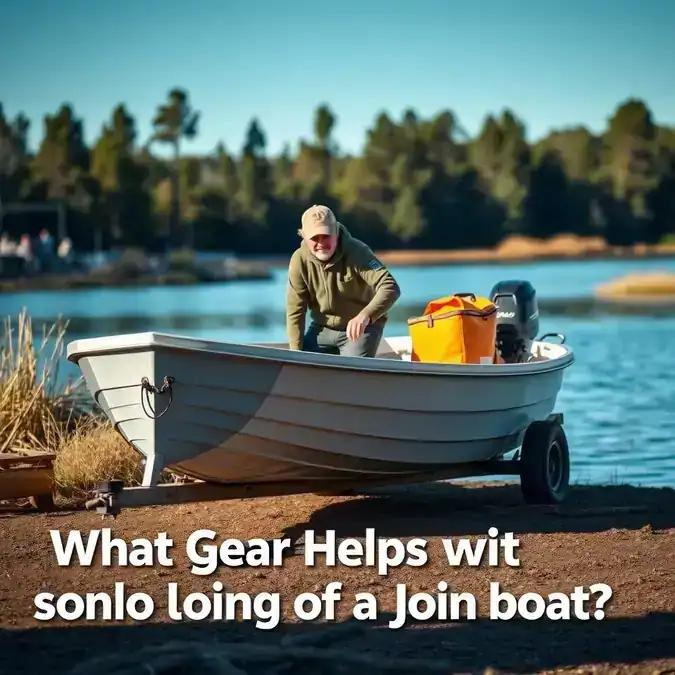
I was struggling with loading my 14-foot jon boat onto the trailer by myself after a long day of fishing — wet, tired, and fighting the wind. Then I discovered the right combination of a roller bunk system, a hand-crank winch, and a simple bow guide that changed everything. If you’ve ever wrestled a slippery aluminum hull up a steep ramp alone, you know the frustration. This guide covers every piece of gear that makes solo loading safe, fast, and repeatable, plus the setup tips I’ve learned through years of trial and error.
- Roller bunks and keel rollers reduce friction so the boat slides on with minimal effort.
- A two-speed hand winch with a long strap lets you crank the boat up in low gear, then finish fast.
- Bow guides (post-style or roller) keep the hull centered in crosswinds and current.
- Transom savers and tie-down straps protect the boat and trailer during transport.
- Practice on a calm day first — muscle memory beats improvisation when the ramp is busy.
Key Takeaways

Introduction
Solo loading a jon boat isn’t about strength — it’s about leverage, friction management, and a repeatable system. I’ve launched from muddy creek banks, wind-swept reservoir ramps, and slick concrete at 5 a.m. The gear that works everywhere shares three traits: it centers the boat automatically, it multiplies your pulling force, and it fails safe if something slips. Below I walk through every component, why it matters, how to install it, and the real-world lessons that only come from doing it wrong a few times first.
Why Use What Gear Helps with Solo Loading of a Jon Boat?

Without dedicated gear, you’re pushing a 300–600 pound hull up a 12–15 degree incline while standing on wet algae. That’s a recipe for back injuries, bent trailer frames, and scratched paint. The right equipment transforms a two-person job into a one-person routine you can execute in under five minutes. It also protects your investment — jon boats dent easily when they slide sideways off a bunk. Good gear pays for itself in avoided repairs and saved fishing time.
Benefits of Using What Gear Helps with Solo Loading of a Jon Boat?

- Physical safety: Eliminates heavy lifting and awkward twisting motions that cause back and shoulder injuries.
- Boat protection: Keeps the hull aligned so it never rubs against trailer fenders or frame rails.
- Time savings: Consistent 3–5 minute load times versus 15+ minutes of wrestling.
- Confidence in conditions: Wind, current, and slick ramps become manageable instead of deal-breakers.
- Solo freedom: Fish when you want, not when a buddy can help.
Types of What Gear Helps with Solo Loading of a Jon Boat?
Trailer Bunk Upgrades
Standard carpeted bunks create high friction. Roller bunks (PVC or polyurethane rollers on a steel frame) let the boat glide. Keel rollers support the centerline and prevent the hull from sagging between bunks. Some anglers combine both: rollers on the bottom, carpeted bunks on the sides for lateral stability.
Winch Systems
Two-speed hand winches (typically 1,500–2,500 lb capacity) offer a low gear for breaking stiction and a high gear for quick retrieval. Electric winches (12V) remove all cranking effort but add wiring complexity and a failure point. Strap length matters — 20 feet minimum for long trailers.
Bow Guidance
Post guides (PVC pipe on steel uprights) are cheap and durable. Roller guides spin freely and self-center better in crosswinds. Some trailers mount both: posts for primary alignment, rollers for fine adjustment.
Transom Support
Adjustable transom savers bolt to the trailer frame and cradle the stern. They prevent the boat from bouncing on the bunks during transit, which fatigues rivets and welds over time.
Tie-Down Straps
Ratchet straps (2-inch wide, 3,000 lb working load) secure the bow eye and transom corners. Retractable strap systems mount permanently on the trailer for speed.
Popular Types of What Gear Helps with Solo Loading of a Jon Boat?
Roller Bunk Kits
Brands like CE Smith, Load Rite, and EZ Loader sell bolt-on kits that replace carpeted bunks in an afternoon. Look for UV-stabilized polyurethane rollers with sealed bearings — they last 5+ seasons in saltwater.
Fulton & Dutton-Lainson Two-Speed Winches
Industry standards. The Fulton F2 2500 lb two-speed is my go-to: smooth gear engagement, corrosion-resistant finish, and a comfortable handle grip. Dutton-Lainson’s DL1600 is a budget alternative that still holds up.
V-Style Bow Guides
Centers the bow automatically as you winch. The V-shape funnels the hull centerline. Works best with a keel roller directly below.
Electric Winch Kits (Superwinch, Powerwinch)
Great if you have shoulder issues or load solo 90% of the time. Requires a dedicated marine battery on the trailer or a long jumper cable run from the tow vehicle. Waterproof solenoid and circuit breaker are non-negotiable.
How to Choose What Gear Helps with Solo Loading of a Jon Boat?
Match gear to your boat weight, trailer style, and ramp conditions. A 12-foot 36-inch beam jon boat (≈250 lbs dry) needs less winch capacity than a 16-foot 48-inch beam (≈500 lbs dry plus motor, battery, gear). Measure your trailer frame width — most bunk kits fit 36–48 inch frames. Check ramp angle: steeper ramps demand lower winch gear ratios and more aggressive roller spacing. Budget $300–800 for a complete DIY upgrade; professional install doubles that.
Installation and Setup of What Gear Helps with Solo Loading of a Jon Boat?
- Remove old bunks: Unbolt carpeted bunks. Inspect frame for rust; wire-brush and cold-galvanize any spots.
- Mount roller bunks: Position rollers so the keel roller aligns with the hull centerline. Space side rollers to support the chine, not the flat bottom. Use Grade 5 bolts with nylon lock nuts.
- Install winch: Mount on the winch stand so the strap pulls parallel to the trailer frame. Angle causes binding. Grease gears annually.
- Attach bow guides: Set posts/rollers 2–3 inches wider than the bow at the waterline. Too tight = scraping; too loose = no centering.
- Add transom saver: Adjust height so the transom sits level when the boat is fully on the trailer. Tighten lock nuts with a wrench, not an impact gun.
- Test load empty: Winch the empty boat on and off three times. Watch for binding, misalignment, or strap rub. Adjust before the first real launch.
Tips for Using What Gear Helps with Solo Loading of a Jon Boat? Effectively
- Spray bunk rollers with silicone spray monthly — reduces stick-slip on hot days.
- Keep a 4-foot section of PVC pipe in the truck. If a roller jams, slide the pipe over it as a temporary sleeve.
- Pre-set the winch strap hook in the bow eye before backing down the ramp. Saves 30 seconds and cold fingers.
- Use a bow line tied to the trailer winch stand. When the boat floats free, you can guide it straight without chasing it.
- Load at idle speed. Power-loading erodes the ramp and can suck the trailer off the blocks.
How It Works for Me
My routine: back the trailer until the fenders are just submerged. Hop in the boat, idle to the trailer, hook the winch strap. Crank low gear until the keel hits the roller, then high gear the rest of the way. Bow guides center it automatically. One ratchet strap on the bow eye, two on the transom corners. Transom saver locked. Five minutes, zero sweat. The first time I did it solo in a 15 mph crosswind, I realized the bow guides were doing 80% of the work — I just steered.
What I Like
- Roller bunks make the boat feel weightless compared to carpet.
- Two-speed winch low gear breaks the initial suction effortlessly.
- V-style bow guides work even when I approach crooked.
- Transom saver eliminates the “thunk-thunk” on rough roads.
- Retractable ratchet straps stay tidy and deploy in seconds.
What Could Be Better
- Roller bunks collect sand and grit — need rinsing after saltwater use.
- Electric winch solenoids corrode if not dielectric-greased religiously.
- PVC bow guide posts crack after 3–4 winters in freeze-thaw cycles. Aluminum posts last longer.
- Long winch straps can tangle if not spooled neatly. A strap keeper helps.
My Personal Experience
I started with a 12-foot Tracker Grizzly on a galvanized trailer with carpet bunks and a single-speed winch. Loading solo meant wading waist-deep, pushing, slipping, cursing. Upgraded to roller bunks and a Fulton two-speed — night and difference. Later added V-guides after a windy day at Lake Texoma pushed the bow into the fender. The transom saver came last, after I noticed stress cracks around the transom rivets from highway bounce. Each upgrade solved a specific pain point. Now I launch alone at 5 a.m. in the dark and trust the system completely.
Recommendation
If you’re building from scratch, prioritize in this order: roller bunks → two-speed winch → bow guides → transom saver → retractable straps. Skip the electric winch unless you have a physical limitation — the hand crank is reliable, cheap, and never dies. Buy marine-grade hardware (Grade 5 bolts, stainless fasteners) once so you don’t redo it.
How to Use What Gear Helps with Solo Loading of a Jon Boat? Effectively
Practice the full sequence on a quiet weekday. Time each step: back down, hook up, winch, secure. Identify bottlenecks. Mine was fumbling the winch hook with cold wet hands — solved by leaving the hook pre-clipped to the bow eye. Develop a checklist: strap hooked, guides clear, transom saver pinned, tie-downs tight. Say it out loud until it’s automatic. That’s the system that works when you’re tired, cold, and the ramp is crowded.
What Gear Helps with Solo Loading of a Jon Boat? Alternatives
If roller bunks exceed your budget, consider DIY PVC pipe rollers — schedule 40 pipe over the existing bunk boards, secured with U-bolts. Not as smooth, but 80% of the benefit for 20% of the cost. For winches, a come-along hand winch can substitute in a pinch, though it’s slower. Bow guide alternative: pool noodles slit and zip-tied to trailer uprights — surprisingly effective for calm conditions.
My Personal Recommendation
For most jon boat owners, the sweet spot is the CE Smith Roller Bunk Kit + Fulton F2 Two-Speed Winch + V-Style Bow Guides. This combo handles boats up to 16 feet, installs in a weekend, and costs under $600 total. It’s the setup I run and the one I’d buy again. Check current pricing and availability here — your back will thank you next season.
Quick Comparison Table
| Feature | Roller Bunks + Hand Winch | Roller Bunks + Electric Winch | Carpet Bunks + Come-Along |
|---|---|---|---|
| Key Benefit | Reliable, low maintenance, full control | Zero cranking effort, great for injuries | Lowest upfront cost |
| Price Range | $400–$700 | $700–$1,200 | $100–$250 |
| Best For | Most solo anglers, all conditions | Shoulder/back issues, frequent solo loads | Occasional use, tight budget |
Conclusion
Solo loading a jon boat isn’t a feat of strength — it’s a system you build once and trust forever. Roller bunks, a two-speed winch, and bow guides form the core. Add a transom saver and retractable straps, and you’ve got a launch routine that works in wind, current, darkness, and fatigue. I’ve fished alone for 20 years because this gear exists. Pick your components, install them carefully, practice until it’s boring. Then go catch fish while the crowd waits for a partner.
FAQs
What is the best gear for solo loading a jon boat?
Roller bunks, a two-speed hand winch, and V-style bow guides form the most reliable core system for most jon boats up to 16 feet.
How much does solo loading gear for a jon boat cost?
A complete DIY upgrade runs $400–$800 depending on trailer size and component quality. Professional installation adds $300–$500.
Can I solo load a jon boat without roller bunks?
Yes, but it’s significantly harder. Carpet bunks create high friction; you’ll need a stronger winch and more physical effort. PVC pipe sleeves over existing bunks are a low-cost compromise.
Do I need an electric winch for solo loading?
No. A quality two-speed hand winch handles 95% of jon boats. Electric winches add wiring complexity and a failure point; reserve them for physical limitations.
How do I keep my jon boat centered on the trailer in crosswind?
V-style bow guides combined with a keel roller center the hull automatically as you winch. Post guides work but require straighter approach.
What maintenance does solo loading gear need?
Rinse rollers after saltwater use, spray silicone monthly, grease winch gears annually, inspect straps for UV damage, check bolt torque each season.