
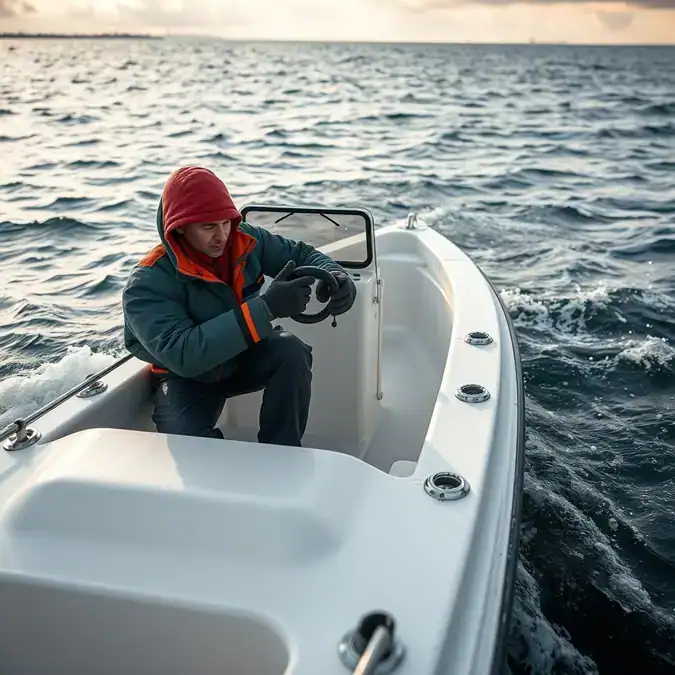
Storm Safety on a Small Boat: What You Need to Know Before You Go

Have you ever watched dark clouds roll in fast while you are miles from shore? That sinking feeling in your gut is real. Storm safety on a small boat is not just a topic for books. It is a skill set that keeps you and your crew alive. This guide breaks down the gear, the habits, and the hard choices you face when the weather turns mean.
Why Small Boats Face Big Risks
Small boats sit low in the water. They have less freeboard. They lack the mass to punch through big chop. A two-foot wave is a splash on a ship. On a 16-foot skiff, it can swamp you. Do you know your boat’s limits? Most of us learn them the hard way.
Wind hits a small hull hard. A 25-knot gust can push you off course in seconds. Rain cuts visibility to near zero. Lightning seeks the tallest thing around — often your mast or antenna. Every factor compounds the others. The smart move is respect, not bravado.
Read the Sky Before You Leave the Dock
What Clouds Tell You
Tall, puffy clouds building fast? That is convection. It means rising air, instability, and likely thunderstorms. Flat, gray sheets lowering? That is a warm front. Steady rain and dropping visibility follow. A sudden wind shift with a temperature drop? Cold front. Expect gusts, heavy rain, and maybe hail.
Tools That Fit in a Pocket
A handheld VHF with weather channels is cheap insurance. A phone app with radar overlay works if you have signal. But the best tool is your eyes. Scan 360 degrees every 15 minutes. Note cloud movement, color, and speed. If the horizon darkens, head in.
Essential Gear for Storm Safety on a Small Boat
You do not need a warehouse of equipment. You need the right few things, maintained and reachable. Here is a practical breakdown.
| Item | Why It Matters | Check Frequency |
|---|---|---|
| USCG-approved life jackets (one per person, worn) | Keeps you afloat if you go overboard or capsize | Every trip |
| Handheld VHF radio with DSC | Call for help, receive weather alerts | Monthly battery check |
| Bilge pump (manual and electric) | Removes water fast | Before each launch |
| Sea anchor or drogue | Keeps bow into waves if engine fails | Annual inspection |
| Waterproof flashlight or headlamp | Signal, navigate, work in dark | Monthly battery check |
| First aid kit, marine grade | Treat cuts, stings, hypothermia | Seasonal restock |
| Emergency position indicating radio beacon (EPIRB) or PLB | Satellite distress signal with GPS | Annual test, battery per maker |
Do you wear your life jacket? Most drownings happen to boaters who had one aboard but not on. Put it on before you leave the dock. No excuses.
When the Storm Hits: Step-by-Step Actions
1. Assess and Communicate
Key the mic. “Securité, securité, securité. This is [boat name], [location], caught in sudden storm. [Number] souls aboard. Seeking shelter at [nearest harbor].” Say it slow. Say it clear. Repeat once.
2. Reduce Speed, Keep Steerage
Do not stop. A dead boat turns beam-to the waves. That invites a rollover. Throttle back to bare steerage way — just enough to hold the bow into the chop. Quarter the waves if the bow slams too hard. Find the angle that feels stable.
3. Secure Everything
Loose gear becomes missiles. Stow rods, coolers, tackle boxes. Close hatches, ports, and curtains. Pump the bilge. Turn on navigation lights. If you have a dodger or bimini, drop it. Windage capsizes small boats fast.
4. Head for the Nearest Safe Haven
Not your home marina. The closest protected water. A lee shore, a cove, a river mouth. Avoid inlets with breaking bars. The entrance may be worse than open water. If you must ride it out, deploy the sea anchor off the bow. Pay out plenty of rode. Let the boat ride head-to-wind.
Lightning: The Invisible Killer
Lightning strikes the highest point. On a small boat, that is you, the mast, or the antenna. Can you prevent a strike? No. Can you survive one? Yes, with prep.
- Lower antennas, outriggers, fishing rods.
- Stay low in the cockpit or cabin.
- Do not touch metal steering wheels, rails, or electronics.
- Disconnect power leads to radios and GPS if time allows.
- If struck, check for fire, hull damage, and crew injuries first.
A friend of mine took a hit on his 22-foot center console. Fried every electronic. Blown a hole in the hull the size of a fist. He lived because he had a wooden spoon taped to the steering wheel — he steered with that. Improvise. Survive.
Cold Water Kills Fast
Even in summer, northern waters run 55 degrees or colder. Cold shock makes you gasp. You inhale water. One minute of panic. Ten minutes of lost muscle control. One hour before hypothermia knocks you out. A life jacket buys you that hour. A ditch bag with a thermal blanket buys more.
Do you have a reboarding plan? A swim ladder? A rope with a loop? Practice it calm. You will not figure it out shaking in 50-degree water.
After the Storm: Check Everything
The danger does not end when the sun comes out. Hull stress cracks hide under gel coat. Through-hull fittings loosen. Bilge pumps clog with debris. Electrical shorts smolder. Walk the boat. Smell for burning. Look for water where it should not be. Start the engine. Test every system. File a float plan update so folks know you are safe.
Frequently Asked Questions About Storm Safety on a Small Boat
What is the single most important thing for storm safety on a small boat?
Wear a life jacket. It keeps you alive long enough to use every other skill and tool.
Can I outrun a storm in my small boat?
Rarely. Storms move 20 to 40 knots. Most small boats cruise 20 to 30. The math fails. Seek shelter early instead.
Should I drop anchor in a storm?
Only in good holding ground with plenty of scope and a sea anchor off the bow. A stern anchor in waves can swamp you. A bow anchor alone may let you yaw and capsize.
How do I know if lightning is close?
Count seconds between flash and thunder. Five seconds equals one mile. Under 10 miles, take full precautions. Under 5 miles, you are in the strike zone.
What goes in a ditch bag for a small boat?
EPIRB or PLB, handheld VHF, water, thermal blankets, first aid, flashlight, knife, whistle, mirror, and a small waterproof GPS. Keep it clipped to you or the grab rail.
Final Thoughts
Storms do not care about your experience level. They care about physics. Respect the water. Watch the sky. Carry the gear. Wear the jacket. Make the call to head in early. The fish will be there tomorrow. You will too — if you choose right today.