
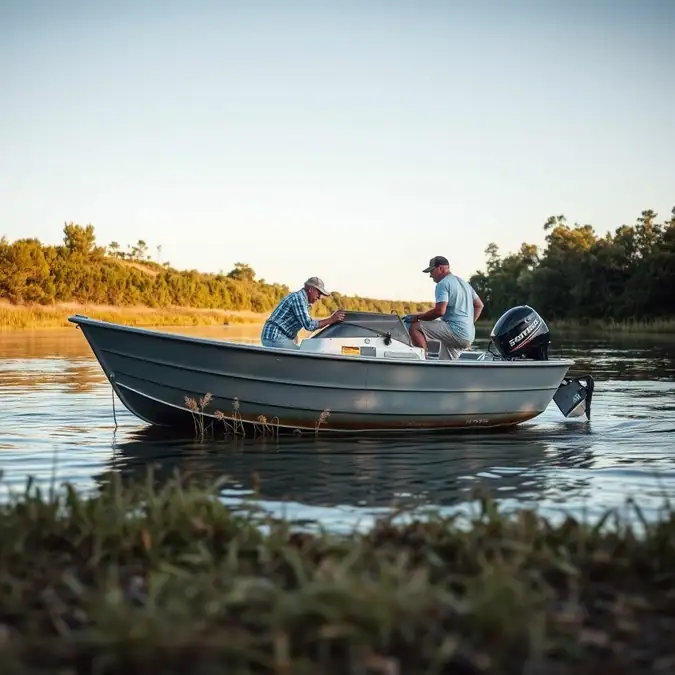
Signs of Overloading a Jon Boat: What to Watch For

Ever felt your jon boat sit low in the water? You might be loading too much weight. Overloading a jon boat can be dangerous. This guide shows the clear signs to look for. Knowing them keeps you safe on the water.
Signs of Overloading a Jon Boat: Why It Matters
A jon boat is built for light loads. Too much weight changes how it handles. It can sink, tip, or stall. Recognizing trouble early saves lives. Let’s look at the most common signs.
Signs of Overloading a Jon Boat: Low Waterline
First, check where the water meets the hull. If the waterline is near the gunwales, the boat is low. A healthy jon boat sits with a few inches of freeboard. When the water reaches the edge, you have too much weight. This is the easiest sign to see.
Signs of Overloading a Jon Boat: Slow Speed
Next, notice how the boat moves. With too much load, the motor struggles. You will see slower speeds even at full throttle. The boat may feel sluggish when you try to plane. If it takes longer to get up on plane, weight is likely the cause.
Signs of Overloading a Jon Boat: Hard Steering
Steering should feel light and responsive. An overloaded jon boat pushes back on the wheel. You may need to use more force to turn. The boat may also drift off course. Hard steering is a clear warning that the load is too high.
Signs of Overloading a Jon Boat: Water Inside
Water splashing over the sides is another sign. When the boat sits low, waves can wash over the gunwales. You might see water pooling in the floor. This not only adds weight but also creates a slip hazard. Keep the deck dry and watch for leaks.
Signs of Overloading a Jon Boat: Motor Strain
Listen to the motor. An overloaded boat makes the engine work harder. You may hear higher RPMs without more speed. The motor may overheat or sputter. If the motor sounds strained, reduce the load right away.
Signs of Overloading a Jon Boat: Uneven Trim
Look at the boat from the side. One end may sit lower than the other. This uneven trim shows poor weight distribution. Even if total weight is okay, bad balance can cause tilt. Shift gear to level the boat before you go.
Signs of Overloading a Jon Boat: Reduced Stability
Finally, feel how the boat rocks. An overloaded jon boat feels tippy. It may roll more when you move or when wakes hit. You might feel less confident standing or walking. If the boat feels unstable, check your load immediately.
Simple Table: Load Limits vs Warning Signs
| Load Level | What You See | What You Feel |
|---|---|---|
| Under limit | Good freeboard, dry deck | Easy steering, smooth ride |
| At limit | Waterline near edge | Slight motor strain |
| Over limit | Water over gunwales, low trim | Hard steering, slow speed, tippy feel |
How to Check Your Jon Boat Load
Start by looking at the capacity plate. It is usually near the transom. It shows the max weight for people and gear. Add up everyone’s weight plus all equipment. Keep the total under that number. If you do not have a plate, use the rule of thumb: no more than 500 pounds total for a small jon boat.
Practical Tips to Avoid Overloading
Pack light. Bring only what you need. Use dry bags to keep gear from soaking up water. Distribute weight evenly from side to side and front to back. Check the waterline before you leave the shore. If you see any of the signs above, unload some gear right away.
What to Do If You Spot the Signs
First, stop the boat in a safe spot. Shift passengers and gear to balance the load. Remove non‑essential items if the boat is still low. Check the motor for overheating. Once the boat rides higher and feels steady, you can continue.
Real‑World Example
Last summer, a friend loaded his jon boat with two coolers, a tent, and four anglers. The waterline reached the gunwales. The boat slowed and felt wobbly. He removed one cooler and moved the tent to the middle. The boat rose, steered easy, and the day went fine.
Staying Safe on the Water
Overloading a jon boat is preventable. Use the signs we discussed as your checklist. Make it a habit to glance at the waterline before each trip. Keep the motor happy and the boat level. When in doubt, unload.
Frequently Asked Questions About Signs of Overloading a Jon Boat
What is the first sign of overloading a jon boat?
The first sign is a low waterline. If the water reaches the edge of the boat, you have too much weight.
Can an overloaded jon boat still plane?
It may try, but it will be slow and the motor will strain. Often it will not get on plane at all.
How often should I check my boat’s load?
Check every time you load gear and before you leave the shore. A quick look at the waterline takes only seconds.
What should I do if water comes over the sides?
Stop, shift weight to balance, and remove some gear. Water over the sides means the boat is too low.
Is it safe to add extra flotation to carry more weight?
Adding flotation can help, but it does not change the boat’s rated capacity. Always respect the manufacturer’s limit.