
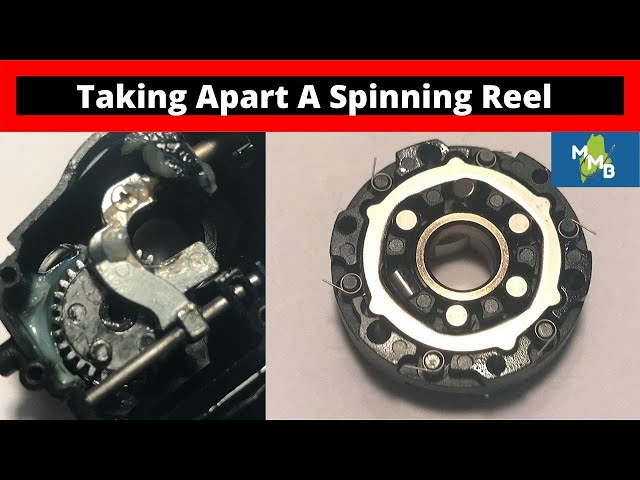
How to Take Apart a Spinning Reel for Cleaning and Maintenance
Learning how to take apart a spinning reel lets you remove dirt, sand, and old lubricant that can cause stiffness, poor casting distance, or premature wear. This guide walks you through each step, from preparing your workspace to reassembling the reel so it spins smoothly again. Expect the process to take about 30 to 45 minutes for a beginner, with a difficulty level rated as easy to moderate.
Before You Start
Having the right tools and a clean area prevents lost parts and protects the reel’s finish. Work indoors or in a sheltered spot where wind won’t blow small screws away.
| Tool / Material | Purpose |
|---|---|
| Small flat‑head screwdriver (precision) | Remove side plate screws and spool clip |
| Phillips screwdriver (size #0 or #1) | Handle any cross‑head screws on the reel |
| Plastic pry tool or old credit card | Gently lift seals without scratching |
| Microfiber cloths | Wipe parts and dry after cleaning |
| Isopropyl alcohol (90%+) | Dissolve old grease and grime |
| Reel‑specific grease (lightweight) | Lubricate gears and bearings |
| Reel‑specific oil (low viscosity) | Lubricate spool shaft and bail pivot |
| Small parts tray or magnetic mat | Keep screws, washers, and springs organized |
| Soft brush (toothbrush size) | Remove sand from tight crevices |
Check that the reel is free of line and that the drag is set to its lowest setting before you begin. If you notice any cracked housing, corroded screws, or missing parts, stop and consider professional service.
Step‑by‑Step Guide
-
Remove the spool. Hold the reel steady and turn the spool counter‑clockwise until it releases from the shaft. Some models have a small retaining clip; use the flat‑head screwdriver to lift it gently. Place the spool in the parts tray.
-
Detach the side plate. Locate the screws on the opposite side of the handle (usually two or three). Unscrew them with the appropriate screwdriver and keep them together. Lift the side plate away; if it sticks, slide the plastic pry tool along the seam to break any seal.
-
Expose the gear train. With the side plate off, you will see the main gear, pinion gear, and bearings. Note the orientation of any washers or spacers before removing them.
-
Remove the pinion gear and bearings. The pinion gear sits on the spool shaft; it may slide off easily or be held by a small C‑clip. Use the screwdriver to release the clip if present, then slide the pinion off. Bearings can be lifted with the pry tool; avoid using metal tools that could scratch the races.
-
Clean each component. Dip the microfiber cloth in isopropyl alcohol and wipe the spool, side plate, gears, bearings, and shaft. Use the soft brush to dislodge sand from gear teeth and bearing housings. Let all parts air dry for a few minutes.
-
Inspect for wear. Look for pitted gears, worn bearing surfaces, or deformed washers. If any part shows significant damage, replace it before re‑lubricating.
-
Lubricate the gears and bearings. Apply a tiny dab of reel‑specific grease to the teeth of the main and pinion gears—just enough to coat the surfaces without excess. Place a single drop of reel‑specific oil on each bearing’s inner race.
-
Reassemble the gear train. Return the bearings to their seats, then slide the pinion gear back onto the shaft, securing any C‑clip. Replace washers and spacers exactly as they were.
-
Reattach the side plate. Align the plate with the reel body, gently press it into place, and reinstall the screws. Tighten them snugly but do not over‑torque; overtightening can strip the threads or deform the plate.
-
Replace the spool. Slide the spool onto the shaft, ensuring it seats fully. If your model uses a retaining clip, snap it back into position. Turn the spool clockwise a few turns to verify smooth rotation.
-
Test the drag and bail. Turn the handle; the reel should spin freely with minimal resistance. Engage the bail and pull line to confirm the drag clicks and releases as expected.
Common Mistakes & Troubleshooting
-
Problem: Spool feels gritty after reassembly.
Likely Cause: Residual sand or old grease in the gear teeth.
Practical Check: Spin the spool by hand; listen for scraping.
Safe Next Action: Disassemble again, clean the gear teeth with a brush and alcohol, then re‑lubricate. -
Problem: Handle sticks or drag is uneven.
Likely Cause: Over‑greased gears or mis‑aligned washers.
Practical Check: Remove the side plate and inspect gear contact.
Safe Next Action: Wipe away excess grease, ensure washers sit flat, and re‑assemble. -
Problem: Screw holes are stripped.
Likely Cause: Using a driver that is too large or applying too much force.
Practical Check: Visual inspection of the screw head and surrounding material.
Safe Next Action: Stop and seek a professional repair; attempting to force a screw can ruin the reel body.
When to Stop
Stop and seek qualified help if you encounter any of the following:
- Cracks or fractures in the reel housing or side plate.
- Corroded or seized screws that refuse to turn despite proper tools.
- Missing or broken internal parts such as the anti‑reverse pawl or bail spring.
- Persistent grinding or binding after thorough cleaning and lubrication.
FAQ
- How often should I take apart my spinning reel for maintenance?
- For casual freshwater use, a full teardown once or twice a year is sufficient. Saltwater anglers should inspect and clean after each trip and perform a full teardown every three to four months.
- Can I use household oil or grease on my reel?
- No. Household lubricants can attract dirt, break down under water, and damage seals. Use products specifically labeled for fishing reels.
- What if I lose a tiny washer or spring?
- Do not reassemble the reel without the missing part. Contact the manufacturer or a reputable tackle shop for a replacement schematic and part.
- Is it necessary to remove the bail during a basic cleaning?
- Generally, the bail can stay attached unless it is corroded or you notice line tangling around the pivot. Removing it adds extra steps and increases the risk of losing small springs.
- How do I know if I’ve applied too much grease?
- If the reel feels sluggish, the handle resists turning, or you see grease squeezing out of the seams after a few turns, you have used too much. Wipe away the excess with a clean cloth.
Final Thoughts
Taking apart a spinning reel is a straightforward process that pays off with smoother casts, longer gear life, and fewer frustrating tangles on the water. By following the steps above, keeping your workspace organized, and using the correct lubricants, you can maintain your reel’s performance season after season. Remember to work slowly, keep track of every small part, and stop immediately if anything looks damaged or out of place.