
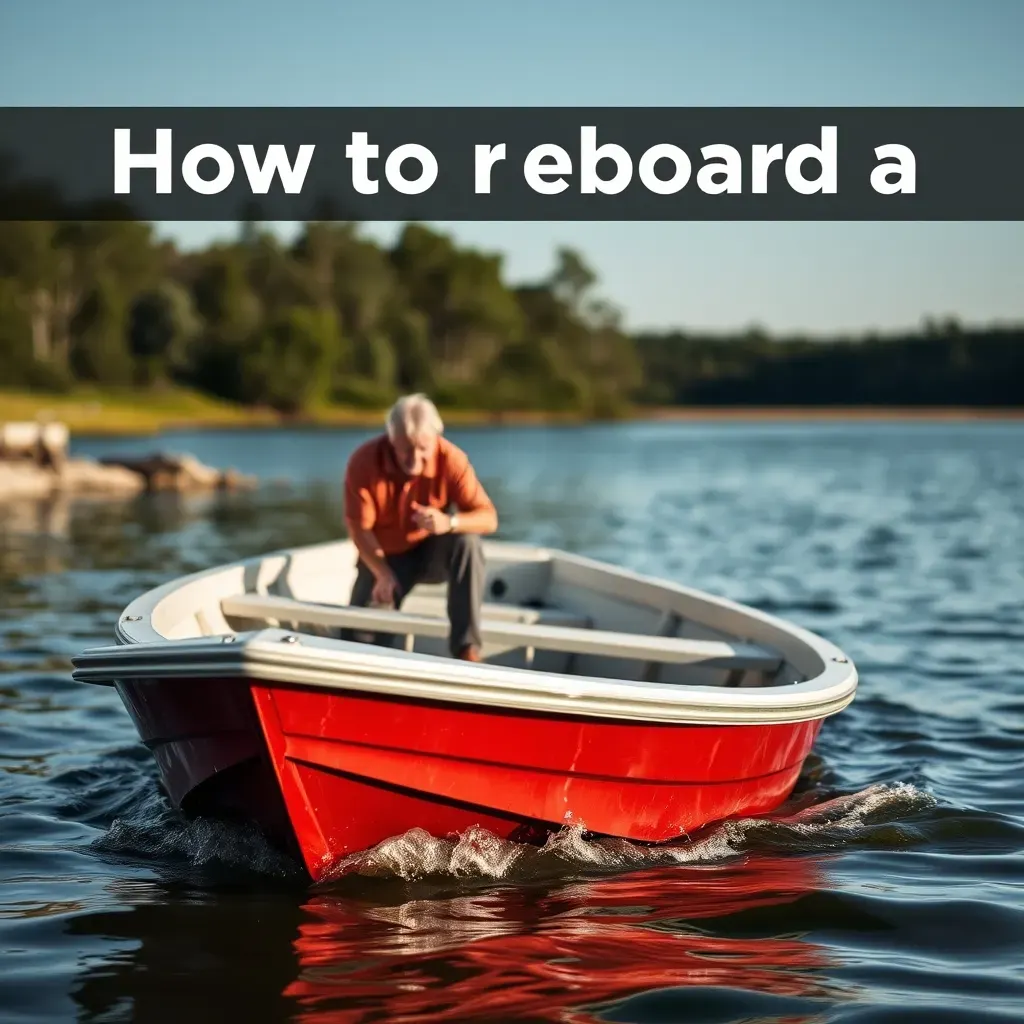
How to Reboard a Jon Boat from Water: Easy Step-by-Step Guide

Before You Start: Tools, Gear & Preparation
Before you try to reboard a jon boat from water, gather the right gear. Having the right items makes the task easier and safer.

| Item / Tool | Purpose | Optional / Required |
|---|---|---|
| Personal Flotation Device (PFD) | Keeps you afloat if you fall | Required |
| Reboarding strap or ladder | Helps you pull up onto the boat | Required |
| Non‑slip shoes | Grip on wet surfaces | Required |
| Whistle | Signal for help | Optional |
| Waterproof flashlight | See in low light | Optional |
| Dry bag for phone | Keeps gear dry | Optional |
Check the weather and water conditions. Calm water is best for practice. If waves are high, wait for a lull or stay with the boat and call for help.
Make sure your PFD is fastened snugly. A loose PFD can slip off when you pull. Do a quick gear check: strap secure, shoes dry, whistle attached.
Captain’s Note: Practice the steps on shore first. Muscle memory builds confidence and cuts panic when you are in the water.
Step 1: Stay Calm and Assess
Stop moving as soon as you hit the water. Take a slow, deep breath. Look at the boat. Notice if it is drifting away or toward shore.

Feel your PFD. Make sure it is snug against your chest. Check for any water in your clothes that could weigh you down.
Ask yourself: Is the boat steady? Can you reach the gunwale with one hand? If the answer is no, wait for a moment.
If the boat is moving, grab a fixed point like a dock line, anchor rope, or a sturdy branch if you are near shore. This gives you a stable reference.
Captain’s Note: Talking to yourself in a calm voice helps lower heart rate. Say “I am safe, I will get back in.”
Step 2: Position Yourself
Turn your body to face the boat side. Keep your back to the water if you can. This lets you see the gunwale clearly.

Place both hands on the gunwale, the top edge of the boat. Keep your elbows slightly bent, not locked.
Your feet should be behind you, pointing down toward the bottom. This stance gives you a strong base to push from.
Feel the boat wobble? If it rocks, wait for a calm moment before you pull. Rushing can tip the boat.
Quick tip: Imagine you are about to do a push‑up against the side of the boat. This mental picture helps you align your body.
Step 3: Grab the Gunwale
Grip the gunwale firmly with both hands. Use your palms, not just your fingers, for a stronger hold.

If the edge is slippery from water or algae, use a reboarding strap. Loop the strap over the gunwale and hold the strap with both hands.
Check for any sharp edges, cracks, or loose fittings. A smooth grip helps you pull up without snagging your skin or gear.
Captain’s Note: Wrap a small piece of waterproof tape around the strap where you hold it. The tape adds texture and stops your hands from slipping.
Take another breath. Feel the boat’s movement. When it is steady, you are ready for the next step.
Step 4: Kick and Pull
Push down with your feet while you pull up with your arms. Think of doing a push‑up in water, using your legs for power.
Your legs give the main lift. Your arms guide the motion and keep your body close to the boat. Keep your elbows tucked in.
Breathe out as you push with your feet. Breathe in as you pull with your arms. This rhythm keeps you steady and prevents gasping.
If you feel stuck, kick harder and pull faster, but keep the motion smooth. Jerking can slip your hands or tip the boat.
Quick tip: Picture yourself trying to get onto a low dock. The same leg‑push, arm‑pull works.
Step 5: Swing Your Legs In
Once your chest is over the gunwale, swing one leg onto the boat. Keep your weight low and centered.
Do not stand up yet. Stay seated on the edge for a moment to test the boat’s stability.
Bring the second leg over in the same smooth motion. Keep your hands on the gunwale until both legs are inside.
Look around. Make sure the boat is still steady and no gear has shifted unexpectedly.
Captain’s Note: If you feel the boat tip, lower your weight back into the water and try again. It is safer to repeat than to fall.
Step 6: Secure Yourself and Gear
Sit down slowly inside the boat. Keep your PFD on at all times while you are aboard.
Check your gear. Make sure nothing fell overboard during the climb. Secure loose items in the boat or in a dry bag.
If you used a strap, store it where it will not trip you or snag on equipment. A neat boat is a safe boat.
Give yourself a quick shake to drain excess water from your clothes and shoes. You are now back on board and ready to go.
Take a moment to relax, check your surroundings, and enjoy the rest of your trip.
Common Mistakes & Troubleshooting
Problem: The boat drifts away while you try to climb. Cause: Not holding the boat or a water current pulling it. Quick Fix: Grab a dock line, anchor rope, or ask a buddy to hold the boat steady.
Problem: Your hands slip on the gunwale. Cause: Wet hands, algae, or a slick surface. Quick Fix: Use a reboarding strap or wipe your hands on your shirt or PFD.
Problem: You get stuck halfway up. Cause: Not using your legs enough; relying only on arm strength. Quick Fix: Push hard with your feet and pull with your arms, think of a squat jump.
Problem: You panic and splash, making the boat rock. Cause: Fear of water or lack of practice. Quick Fix: Take a deep breath, focus on the steps, and practice the moves on shore first.
Frequently Asked Questions About How to Reboard a Jon Boat from Water
Q: How long does it take to reboard a jon boat from water?
A: Most people can do it in under two minutes if they stay calm and use the steps.
Q: Do I need a ladder or strap to get back in?
A: A ladder or strap makes it easier, but you can use the gunwale if you are strong and the boat is steady.
Q: What should I wear when practicing reboarding?
A: Wear a PFD, non‑slip shoes, and clothes that let you move freely.
Q: Is it safe to reboard in rough water?
A: It is harder and riskier. Wait for calmer water or stay with the boat and call for help if needed.
Final Thoughts
Getting back into a jon boat from the water is a skill every boater should know. With the right gear, calm mind, and the six steps above, you can climb aboard fast and safe. Practice the moves on shore, keep your PFD on, and always check your boat before you head out. Now go enjoy the water with confidence.
1 thought on “how to reboard a jon boat from water: 5 Tips”