
Houseboat vs Boathouse: What Is the Actual Difference?
People mix up the words houseboat and boathouse all the time. One is a place to live on the water. The other is a place to keep a boat. That single fact changes almost everything about cost, rules, taxes, and daily life. Here is a clear, practical breakdown of the houseboat vs boathouse difference so you can tell them apart and choose the right one for your needs.
Quick Answer: Houseboat vs Boathouse
A houseboat is a floating home you can live in. Some move under their own power. A boathouse is a covered structure on or near the water used to shelter a boat. A houseboat is a place to sleep, cook, and relax. A boathouse is a garage for a boat.
| Feature | Houseboat | Boathouse |
|---|---|---|
| Main purpose | Living space on the water | Storing and protecting a boat |
| Moves under power | Often yes (some do not) | No |
| Typical size | 30 to 100+ feet long | Matches the boat it covers |
| Used as a home | Yes | No |
| Common materials | Hull-based or pontoon-based | Pilings, wood, metal, concrete |
| Cost range | Wide range, often cheaper than a house in some areas | Wide range, depends on location and water access |
| Laws and rules | Often treated like a vessel or a home depending on location | Usually governed by waterfront and dock rules |
What Is a Houseboat?
A houseboat is a boat that has been built or changed so it works as a home. It floats, it has living space, and many models can move on the water using their own engine or motor. Others stay in one spot and use a small dinghy or skiff to get to shore.
Houseboats come in many styles. Some look like small cabins on a barge hull. Others look more like pontoon platforms with rooms on top. A few are built on top of modified boat hulls. What they share is this: they are designed first and foremost to be lived in.
How Houseboats Work
Most houseboats float on a flat-bottomed hull or a set of large pontoons. This shape keeps them stable while parked, but it also limits how well they handle rough water. Many houseboats can move slowly between marinas or coves. Some are not meant to move at all and need a tow boat or a tug if they must be relocated.
Inside, a houseboat usually has a kitchen, sleeping areas, a bathroom, and a deck or porch. Power comes from shore hookups, solar panels, or onboard generators. Fresh water is stored in tanks and refilled at a dock. Wastewater is held in holding tanks and pumped out at marina pump-out stations.
Where You Can Live on a Houseboat
Houseboat living is allowed in many places in the United States, but the rules change a lot by state, county, and marina. Common spots for houseboat living include:
- Parts of Florida, especially the Florida Keys and certain bayou areas
- Sausalito, California
- Seattle and the Puget Sound area
- Lake Cumberland in Kentucky
- Parts of the Tennessee River system
- Some private marinas and houseboat rental communities
Always check local rules before you buy or rent a houseboat as a full-time home. Some places allow short visits but do not allow year-round residency on the water.
Why Houseboats Often Cost Less
Houseboats tend to be cheaper than waterfront homes for a few reasons. They usually have less square footage. They often sit in older marinas. Many are older builds. Insurance and slip fees also affect total cost of ownership.
That said, prices vary widely. A small, older houseboat might sell for a modest sum. A newer luxury houseboat on a Florida canal can sell for much more. The price gap comes from age, size, location, and condition.
What Is a Boathouse?
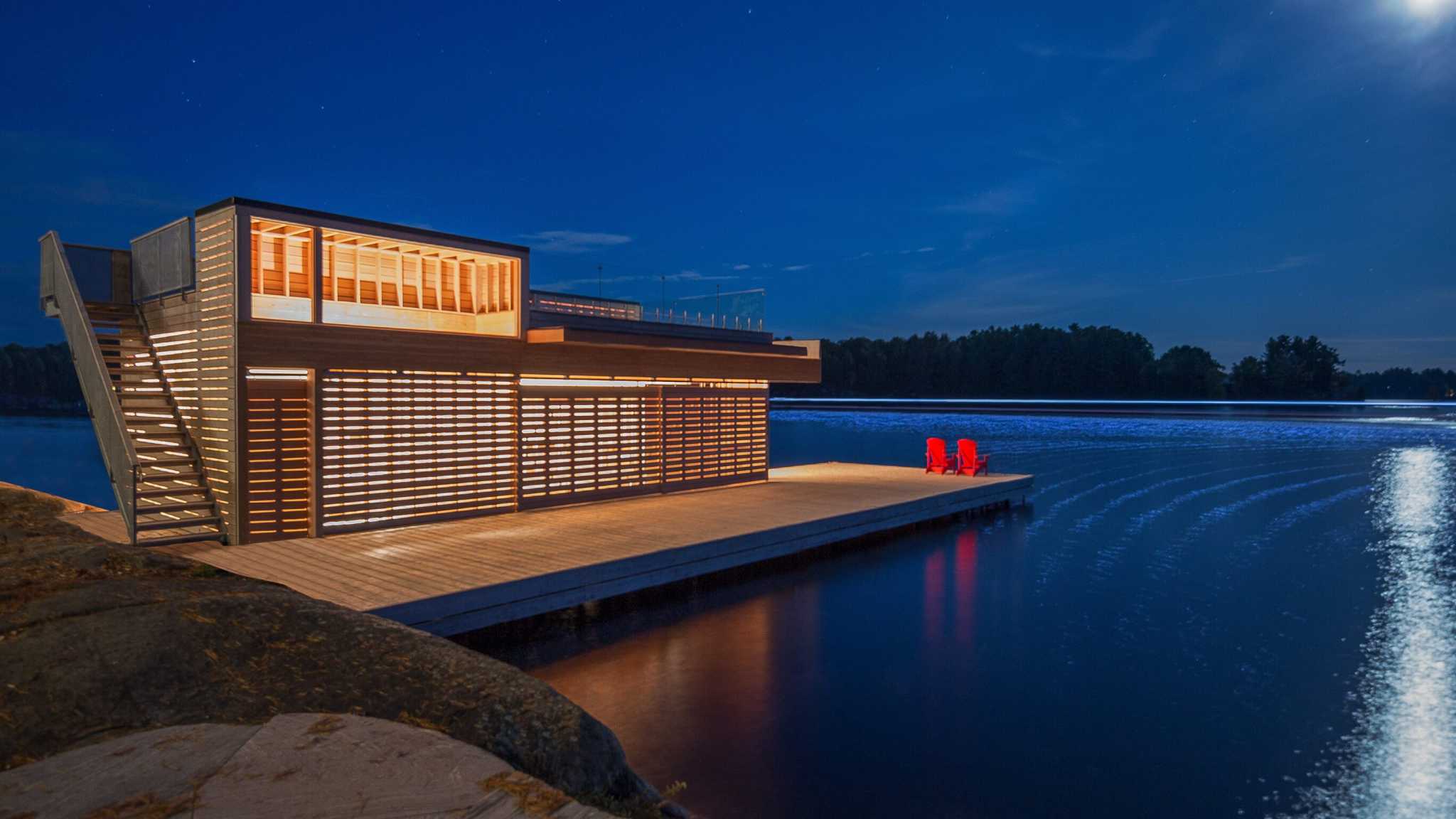
A boathouse is a building on the water’s edge that is used to store and protect a boat. Think of it like a garage, but for boats. It can sit right on the water, on pilings, or as a covered slip attached to a dock.
Some boathouses also include a small room or loft above the boat storage area. That room might be used as a workshop, a hangout space, or in some cases a sleeping spot. Even when a boathouse has living space, its main job is still to shelter the boat.
How Boathouses Work
A boathouse is built over the water using pilings driven into the lake or sea floor. The boat is pulled inside and tied up. This protects the boat from sun, rain, snow, and wind. It also reduces algae and barnacle growth in warm saltwater spots.
Boathouses can also be built as part of a private dock on a lake home. In that case, the boathouse belongs to the owner of the waterfront property and is not a separate floating structure.
Types of Boathouses
- Wet slip boathouse: The boat stays in the water under a roof. Common at private lakes and coastal homes.
- Dry storage boathouse: The boat sits on a cradle and may be lifted out of the water.
- Community boathouse: Found in some marinas or shared waterfront neighborhoods.
- Roof-over-dock boathouse: A simple covered slip attached to an existing pier.
Houseboat vs Boathouse: Key Differences That Matter
The table above gives the short version. Here is what each difference really means in daily life.
Purpose and Daily Use
The biggest houseboat vs boathouse difference is the purpose. A houseboat is meant to be lived in. A boathouse is meant to store a boat. If you wake up in one, it is a houseboat. If you wake up next to one, it is a boathouse.
Movement and Mobility
Many houseboats have engines and can move under their own power, even if only at slow speeds. Boathouses stay in one place. They are fixed structures and cannot move.
Legal and Tax Treatment
Houseboats may be taxed as vessels, as personal property, or as real property depending on the state and how the boat is moored. Boathouses on private land usually count as part of that land. Boathouses on public or leased water may have their own rules. Check local tax codes before you buy.
Insurance and Lending
Houseboat insurance is similar to boat insurance but can include home-like coverage. Some lenders offer boat loans for houseboats but not standard home mortgages. Boathouses attached to private property may be covered by the property’s insurance and mortgage. Standalone boathouses vary more.
Utilities and Off-Grid Life
Houseboats often need their own power, water, and waste systems, especially if they are not docked at a full-service marina. Boathouses usually have no utilities at all, unless the owner adds them for a workshop or guest space.
Maintenance Realities
Both need upkeep. Houseboats need hull care, bilge pumping, and rust or rot checks, just like any boat. Boathouses need roof care, piling checks, and marine growth removal. The work is different but the salt and water are the same.
Common Mistakes to Avoid
- Confusing the two words in listings: A real estate ad that says “boathouse for sale” usually means a structure, not a home. Read carefully.
- Assuming all houseboats can travel: Some cannot. Ask before you buy if you plan to move it.
- Skipping local rule checks: Some marinas do not allow long-term living. Some lakes ban houseboats entirely.
- Ignoring holding tank rules: Many places require pump-outs and ban direct discharge. Plan for this.
- Underestimating weather risk: Both houseboats and boathouses take a beating in storms. Secure both well.
Safety Considerations
Living on a houseboat brings real safety concerns that a normal home does not have. You are on the water, so weather, fire, and evacuation all work differently.
- Keep life jackets and a first aid kit easy to reach.
- Have a plan to leave the boat quickly if fire or storm hits.
- Store fuel and propane in marine-rated, ventilated lockers.
- Test smoke and carbon monoxide alarms often. Marine air is damp, so check battery life.
- For boathouses, make sure the boat is tied off well and the roof is sound. A bad roof over a boat is just as bad as a bad roof over a car.
Houseboat vs Boathouse in Florida
Florida is one of the most common places to see both. The state has many marinas with houseboats and many private waterfront lots with boathouses. In Florida, the houseboat vs boathouse difference also shows up in tax rules. Some Florida counties treat a houseboat as a vehicle with a yearly tag fee. Others treat a permanently moored floating home as real property. Boathouses on private land usually count toward the property’s value.
If you are shopping in Florida, ask the county tax collector how the structure is classified before you buy.
Frequently Asked Questions
Is it called a boathouse or a houseboat?
It depends on what you are talking about. If it is a place to sleep, cook, and live on the water, it is a houseboat. If it is a covered structure that shelters a boat, it is a boathouse.
What is the difference between a houseboat and a boathouse?
A houseboat is a floating home. A boathouse is a covered dock or shed for storing a boat. A houseboat can move (sometimes). A boathouse never moves.
Where in the USA can I live on a houseboat?
Common spots include parts of Florida, Sausalito in California, Seattle in Washington, Lake Cumberland in Kentucky, and select marinas along the Tennessee River. Rules vary by location, so check local laws first.
Why are houseboats so cheap?
Houseboats often cost less than waterfront homes because they have smaller living space, older builds, and limited financing options. Slip fees and insurance costs also affect the real cost of ownership.
Can a boathouse have a living space?
Yes. Many boathouses have a loft or second story used as a hangout or sleeping spot. In most places, this space is still secondary to the boat storage, and living there full time may not be allowed.
What is a floating home?
A floating home is built on a float or barge and stays in one place. Unlike a true houseboat, it usually has no engine and is not meant to move. It is considered a permanent dwelling in many areas.
Final Thoughts
The houseboat vs boathouse difference is simple once you see it side by side. A houseboat is a home on the water. A boathouse is a garage on the water. If you want to live aboard, look into houseboats and floating homes. If you want to protect a boat, look into boathouses. Either way, check the local rules before you commit, plan for weather and maintenance, and keep safety gear easy to reach.
Practical Takeaways
- Match the structure to your goal: home vs storage.
- Confirm local laws for living on the water.
- Budget for slip fees, insurance, and upkeep.
- Plan for storms and quick exits.
- Ask how the structure is taxed before you buy.
Beginner-Level Related Topics
- What is a pontoon boat?
- How do boat slip sizes work?
- What is a holding tank on a boat?
Advanced or Deeper Related Topics
- Marine electrical systems for liveaboards
- Piling and dock foundation standards
- Tax treatment of floating homes by state
Internal Link Placeholders