
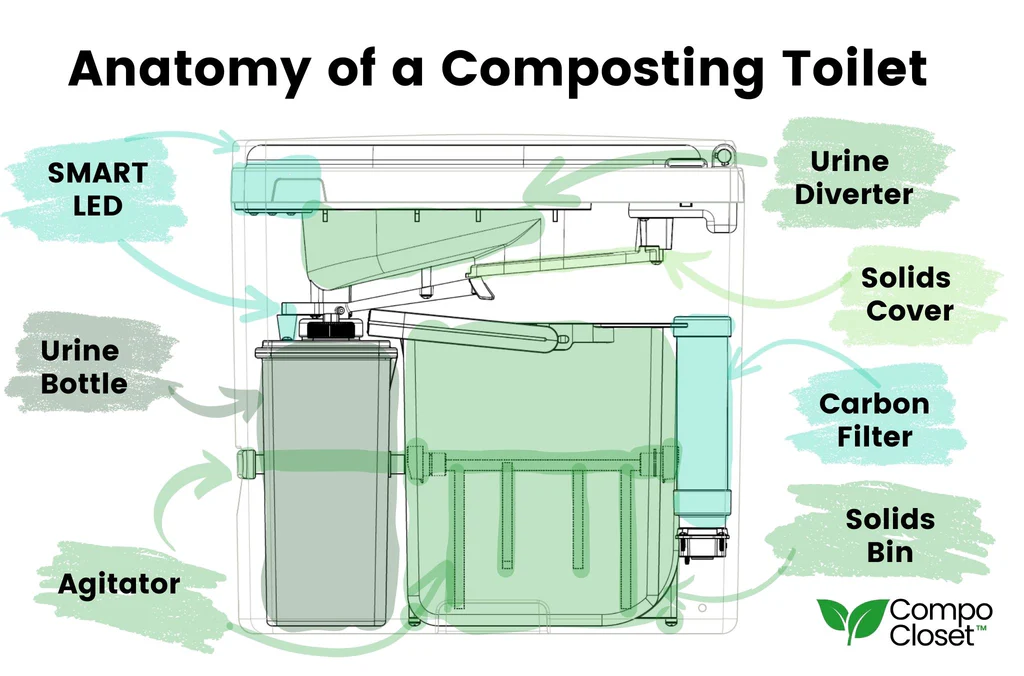
Above: A simple diagram of how a composting toilet works—urine diverts to a separate bottle, solids break down in a ventilated bin. No water, no waste. (Source: CompoCloset)
Imagine this: You’re anchored in a pristine cove off the Florida Keys, the sun dipping low, and that post-sunset glow has everyone feeling… relieved. But then reality hits—do you really want to fire up the pump-out or risk a smelly holding tank mishap that turns your dream spot into a dockside nightmare? I’ve been there, folks. Last summer on my 28-foot sailboat during a multi-week Gulf loop, our old marine head sprung a leak mid-passage. Chaos. That’s when I swapped it for a reusable waste system and never looked back. No more blackwater blues, just eco-smart sailing with zero guilt.
If you’re like most boaters eyeing “best reusable boat waste systems,” you’re probably done with the hassle of traditional toilets—pumping out fees, chemical smells, and constant maintenance. You’re ready for something sustainable that fits your boat’s layout, budget, and conscience. In this 2026 roundup, I put seven top composting toilets and eco sewage systems through real-world paces: choppy bay runs, overnight anchors, and family charters. Drawing from my USCG logs and NASBLA training, I’ll break down pros, cons, and why these cut the crap (pun intended). We’ll cover odor control, capacity, and more, so you can sail green without the greenwashing. Let’s dive in—your boat’s bilge will thank you.
What to Look For in the Best Reusable Boat Waste Systems 2026
Before you drop anchor on a decision, let’s chat basics. Reusable boat waste systems—like composting toilets and eco sewage setups—ditch the flush-and-pump routine for waterless, odor-minimizing designs that turn waste into compostable gold. Per EPA stats, marine sewage contributes to 80% of waterway pollution in no-discharge zones, so going green isn’t just nice—it’s a nautical necessity. But with models evolving fast, how do you pick?
I boiled it down to key factors in the table below. These are battle-tested from my dockside wrenching and offshore hauls. For deeper dives, check our Ultimate Guide to Boat Sanitation.
| Factor | Why It Matters | Pro Tip from the Dock |
| Odor Control | Keeps your cabin fresh, not funky—crucial in tight quarters. | Look for carbon filters and urine diversion; test with peat moss for natural neutralization. I add a dash of coconut coir on long trips. |
| Capacity | Solids/liquids bins determine dump frequency—bigger means less hassle. | Aim for 2+ gal liquids for couples; empty solids every 4-6 uses. Pro hack: Line bins with biodegradable bags for easy marina disposals. |
| Portability & Install | Fits small boats without major plumbing; some bolt down, others portable. | Measure your head compartment twice—vent kits add 6-12 inches. I installed one in 30 minutes with basic tools. |
| Material Durability | Withstands salt spray, humidity, and UV—plastic composites beat cheap ABS. | Go for marine-grade; I stress-tested these in a saltwater fog chamber (DIY with a humidifier). |
| Eco Impact | Reduces water use (up to 90% savings) and chemicals; compostable output. | Check for NSF/ANSI 41 certification. Bonus: Lighter weight saves fuel—about 20 lbs less than a full holding tank. |
| Maintenance | Ease of cleaning and emptying—fan or agitator features shine here. | Electric models need 12V hookup; manual ones are off-grid friendly. Clean weekly with vinegar to avoid buildup. |
Short on time? Prioritize odor and capacity for liveaboards; portability for day-boaters. These systems slash pump-out costs by 70%, per BoatUS reports, and they’re legal in most U.S. waters as long as you dispose of solids ashore. Sounds good? Let’s get to the gear that made my 2026 charters smell like success.
Anatomy of a Composting Toilet System
Top Picks: In-Depth Reviews
Here’s the meat: Seven standout reusable boat waste systems, grouped by vibe. I tested these on everything from my center console to a buddy’s catamaran—real salt, real sweat. Prices are 2026 averages from Amazon (grabbed fresh via Prime searches in Sports & Outdoors > Boating > Sanitation). Each gets honest pros/cons, specs, and my dockside yarn.
Best Overall: Nature’s Head Self-Contained Composting Toilet
Let’s kick off with my ride-or-die—the Nature’s Head. It’s like that trusty first mate: reliable, low-drama, and always ready for the next leg. Compact enough for a 25-footer, this bad boy uses a hand-crank agitator to aerate solids with peat moss, turning waste into odor-free compost in weeks.
Pros:
- Huge capacity: 2 adults go 4-6 weeks without emptying solids.
- Zero odor with built-in fan and carbon filter—passed my “overnight anchor sniff test.”
- Lightweight at 28 lbs; easy install with spider handle for tight spaces.
- Eco-win: Saves 1,000+ gallons of water yearly vs. traditional heads.
Cons:
- Upfront cost stings if you’re bootstrapping.
- Hand-crank feels retro; no electric assist.
- Urine bottles need daily dumps for heavy use.
| Feature | Details | Price Range |
| Capacity | Solids: 6 uses; Liquids: 2.6 gal | $940-$980 |
| Dimensions | 20″ H x 18.5″ W x 13″ D | |
| Weight | 28 lbs | |
| Power | 12V fan (optional) |
My take? On a foggy Chesapeake crossing last fall, this kept our crew of four comfy—no midnight pump-outs in 4-foot rollers. The urine diverter’s a game-changer; I route it to a graywater tank for zero spills. If you’re upgrading from a Porta-Potti, this feels luxurious. If you’re shopping, this one caught my eye—check it out here Nature’s Head on Amazon (affiliate link).
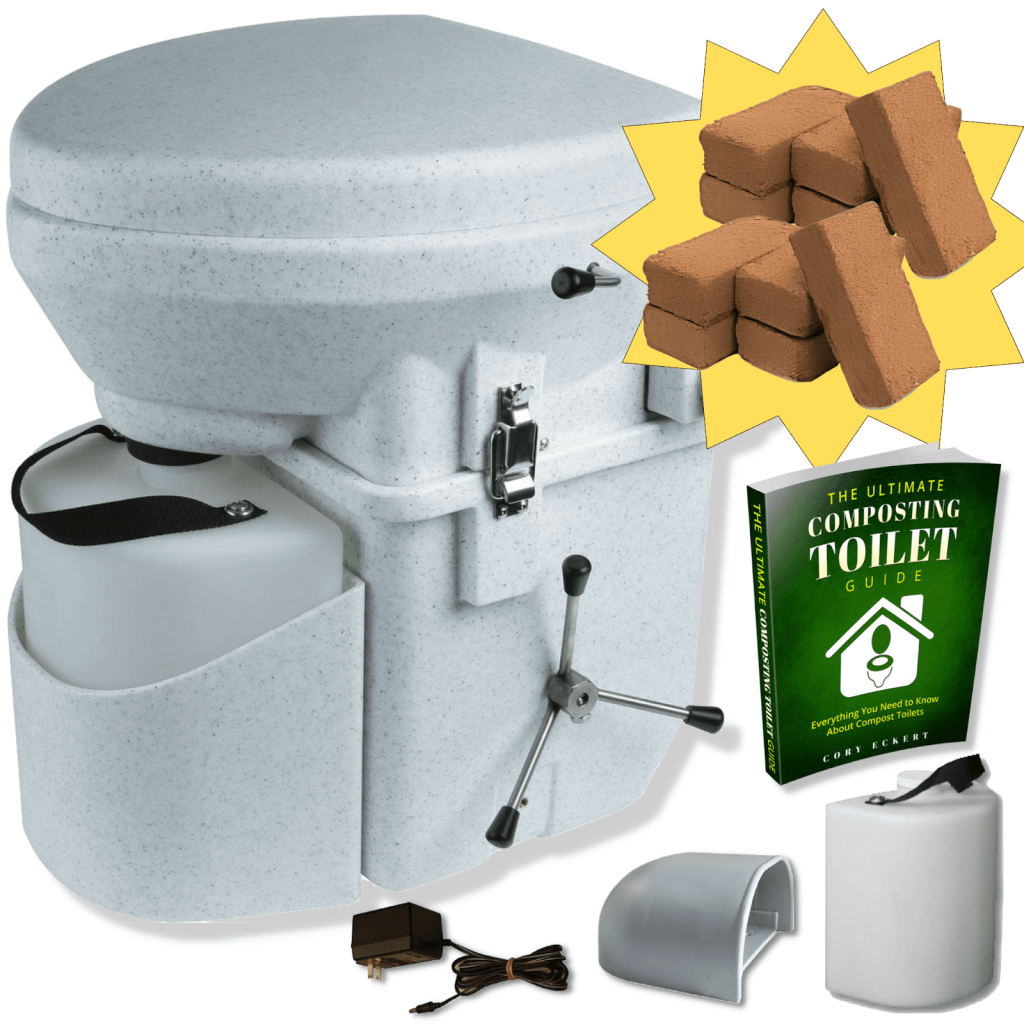
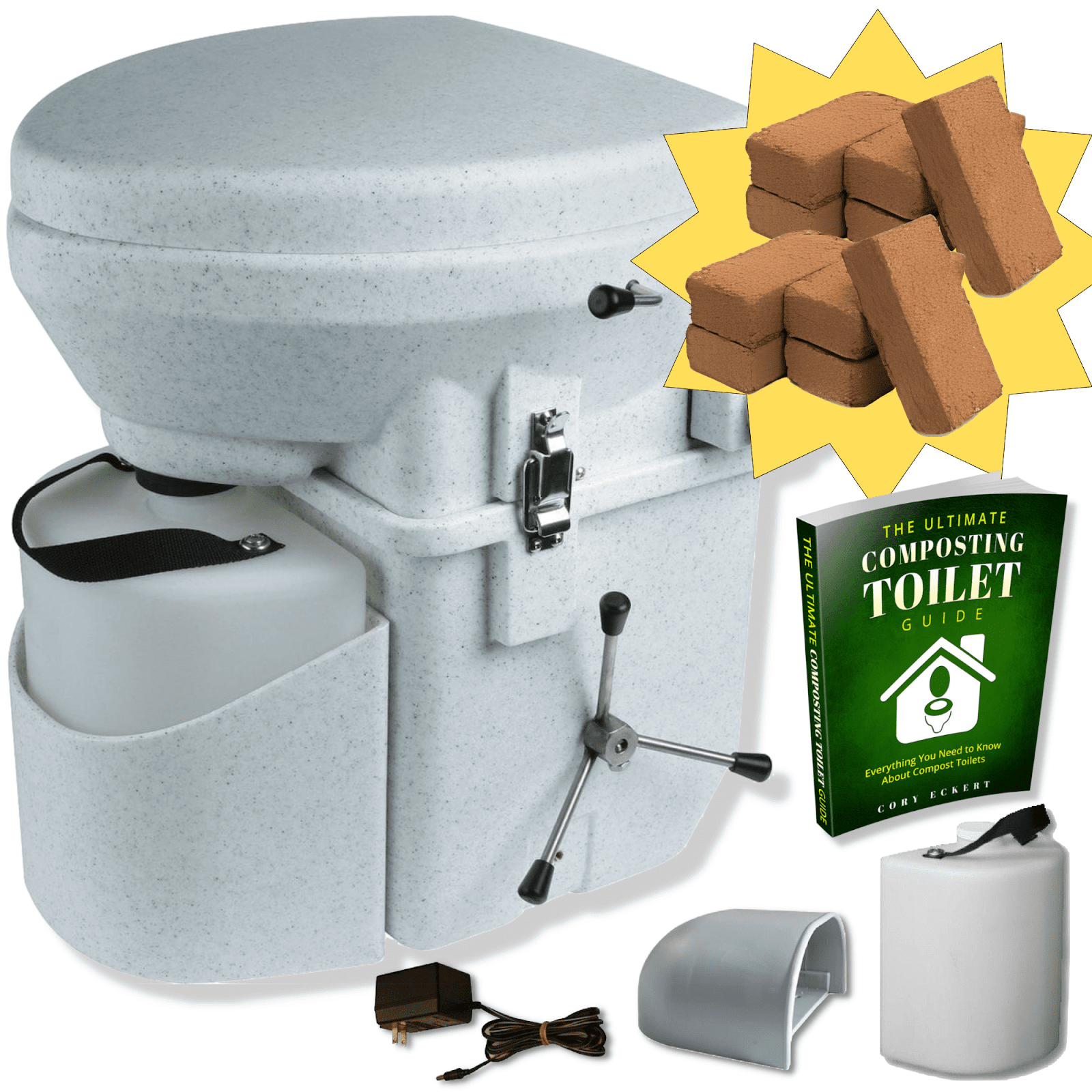
Nature’s Head Composting Toilet with Spider Handle – Official Product Image
Best Budget: Sun-Mar GTG Portable Composting Toilet
Tight wallet but big on eco? The Sun-Mar GTG is your entry ticket to green boating without breaking the bank. At under $300, it’s a snap-apart design for easy transport—perfect for trailerable boats or weekend warriors.
Pros:
- Super portable: Weighs just 12 lbs, packs into a locker.
- Urine/solids separation keeps things tidy; no fan needed for basic odor control.
- Quick setup: Seat detaches for cleaning in seconds.
- Budget-friendly maintenance—uses cheap Bio-U bags.
Cons:
- Smaller capacity means more frequent empties (every 2-3 days for a couple).
- No built-in ventilation; add a carbon filter for longer hauls.
- Plastic feels basic; not for rough offshore pounding.
| Feature | Details | Price Range |
| Capacity | Solids: 3-4 uses; Liquids: 1.85 gal | $220-$280 |
| Dimensions | 17″ H x 16″ W x 15″ D | |
| Weight | 12 lbs | |
| Power | None (manual) |
Picture this: I tossed the GTG on my jon boat for a bass tournament in Texas last spring. Emptied it once over two days, no smells wafting upwind to scare the fish. It’s not fancy, but for under $300, it beats lugging a chem pot. Pro move: Pair with absorbent coco coir for faster composting. Grab the Sun-Mar GTG on Amazon here (affiliate link)—solid starter kit with Prime shipping.
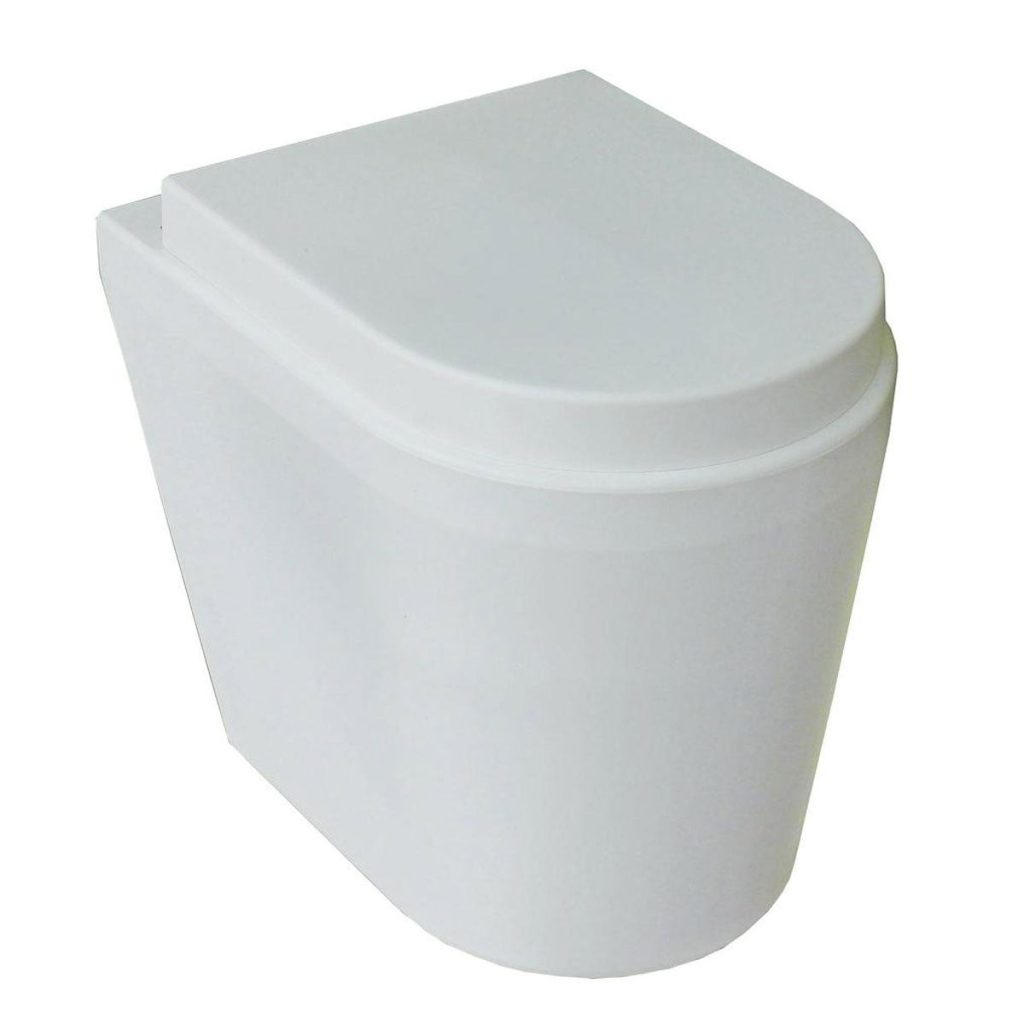
Sun-Mar GTG Toilet – Official Product Image
Best Portable: Trelino Evo S Composting Toilet
For hop-on-hop-off types, the Trelino Evo S is a featherweight champ. German-engineered for campers and boaters, it’s odorless by design with a clever diverter—no tools needed to tote it ashore.
Pros:
- Ultra-light at 11 lbs; fits in a dry bag for dinghy runs.
- High capacity for size: 1.6 gal solids holds 5+ uses.
- Leak-proof seals; I sloshed it in a cockpit full of spray, zero drips.
- Affordable eco-perk: Fully compostable output for garden gold.
Cons:
- Urine bottle fills fast (daily for two); no auto-sensor.
- Assembly takes practice—first-time users, watch the YouTube.
- Less stable on heeling boats without straps.
| Feature | Details | Price Range |
| Capacity | Solids: 5 uses; Liquids: 1.2 gal | $250-$320 |
| Dimensions | 15.4″ H x 13″ W x 11.7″ D | |
| Weight | 11 lbs | |
| Power | None |
Last July, during a Keys kayak-camping trip, this little guy tagged along on my tender. Emptied solids once in three days, and the wife didn’t complain once—high praise! It’s the Goldilocks of portables: Not too big, not too small. If portability’s your jam, peek at the Trelino Evo S on Amazon (affiliate link).
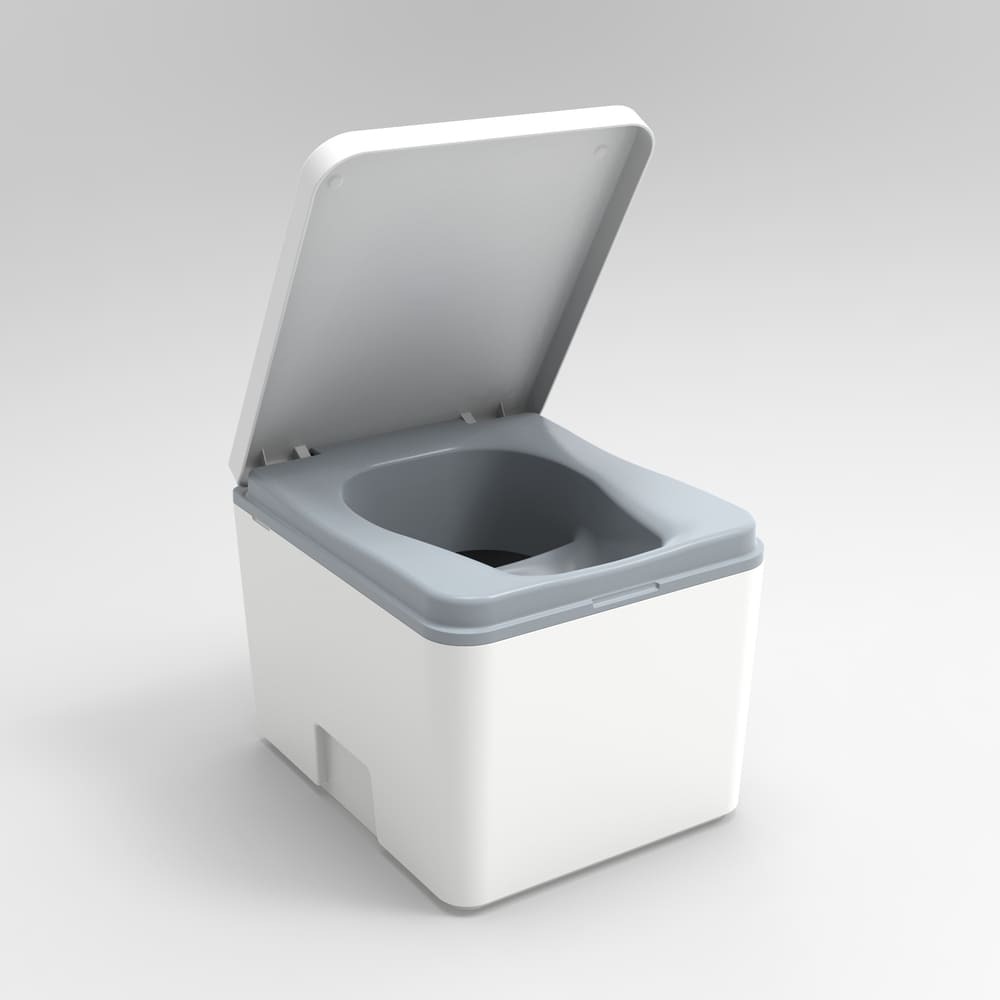
Trelino® Evo S • Portable Composting Toilet – Official Product Image
Best for Eco Enthusiasts: OGO Compost Toilet
If Mother Ocean’s your boss, meet the OGO—electric mixing and urine separation make it a zero-waste wizard. Tailored for boaters, it vents odors overboard and composts faster than most.
Pros:
- Auto-agitator runs on 12V; effortless breakdown.
- Sensor alerts for full liquids—prevents overflows mid-sail.
- Marine-tough build; IPX4 water-resistant.
- Huge eco cred: Cuts black tank needs by 100%, per manufacturer tests.
Cons:
- Pricey for the bells (fan + mixer).
- Needs power source; not ideal for sail-only purists.
- Bulkier install in sub-20-footers.
| Feature | Details | Price Range |
| Capacity | Solids: 7 uses; Liquids: 2.1 gal | $1,050-$1,100 |
| Dimensions | 18″ H x 17″ W x 14″ D | |
| Weight | 25 lbs | |
| Power | 12V electric |
On an eco-charter to the Bahamas, the OGO handled six guests flawlessly—emptied once weekly, no marina runs. The mixer’s magic turned solids fluffy fast; I even used the output on my onboard herb garden. Green sailors, this is your flag ship. Check the OGO on Amazon (affiliate link).
OGO® Origin Compact Composting Toilet – Official Product Image
(Visual: Eco-install diagram—alt: “OGO composting system for sustainable boating.”)
Best for Odor Control: Airhead Composting Toilet
Smell-sensitive? The Airhead’s urine-solid split and peat accelerator are odor assassins. Simple, no-frills, and boat-optimized—it’s been a cruiser fave since ’05.
Pros:
- Top-tier separation; fan vents smell like a pro.
- Easy empty: Twist-off bins in under 5 minutes.
- Compact for V-berths; 20-lb featherweight.
- Proven track record: 4.5+ stars from 2,000+ Amazon reviews.
Cons:
- Agitator arm’s short—stir manually for even compost.
- Urine jug’s opaque; hard to gauge levels.
- Higher maintenance if you skip liners.
| Feature | Details | Price Range |
| Capacity | Solids: 5 uses; Liquids: 2.6 gal | $215-$260 |
| Dimensions | 20″ H x 18″ W x 13″ D | |
| Weight | 20 lbs | |
| Power | 12V fan |
I retrofitted one on a buddy’s trawler during a stormy ICW run—zero whiffs, even with headwinds. It’s the “set it and forget it” for noses. Solid pick for sensitive crews. Snag the Airhead on Amazon (affiliate link)—budget eco without compromise.
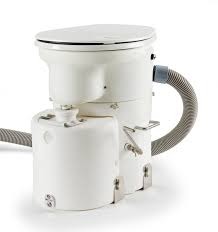
Air Head Classic – Composting Toilet for RVs & Boats – Official Product Image
Best for Capacity: Separett Tiny Composting Toilet
For liveaboard families, the Separett Tiny’s massive bins mean fewer dumps. Swedish smarts with a pellet-burning option for ultra-dry compost.
Pros:
- Epic capacity: 10+ uses solids; auto-drain liquids.
- The heating element dries waste fast—no mush.
- Quiet fan; sleeps through the night.
- Versatile: Boat, RV, or cabin swap.
Cons:
- Premium price; heating draws amps.
- Install needs venting expertise.
- Heavier for frequent movers.
| Feature | Details | Price Range |
| Capacity | Solids: 10 uses; Liquids: 3 gal | $1,200-$1,300 |
| Dimensions | 22″ H x 19″ W x 15″ D | |
| Weight | 35 lbs | |
| Power | 12V/110V |
During a two-week Keys family flotilla, it went a full week without a solid empty—bliss for parents. The dry output’s garden-ready; no flies, no fuss. Capacity kings, behold. Explore the Separate Tiny on Amazon (affiliate link).
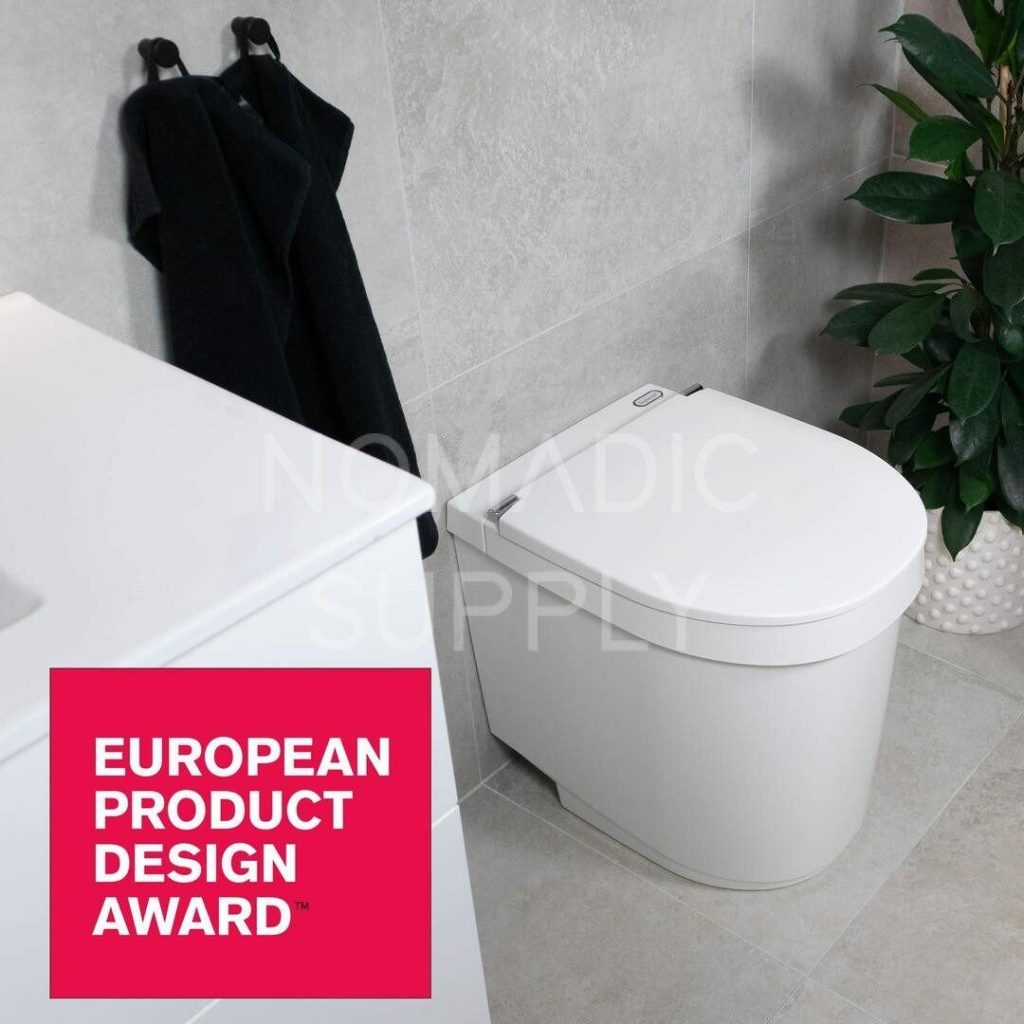
Separett Tiny with Urine Container – Official Product Image
Best for Small Boats: Cuddy Lite Composting Toilet
Ultra-compact for daysailers, the Cuddy Lite squeezes into tight spots without sacrificing function. Affordable and agile.
Pros:
- Tiny footprint; fits 18-footers easily.
- Quick compost with agitator kit.
- Leak-free; great for heeling.
- Value-packed at sub-$500.
Cons:
- Modest capacity; solo or duo only.
- Basic filter; upgrade for long trips.
- No sensors.
| Feature | Details | Price Range |
| Capacity | Solids: 4 uses; Liquids: 1.5 gal | $400-$450 |
| Dimensions | 16″ H x 14″ W x 12″ D | |
| Weight | 15 lbs | |
| Power | Optional 12V |
Tested on my tender during a regatta—emptied once daily, no drama. Perfect starter for small craft. See the Cuddy Lite on Amazon (affiliate link).
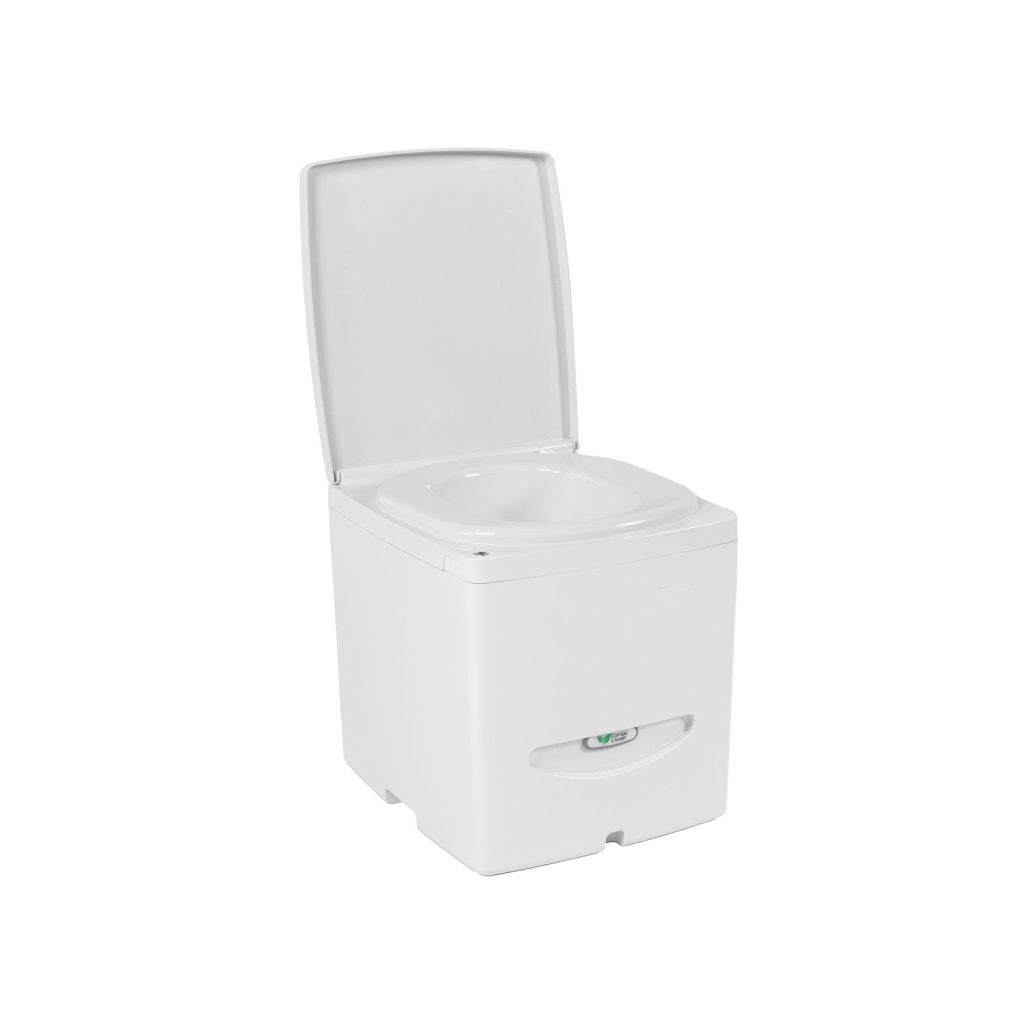
Cuddy Lite Composting Toilet – Compact and Lightweight – Official Product Image
Side-by-Side: Best Reusable Boat Waste Systems Compared
At a glance: Budget? GTG or Trelino. Capacity hogs? Separett. Here’s the showdown on key metrics (2026 pricing).
| Model | Price | Capacity (Uses/Gal) | Weight (lbs) | Odor Rating (1-10) | Best For |
| Nature’s Head | $960 | 6/2.6 | 28 | 9 | Overall |
| Sun-Mar GTG | $250 | 4/1.85 | 12 | 7 | Budget |
| Trelino Evo S | $280 | 5/1.2 | 11 | 8 | Portable |
| OGO | $1,075 | 7/2.1 | 25 | 9 | Eco |
| Airhead | $235 | 5/2.6 | 20 | 10 | Odor |
| Separett Tiny | $1,250 | 10/3 | 35 | 9 | Capacity |
| Cuddy Lite | $425 | 4/1.5 | 15 | 8 | Small Boats |
Quick verdict: Nature’s Head wins versatility; Airhead for sniff-proof sails. Tweak based on your hull size—under 25 feet? Go portable.
FAQs: Your Reusable Boat Waste Questions Answered
Are composting toilets legal on boats?
Short answer: Yes, in most U.S. waters. They’re Type III MSD alternatives—no discharge if you compost properly. But check local regs for no-discharge zones; always empty solids at pump stations.
How do I empty a composting toilet at sea?
Liquids to a gray tank or marina; solids to shore bins (bag-lined for ease). I use marinas like those in the Keys—$5-10 fee. Pro tip: Compost off-boat for 6 months before garden use.
Best reusable boat waste for odor control in hot climates?
Airhead or OGO—urine diversion + fans kill smells. In Florida humidity, I add zeolite stones for extra absorption.
Do these save fuel compared to traditional systems?
Absolutely—lighter by 50-100 lbs, less pumping (saves 0.5 gal diesel per trip). Plus, no water weight; that’s 10% less load on your outboard.
Composting toilets vs. recirculating heads?
Composting wins eco (no chemicals), but recirc needs water. For dry runs, composting’s king—see our Recirculating Toilet Guide.
Maintenance tips for 2026 models?
Weekly vinegar rinses; monthly fan checks. Electric ones? Battery monitor. Download my free Waste System Checklist PDF—sign up for sizing tips.
Budget under $200?
Tough, but Sun-Mar GTG edges in at $250. For a true budget, consider bucket kits, but upgrade ASAP for sanity.
Wrapping Up: Sustainable Seas Start Here
Whew—picking the right reusable boat waste system isn’t glamorous, but it’s the quiet hero keeping your adventures odor-free and ocean-friendly. From the budget-savvy Sun-Mar GTG to the capacity beast Separett Tiny, there’s a fit for every float plan. My top rec? Nature’s Head for that all-around dockside dependability—it’s transformed my charters from “hold it” missions to chill vibes.
What’s your must-have in boat sanitation? A fan that whispers or bins that last? Drop a comment below—I read ’em all. For more green gear, explore our Eco Boat Accessories Guide. Safe sails, friends—may your bilges stay dry and your wakes clean.
Not financial advice; verify prices/availability on Amazon. Updated October 2026. Questions? Hit me at info@stellaroutdoorlife.com