
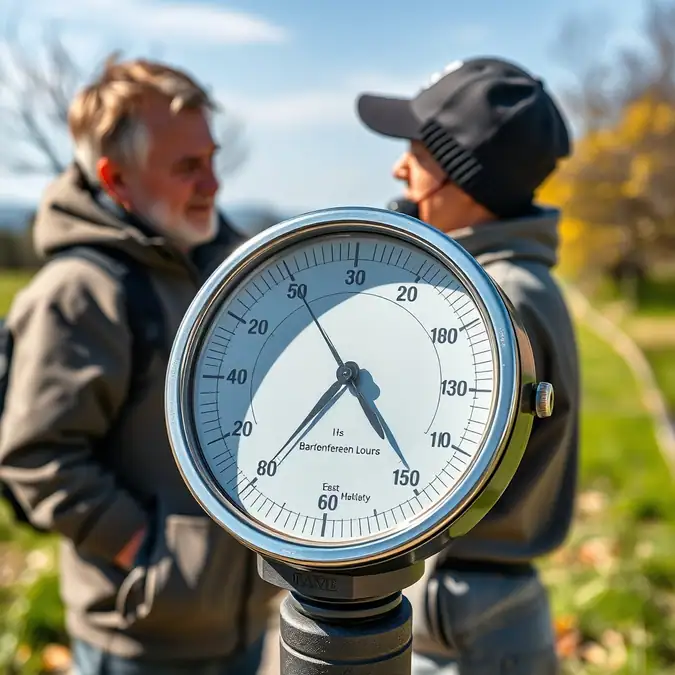
Barometer Reading for Beginners: Simple Guide to Weather Pressure

Overview: What Is Barometer Reading for Beginners?
You are on the lake, clouds gather, you wonder if a storm is coming. A small tool called a barometer can help. This guide shows barometer reading for beginners in plain words. You will learn what a barometer is, how it works, and how to use it on water, road, or camp. Let’s start.
Why does air pressure matter? High pressure often means clear skies. Low pressure can bring wind, rain, or storms. Knowing the pressure trend helps you plan a trip, stay safe, and enjoy the outdoors.
Ever wondered why some anglers check the barometer before casting? They know fish often bite better when pressure is steady or rising.
How a Barometer Works
A barometer measures the weight of the air above us. That weight is called atmospheric pressure. When the air pushes down harder, the reading goes up. When the air pushes down less, the reading drops.
Most barometers use one of two simple ideas:
- A column of mercury that rises or falls with pressure.
- A sealed metal box that expands or contracts with pressure changes.
The movement moves a needle or changes a number on a screen. That number is the pressure reading.
Want to see a real barometer? Here is a simple diagram showing the parts.
Types of Barometers
Which type should you pick? Let’s look at the two main kinds.
| Type | How It Works | Pros | Cons |
|---|---|---|---|
| Analog | Uses mercury or air in a tube | No battery, simple to read | Hard to get exact number, fragile |
| Digital | Uses a sensor and a screen | Shows clear number, often adds temp | Needs battery, can drift over time |
Many boaters like a rugged analog model mounted on the dash. Campers often choose a small digital unit that fits in a pocket.
What about units? You will see pressure in inches of mercury (inHg) or hectopascals (hPa). One inch of mercury is about 33.86 hPa. Most weather reports use hPa.
How to Read and Use It
How do you turn a number into a weather hint?
First, note the current reading. Write it down or remember it.
Second, check it again after a few hours. Compare the two numbers.
If the reading goes up, pressure is rising. Expect calmer weather.
If the reading goes down, pressure is falling. Expect wind, clouds, or rain.
If the reading stays about the same, the weather is likely to stay steady.
Here is a quick guide you can keep in your gear bag:
- Rising 0.1 inHg (or 3 hPa) or more → improving conditions.
- Falling 0.1 inHg (or 3 hPa) or more → worsening conditions.
- Change less than that → little change expected.
How do you use this on the water? Before you head out, take a reading. Write it down. After an hour on the lake, take another. If pressure is falling fast, consider heading back before a storm hits.
What about fishing? Many anglers say fish bite best when pressure is steady or slightly rising. A fast fall can make fish go deep and stop biting.
For RV travelers, a rising pressure often means a good day for driving and sightseeing. A falling pressure warns of possible rain or strong winds.
Maintenance & Care
How do you keep your barometer working well?
Analog models with mercury need to stay level. Do not tilt or shake them. Keep them out of direct sun, which can heat the fluid and cause a false high reading.
Digital models need a fresh battery every six to twelve months. Check the manual for the exact type. Wipe the screen with a soft cloth if it gets wet.
Store the unit in a dry place when not in use. A small dry bag works well for a pocket digital barometer.
If you notice the number seems stuck or jumps wildly, it may need service. For a simple analog tap, gently turn the adjustment screw (if present) to zero it at the known local pressure. You can find the local pressure on a weather website or app.
Want to check your local pressure now? Visit the National Weather Service and look for the “observations” page for your area.
Frequently Asked Questions About Barometer Reading for Beginners
What is the best barometer reading for beginners?
The best reading is the one you can understand and trust. A simple analog or digital unit that shows pressure in hPa or inHg works fine for starters.
How much does a barometer for beginners cost?
You can find a basic analog model for about $20 to $40. A decent digital pocket unit often costs $25 to $50. Prices vary by brand and features.
What should I look for when buying a barometer for beginners?
Look for clear numbers, a sturdy case, and a unit that uses the pressure unit you prefer. Check if it needs a battery and how easy it is to replace.
Can I use a smartphone app instead of a physical barometer?
Apps can show pressure from nearby weather stations, but they are not as instant or personal as a device you hold. For quick trend checks, a real barometer is best.
How often should I check the pressure on a trip?
Check at the start, then every one to two hours if you are on the water or in changing weather. More often if you see clouds building fast.
Final Thoughts
Knowing barometer reading for beginners gives you a simple tool to stay ahead of the weather. Use the trend, not just the number, to make smart choices on the lake, road, or trail.
Get out there, watch the pressure, and enjoy your adventure with confidence.