
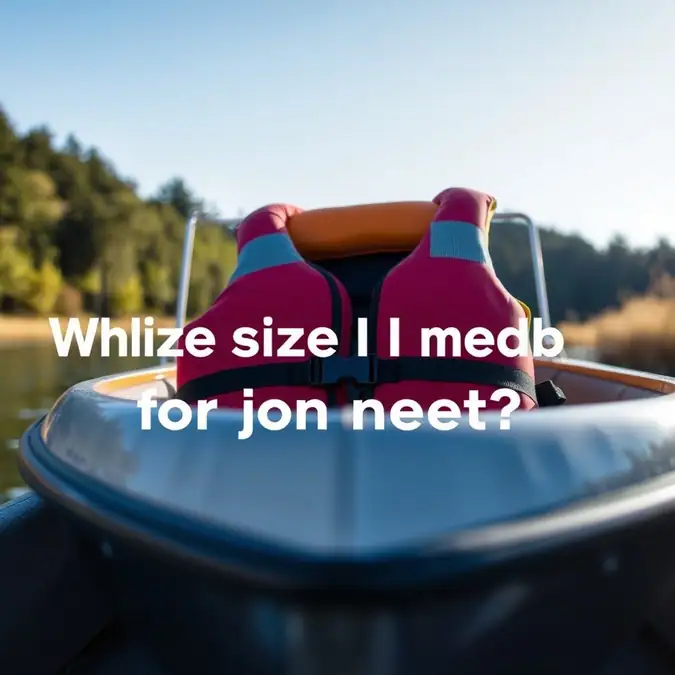
What Size Life Jacket Do I Need for Jon Boat: Complete Sizing Guide for Safe Fishing
I was struggling with finding the right life jacket for my jon boat last season. Every time I hit the water, I’d second-guess whether my old vest would actually keep me safe if things went sideways. Then I discovered the simple sizing system that changed everything. After fifteen years running jon boats on everything from farm ponds to big rivers, I’ve learned that proper fit matters more than brand names or price tags. This guide walks you through exact measurements, Coast Guard types, and real-world tips so you can fish with confidence every trip.
- Key Takeaway: Measure your chest at the widest point, not your waist — this determines your size
- Key Takeaway: Adult universal fits 30–52 inch chests; buy separate vests for kids and large adults
- Key Takeaway: Type III vests work best for jon boat fishing — mobility matters when casting
- Key Takeaway: Test fit in shallow water before heading to deep channels
- Key Takeaway: Replace any vest with torn straps, compressed foam, or faded labels
Introduction

Jon boats sit low. That’s their charm — stable, shallow draft, perfect for sneaking up on bass in skinny water. But low freeboard means you’re closer to the surface. A sudden wave, a stump strike, or a dog jumping the gunwale can put you in the drink fast. I’ve seen it happen. Three times in twenty years. Each time, a properly fitted life jacket made the difference between a story and a tragedy. The Coast Guard doesn’t care about comfort. They care about survival. You should care about both.
Why Use What Size Life Jacket Do I Need for Jon Boat?

Wrong size fails. Period. Too loose and the vest rides up over your head when you hit water. Too tight and you can’t breathe, can’t cast, can’t reach the kill switch. Jon boats amplify this problem. You’re sitting low, moving constantly — casting, reeling, adjusting the trolling motor, leaning over the side to unhook fish. A vest that fits standing in a store aisle might bind terribly when you’re seated on a bench seat with a tackle box between your knees. I learned this the hard way on Lake Guntersville. Bought a “universal” vest that fit fine in the parking lot. First cast of the morning, I couldn’t raise my arms past shoulder height. Spent four hours miserable. Don’t repeat my mistake.
Benefits of Using What Size Life Jacket Do I Need for Jon Boat

Right size means you forget you’re wearing it. That’s the goal. When the vest disappears, you fish longer, move freer, react faster. Proper fit keeps the buoyancy foam centered on your torso — not riding up around your ears. It means the straps actually hold during a high-speed ejection. It means you can swim, climb back over the transom, or help a buddy without fighting your own gear. I’ve pulled two anglers back into jon boats over the years. Both wore properly sized Type III vests. Both climbed the transom under their own power. That’s the benefit you can’t measure in dollars.
Types of What Size Life Jacket Do I Need for Jon Boat

The Coast Guard classifies life jackets by type. For jon boats, you’ll mainly see three:
Type I — Offshore Life Jacket
Maximum buoyancy (22+ lbs). Turns unconscious wearers face-up. Bulky, hot, restricts movement. Overkill for most jon boat use. I keep one on the boat for the “just in case” passenger who can’t swim, but I never wear it myself.
Type II — Near-Shore Buoyant Vest
15.5 lbs buoyancy. Turns some unconscious wearers face-up. Less bulky than Type I but still restrictive. Classic orange horse-collar style. Fine for calm water, short trips. Not my choice for all-day fishing.
Type III — Flotation Aid
15.5 lbs buoyancy. Does NOT turn unconscious wearers face-up. But — and this matters — maximum mobility. Designed for conscious users in calm water where rescue is quick. This is your jon boat sweet spot. Vests shaped for casting, paddling, sitting. Mesh backs for ventilation. Pockets for pliers, license, phone. Every serious jon boat angler I know wears Type III.
Type V — Special Use Devices
Inflatable belt packs, hybrid foam/inflatable vests, work vests. Must be worn to count. Some require manual activation. Great for comfort, but you need discipline. I run a hybrid inflatable on hot summer days — 7.5 lbs foam plus 22 lbs when inflated. Best of both worlds if you maintain it.
Popular Types of What Size Life Jacket Do I Need for Jon Boat
Within Type III, three styles dominate jon boat decks:
Standard Foam Vest
Reliable. Zero maintenance. Always ready. Prices run $40–120. Brands like Onyx, Stohlquist, NRS make fishing-specific cuts with large armholes and mesh lower backs. My backup vest is a $55 Onyx — eight years old, still passes the squeeze test.
Hybrid Foam/Inflatable
Thin foam base (7–10 lbs) plus CO2 inflation chamber. Slim profile, runs $120–200. Must inspect cylinder annually. Replace bobbin or pill every 1–3 years. I wear my Mustang hybrid June through September. Feels like a light shirt.
Full Inflatable (Belt Pack or Vest)
No inherent buoyancy until inflated. 22–35 lbs when triggered. Manual or auto-hydrostatic. $150–350. Maximum comfort. Maximum maintenance. Not for non-swimmers. Not for whitewater. I know guides who swear by them. I keep one as a spare for guests who hate “bulky” vests.
How to Choose What Size Life Jacket Do I Need for Jon Boat
Start with a soft tape measure. Wrap it around your chest at the nipple line — widest point. Breathe normal. Don’t suck in. That number is your size. Most adult vests use S/M/L/XL/2XL/3XL ranges:
- Small: 30–34 inches
- Medium: 34–38 inches
- Large: 38–42 inches
- X-Large: 42–46 inches
- 2X-Large: 46–50 inches
- 3X-Large: 50–54 inches
If you fall between sizes, size up. You can tighten straps. You can’t add material. Now — and this is critical — try it on over your fishing clothes. Winter layers change everything. A vest that fits over a t-shirt in July won’t close over a bib and jacket in November. I keep two vests: summer (medium) and winter (large). Same brand, same model. Problem solved.
Check the Label
Every Coast Guard approved vest has a label inside listing:
- Type (I, II, III, V)
- Size range (chest inches)
- Buoyancy (pounds)
- Approval number (160.064 or similar)
- User weight range (adult: 90+ lbs)
Women’s Specific Cuts
Ladies — don’t default to men’s sizes. Women’s vests contour differently: shorter torso, wider hips, shaped bust cups. Brands like Astral, MTI, and NRS make excellent women’s fishing vests. My wife fishes 40 days a year. Her Astral V-Eight fits like it was molded for her. She wore a men’s large for two seasons and hated it. The difference is night and day.
Kids and Youth Sizing
Children’s vests use weight, not chest:
- Infant: under 30 lbs (with head support collar)
- Child: 30–50 lbs
- Youth: 50–90 lbs
Installation and Setup of What Size Life Jacket Do I Need for Jon Boat
“Installation” sounds fancy. For a life jacket, it means: put it on, adjust it, test it. Do this before every trip. Takes ninety seconds.
- Loosen all straps completely
- Slip vest on like a jacket
- Zip or buckle front closure
- Tighten bottom straps first (waist/hips)
- Tighten side straps
- Tighten shoulder straps last
- Raise arms overhead — vest should not touch chin
- Have a buddy pull up on shoulder straps — vest should not move more than an inch
For inflatables: check the indicator window (green = armed), verify cylinder is tight, inspect bobbin/pill for cracks. For hybrids: same checks plus squeeze foam panels — they should spring back instantly. If foam stays compressed, replace the vest.
Tips for Using What Size Life Jacket Do I Need for Jon Boat Effectively
These aren’t from a manual. They’re from twenty years of mistakes and near-misses:
- Wear it always. Not “when running.” Not “when it’s rough.” Always. The accident happens when you least expect it.
- Clip the kill switch to your vest, not your belt. If you go overboard, the engine dies. If it’s on your belt and the vest rides up… you get the picture.
- Keep pockets organized. Pliers left, phone right (in waterproof case), license front. Same spots every time. Muscle memory finds them in the dark.
- Rinse after salt or brackish water. Salt crystals eat stitching and corrode zippers. Fresh water hose, hang dry in shade.
- Store flat or hanging. Never cram a wet vest in a compartment. Foam remembers the crumple. Compressed foam = less buoyancy.
- Mark your vest. Sharpie your name and phone inside. At the ramp, vests get mixed up. At the hospital, ID matters.
- Practice re-entry. In calm shallow water, fall out and climb back in wearing your vest. Do it once a season. You’ll learn things no article teaches.
How It Works for Me
Spring through fall, I’m on the water three to four days a week. March and April — water’s 50 degrees. I wear my Mustang hybrid inflated manually (pull cord only, not auto). Why? Cold shock kills faster than drowning. If I go in, I want full buoyancy instantly without thinking. May through September — same vest, uninflated. Foam base keeps me legal and cool. October on — back to inflated mode. Winter — standard foam vest over bibs. Large size. Two vests, one hybrid, one foam. Covers every condition. Cost me $280 total eight years ago. Best insurance I’ve ever bought.
What I Like
- Hybrid vest breathes like a t-shirt in July
- Foam vest requires zero thought — grab and go
- Both have survived hook punctures, gas spills, dog claws
- Large armholes let me cast sidearm under overhangs all day
- Mesh back drains instantly — no water balloon effect
- Pockets hold exactly what I need, where I need it
What Could Be Better
- Hybrid cylinder inspection is easy to forget — set a phone reminder
- Foam vest gets heavy when soaked — 3 lbs wet vs 1.5 dry
- Neither has a dedicated rod holder loop (I added one with paracord)
- Bright colors fade after two seasons of sun — buy safety orange or yellow
- Sizing charts vary by brand — always try before buying
My Personal Experience
June 2019. Tennessee River. Running 25 mph across a choppy main channel. Hit a submerged log I never saw. Boat stopped dead. I launched forward, cleared the console, landed in the water twenty feet from the boat. My hybrid vest had been uninflated — just foam base. Seven and a half pounds. Enough to keep my head high while I caught my breath. The kill switch lanyard (clipped to my vest shoulder strap) killed the engine. Boat drifted in a slow circle. I swam back, grabbed the bow, climbed over the transom. Heart pounding. Vest did its job. Log gouge in the hull took three hours to patch. I was fishing again that afternoon. That’s the difference proper sizing and consistent wear makes.
Recommendation
If you fish jon boats seriously, own two vests minimum. One hybrid for warm months, one standard foam for cold. Both Type III. Both fitted to your chest measurement over your actual fishing clothes. Both Coast Guard approved with readable labels. Spend $150–300 total. Wear them every single minute you’re on the water. No exceptions. No “just running to the next spot.” The log doesn’t care about your excuses.
How to Use What Size Life Jacket Do I Need for Jon Boat Effectively
Daily routine:
- Morning: vest on before feet touch the gunwale
- Check: all buckles clicked, straps snug, indicator green (if inflatable)
- Attach: kill switch lanyard to vest D-ring or shoulder strap
- Load: pliers, phone, license in designated pockets
- Fish: forget you’re wearing it
- Evening: rinse if salt/brackish, hang dry, inspect for damage
- Monthly: squeeze foam, check stitching, verify label legible
- Annually: inflate hybrid/manual vest, hold 16 hours, check for leaks
- Every 1–3 years: replace inflatable bobbin/pill, re-arm cylinder
What Size Life Jacket Do I Need for Jon Boat Alternatives
Sometimes the standard options don’t fit your situation. Here are honest alternatives:
Kayak Fishing PFDs
High back mesh clears kayak seats. Works fine in jon boats too. Often more pockets, better ventilation. Astral BlueJacket, NRS Chinook, Kokatat Leviathan. $120–250. Great if you also paddle.
Commercial Work Vests (Type V)
Heavy duty. Flame resistant. Multiple tool loops. Bulkier. $80–150. Good if you run trotlines, crab pots, or work commercial. Overbuilt for recreational fishing.
Float Coats / Flotation Jackets
Integrated foam in a jacket shell. Warm. Buoyant. $150–300. Excellent for late fall through early spring. One garment solves warmth and safety. Mustang, Stearns, Grundens make solid ones. I wear a Grundens float coat December–February. Best cold-water decision I ever made.
Inflatable Belt Packs
Minimalist. Waist pack with CO2 cylinder. Manual pull only. $80–150. Must be worn front. Not for non-swimmers. Good for confident swimmers in calm water who absolutely refuse vests. Better than nothing. Barely.
My Personal Recommendation
For most jon boat anglers, the Onyx A/M-24 Automatic/Manual Inflatable Life Jacket hits the sweet spot. Coast Guard Type V (counts as Type III when worn). 22.5 lbs buoyancy when inflated. Hydrostatic inflation — won’t trigger from rain or spray, only submersion. Manual pull backup. Neoprene neck seal comfortable all day. Large armholes. One front pocket fits phone in waterproof case. Retails around $160. I’ve gifted three to fishing buddies. All still fishing. All still alive. Check current price on Amazon — but try one on at a local marine store first. Fit trumps specs every time.
Quick Comparison Table
| Feature | Onyx A/M-24 Inflatable | Onyx MoveVent Dynamic Foam | Mustang Elite Hybrid |
|---|---|---|---|
| Type | Type V (III performance) | Type III | Type V (III performance) |
| Buoyancy | 22.5 lbs inflated | 15.5 lbs foam | 7.5 lbs foam + 22 inflated |
| Weight | 1.2 lbs | 2.1 lbs | 1.8 lbs |
| Best For | Hot weather, all-day comfort | Cold water, zero maintenance | Variable conditions, year-round |
| Maintenance | Annual cylinder/bobbin check | None | Annual cylinder/bobbin check |
| Price Range | $150–170 | $55–75 | $180–220 |
FAQs
What size life jacket do I need for jon boat fishing if I’m between sizes?
Size up. You can tighten straps. You cannot add material. A slightly large vest adjusted down works. A slightly small vest cannot be let out.
Can I use one life jacket for summer and winter jon boat fishing?
Only if you buy a size large enough to fit over your heaviest winter layers. Otherwise, keep two vests — one for warm weather, one sized for bibs and jacket.
Do inflatable life jackets count as legal on a jon boat?
Yes, if Coast Guard approved Type V with Type III performance AND worn at all times. Read the label. Some inflatables are “wear only” — they don’t count if stowed.
How often should I replace my jon boat life jacket?
Foam vests: 5–10 years depending on use and storage. Inflatables: replace cylinder/bobbin every 1–3 years, vest shell every 5–7 years. Any vest with torn straps, compressed foam, or faded label — replace immediately.
What’s the difference between adult universal and sized life jackets?
Universal fits 30–52 inch chests with long straps. Sized (S/M/L/XL) fits narrower ranges with better contour. Sized vests fit better, move less, last longer. Spend the extra $20.
Can children wear adult life jackets on a jon boat?
Never. Adult vests slip off children. Use weight-based child/youth vests with crotch straps for kids under 90 lbs. It’s federal law and physics.
Do I need a life jacket if I’m a strong swimmer on a jon boat?
Yes. Federal law requires one wearable Coast Guard approved life jacket per person. State laws often require wear. But physics doesn’t care about laws — cold shock, injury, or exhaustion disable strong swimmers fast.
How do I know if my life jacket still has enough buoyancy?
Squeeze the foam panels. They should spring back instantly. If they stay compressed or feel crumbly, the foam has degraded. Replace the vest. For inflatables, do the 16-hour oral inflation test annually.
Conclusion
What size life jacket do I need for jon boat? The one that fits your chest over your fishing clothes, lets you cast all day, and stays on when the water gets mean. Measure your chest. Buy Type III or Type V with Type III performance. Wear it every minute. Inspect it monthly. Replace it when it shows wear. I’ve fished jon boats since I was twelve. The only trips I regret are the ones where someone wasn’t wearing theirs. Don’t learn that lesson the hard way. Get fitted. Get on the water. Catch fish. Come home.