
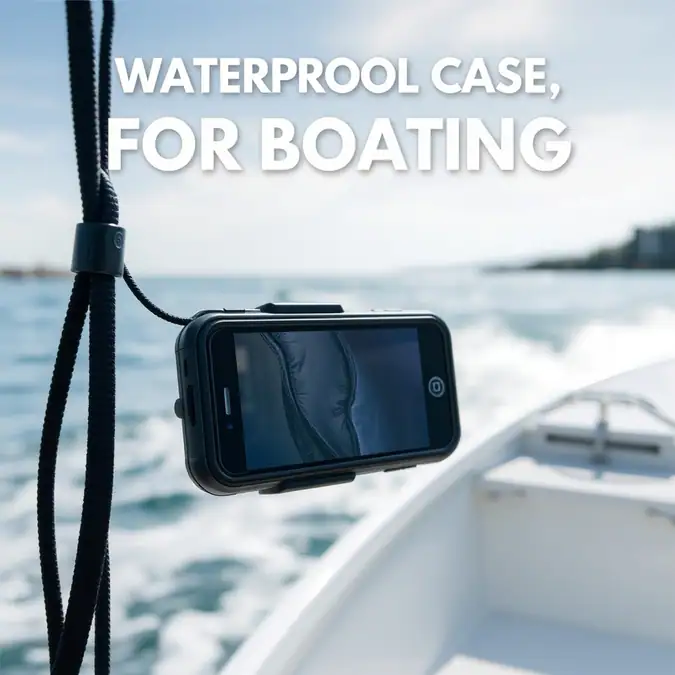
Waterproof Phone Case for Boating: Keep Your Device Safe on the Water

Ever wonder how to keep your phone dry while you’re out on the lake or sea? A good waterproof phone case for boating can save your device from splashes, rain, or an accidental dunk. This guide shows you what to look for, how the cases work, and how to care for them. Let’s get started.
Why You Need a Waterproof Phone Case on a Boat
Boats move fast, water splashes, and weather changes quickly. Your phone is a lifeline for maps, weather alerts, and calling for help. If water gets inside, it can ruin the screen, battery, or internal parts. A waterproof case acts like a shield.
Have you ever dropped your phone in the water while fishing? Or felt panic when a wave sprayed over the gunwale? Those moments remind us why protection matters. A simple case can turn a costly loss into a quick laugh.
Think about the cost of a new phone versus a case that costs less than twenty dollars. The choice is clear for most boaters.
How Waterproof Cases Keep Water Out
Most cases use a seal that locks around the edges. The seal is often made of silicone or rubber. When you close the case, the seal presses tight and stops water from getting in.
Some cases rely on a zip‑lock style closure. You press the sides together and slide a lock into place. Others use a screw‑on lid that you twist until it feels snug.
The material of the case also matters. Hard plastic cases resist impacts. Soft pouches bend and fit snugly around the phone. Both types aim to keep the interior dry.
Do you know what IP rating means? It tells you how well a case resists water and dust. An IP68 rating means the case can stay underwater beyond one meter for a long time. For boating, IP67 or IP68 is a good target.
Types of Waterproof Phone Cases for Boating
There are three main styles you will see on the market. Each has pros and cons. The table below shows a quick comparison.
| Type | How It Works | Best For | Typical Price |
|---|---|---|---|
| Hard Shell Case | Rigid plastic with a sealing gasket | Rough water, impact protection | $15‑$35 |
| Soft Pouch | Flexible TPU or PVC with a zip seal | Kayaking, paddle boarding, light spray | $8‑$20 |
| Dry Bag Style | Roll‑top closure with buckles | Full submersion, long trips, extra gear | $12‑$30 |
Hard shell cases give the strongest defense against drops and bumps. They often have a clear back so you can still see the screen. Soft pouches are light and easy to pack. Dry bags let you store more than just a phone, like a wallet or keys.
Which type fits your boat style? If you run a speedboat that bounces, a hard shell may be best. If you prefer a calm kayak ride, a soft pouch could be enough.
Key Features to Look For
When you shop, check these points. They help you pick a case that will last.
- Seal quality – look for a thick silicone gasket or a reliable zip lock.
- Clear window – make sure the plastic over the screen is not foggy or scratched.
- Touch sensitivity – you should be able to swipe and type without removing the phone.
- Lanyard or strap – a loop lets you attach the case to your life jacket or boat rail.
- Floatation – some cases have air pockets that keep them afloat if dropped.
- UV resistance – the material should not break down in strong sun.
Have you ever tried to use a touchscreen through a foggy window? It feels impossible. A clear, responsive window makes a big difference on the water.
Think about how you will carry the case. A lanyard can stop it from sinking if you drop it overboard. A strap can keep it handy on your belt.
Care and Maintenance Tips
Even the best case needs a little care. Rinse it with fresh water after each salty outing. Salt can corrode the seal over time.
Open the case and let it air dry completely before storing it. Moisture trapped inside can cause mildew.
Check the seal for cracks or tears every few months. If you see damage, replace the case before your next trip.
Avoid leaving the case in direct sunlight for long periods. UV rays can make plastic brittle.
Do you store your gear in a dry locker? Placing the case there with a silica packet helps keep moisture low.
Frequently Asked Questions About Waterproof Phone Case for Boating
What is the best waterproof phone case for boating?
The best case depends on your boat type and how rough the water gets. For high‑impact boating, a hard shell with IP68 rating is top choice. For calm paddling, a soft pouch with IP67 works well.
How much does a waterproof phone case for boating cost?
You can find reliable cases from eight dollars to thirty‑five dollars. Price often reflects material strength and seal quality.
What should I look for when buying a waterproof phone case for boating?
Check the seal, screen clarity, touch response, and any extra features like a strap or floatation. Make sure the rating matches your expected water exposure.
Can I use my phone normally inside the case?
Yes, most cases let you touch the screen, use the camera, and hear calls. Test the touch response before you head out.
How do I clean a waterproof phone case?
Rinse with fresh water, wipe with a soft cloth, and let it air dry. Avoid harsh chemicals that could harm the seal.
1 thought on “waterproof phone case for boating: 6 Tips”