
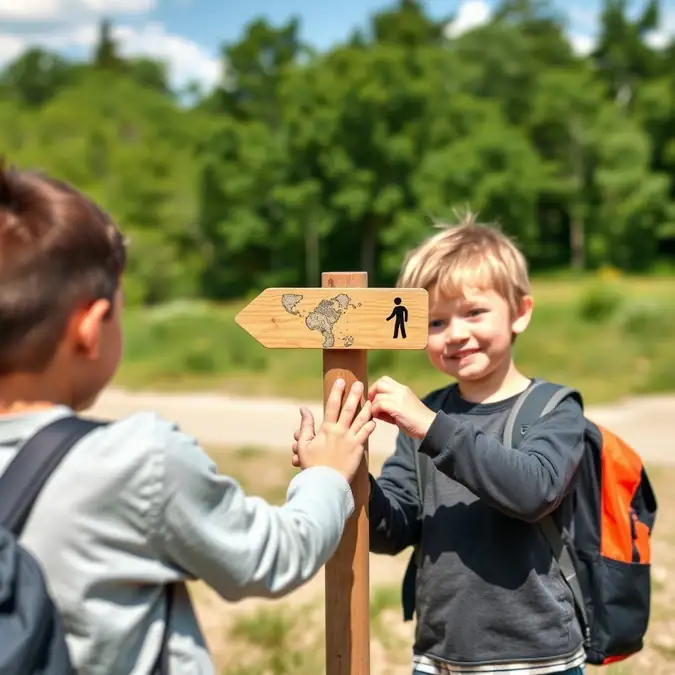
Teaching Kids Outdoor Navigation Signs: A Simple Guide for Families

Have you ever watched a child stare at a trail marker and ask what it means? Kids love to explore. But they need to know how to read nature’s signs. This guide covers teaching kids outdoor navigation signs in a fun, safe way. You will learn simple methods that work on any trail.
| Sign Type | What It Means | Best Age to Teach |
|---|---|---|
| Blaze Marks | Follow this path | 5+ years |
| Cairns (Rock Piles) | Trail goes this way | 6+ years |
| Arrow Signs | Turn here | 4+ years |
| X Marks | Wrong way | 5+ years |
Why Navigation Signs Matter for Kids
Do your kids know what to do if they get lost? Trail signs are like a secret code. When children learn this code, they feel brave. They also stay safe. A child who reads signs can help the whole group. This skill builds confidence that lasts for life.
Start with the basics. Keep lessons short. Make it a game. Kids learn best when they play.
Common Trail Signs Every Child Should Know
Paint Blazes on Trees
Have you seen colored marks on tree trunks? These are paint blazes. Each color means something different. White often marks the main trail. Blue might mark a side loop. Yellow could show a connector path. Teach kids to spot these colors. Ask them to count how many they see.
Rock Cairns
Ever wonder why people stack rocks on trails? Those piles are called cairns. They show the way when trees are scarce. Kids love building them. But teach them: only adults should make official cairns. Kids can practice with small stones at camp.
Posted Signs and Arrows
Metal or wood signs appear at junctions. They show distances and directions. Let kids read the numbers. Ask: “How many miles to the lake?” This builds math skills too.
How to Teach Navigation Signs Step by Step
Step 1: Start at Home
Print pictures of common signs. Put them on the fridge. Quiz kids at breakfast. Keep it light and fun.
Step 2: Walk a Familiar Trail
Choose a trail you know well. Stop at each sign. Ask: “What does this tell us?” Let the child lead for a bit.
Step 3: Play Trail Detective
Give kids a notebook. Have them draw each sign they find. Write what it means. Make a badge for “Junior Navigator.”
Step 4: Practice With a Map
Show a simple trail map. Match signs to map symbols. Kids see how signs and maps work together.
Safety Rules to Teach Alongside Signs
What happens if a sign is missing? Teach these backup rules:
- Stay on the trail
- Hug a tree if lost
- Blow a whistle three times
- Wait for help
Give each child a whistle. Practice the three-blast signal at home. Make sure they know it means “I need help.”
Fun Games That Build Navigation Skills
Sign Scavenger Hunt
Make a list: “Find a white blaze. Find a cairn. Find an arrow sign.” First to spot all wins a treat.
Compass Rose Relay
Draw a big compass on the ground with sticks. Call out directions. Kids run to the right point. North, South, East, West.
Trail Memory Game
Walk a short loop. Then ask: “Which way did we turn at the big pine?” “What color was that blaze?” Builds observation.
Gear That Helps Kids Learn
Do you need fancy tools? Not really. But a few items help:
- Kid-size compass
- Whistle on a lanyard
- Small notebook and pencil
- Trail map in a zip bag
Let kids carry their own pack. They feel responsible and grown up.
Frequently Asked Questions About Teaching Kids Outdoor Navigation Signs
What age should kids start learning trail signs?
Kids as young as four can learn basic arrows and colors. By age six, most understand blazes and cairns. Match the lesson to the child.
How long does it take to teach navigation basics?
A few short hikes over a month works well. Keep each lesson under 20 minutes. Repetition beats long sessions.
What if my child gets scared about getting lost?
Focus on empowerment, not fear. Say: “These signs are your friends. They help you stay found.” Practice the “hug a tree” rule until it feels natural.
Should kids use a GPS or phone instead?
Tech fails. Batteries die. Signs and maps work always. Teach signs first. Add tech later as a backup tool.
How do I make sure kids remember the signs?
Review before every hike. Play car games: “I spy a white blaze.” Celebrate every correct answer. Confidence grows with praise.
Final Thoughts
Teaching kids outdoor navigation signs gives them freedom and safety. Start small. Keep it fun. Watch them grow into capable explorers. The trail is waiting. Grab a map, lace up boots, and go learn together.