
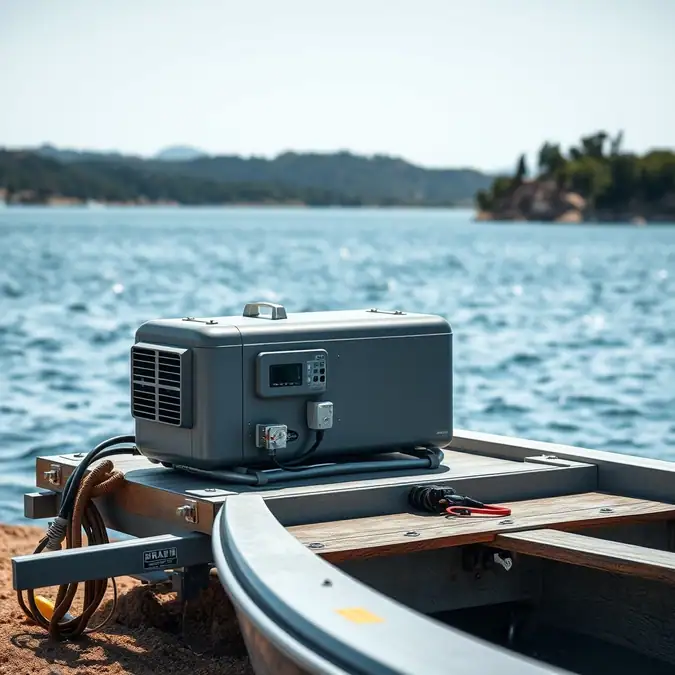
Portable Power Station for Boating: Easy Guide to Stay Charged on the Water

Imagine you are out on the lake, the sun is high, and your phone dies. You need power for lights, a radio, or a small fridge. A portable power station for boating can keep you going. This guide shows what a portable power station for boating is, how it works, and what to look for when you buy one. We will talk about types, key features, care, and common questions. By the end, you will know if a portable power station for boating fits your trips and how to use it safely. Let’s get started. We will also share simple tips to extend battery life and avoid common mistakes.
How Does a Portable Power Station for Boating Work?
Ever wonder how a small box can run your boat gear? A portable power station for boating stores electricity in a battery. When you plug a device into its outlet, the battery sends power out. You can charge the battery from a wall outlet, a car socket, or a solar panel.
The unit has three main parts: the battery, the inverter, and the charge controller. The battery holds the energy. The inverter changes stored DC power to AC power for regular plugs. The charge controller manages how the battery gets charged so it does not overfill.
Most models use lithium‑ion batteries because they are light and hold a lot of charge. Some older models use lead‑acid batteries which are heavier but cheaper. The inverter size tells you how many watts you can draw at once. A 300‑watt inverter can run a small TV or a few lights.
You control the unit with buttons or a small screen. It shows battery level, input watts, and output watts. Some have USB ports for phones and 12‑volt sockets for boat accessories.
Types of Portable Power Stations for Boating
Not all power stations are the same. Choosing the right type depends on your boat size, how long you stay out, and what you plan to run.
| Type | Best For | Typical Weight | Typical Capacity | Notes |
|---|---|---|---|---|
| Lithium‑ion, compact | Day trips, small electronics | 5‑10 lbs | 200‑500 Wh | Easy to carry, fast recharge |
| Lithium‑ion, mid‑size | Overnight trips, fridge, lights | 10‑20 lbs | 500‑1000 Wh | Good balance of power and portability |
| Lithium‑ion, large | Extended stays, multiple devices | 20‑40 lbs | 1000‑2000 Wh | Needs secure mounting, higher cost |
| Lead‑acid, budget | Short runs, low power needs | 15‑30 lbs | 300‑600 Wh | Heavier, slower charge, shorter life |
Think about how much power you need. Add up the watts of each device you will use at the same time. Then pick a station with a higher watt‑hour rating so you have a safety margin.
Key Features to Look For
When you shop, focus on a few simple specs that matter most on the water.
- Battery capacity (Wh) – tells how long it can run.
- Inverter wattage (W) – tells the max load you can plug in.
- Number and type of outlets – AC sockets, USB‑C, USB‑A, 12 V.
- Charging options – wall, car, solar input.
- Weight and size – easy to lift and store on your boat.
- Water resistance – look for an IP rating if it may get splashed.
Also check the warranty. A two‑year warranty is common for good brands. Read the manual to learn the safe temperature range for charging and use.
Care and Maintenance Tips
A portable power station for boating will last longer if you treat it right. Follow these easy steps.
After each trip, wipe the case with a dry cloth. If it got wet, let it air dry before storing. Do not use harsh chemicals.
Store the unit in a cool, dry place. Extreme heat or cold can hurt the battery. If you will not use it for a month, charge it to about 50 % and check the charge every few weeks.
Inspect the cables and plugs for wear. Replace any frayed cords right away. Keep the vents clear of dust so the unit does not overheat.
When you charge from solar, angle the panels toward the sun and keep them clean. A dirty panel makes charging slow.
Frequently Asked Questions About Portable Power Station for Boating
What is the best portable power station for boating?
The best one matches your power needs, fits your boat, and fits your budget. Look for a lithium‑ion model with enough watt‑hours for your devices and a strong inverter.
How much does a portable power station for boating cost?
Prices vary widely. Small units start around $150. Mid‑size models range from $300 to $600. Large, high‑capacity units can go over $1000.
Can I use a portable power station for boating in the rain?
Only if the unit has a water‑resistant rating. Check the IP code. If it is rated IPX4 or higher, it can handle splashes. Never submerge it.
How do I know when the battery is low?
Most units show a battery icon or a percentage on the screen. When it drops below 20 %, plan to recharge soon.
Is it safe to leave the power station plugged in all the time?
It is safe if the unit has a built‑in charge controller that stops overcharging. Still, unplug it when you store it for long periods to save energy.
Now you have the basics. Grab your portable power station for boating, charge it up, and enjoy more time on the water with peace of mind.
Happy boating!