
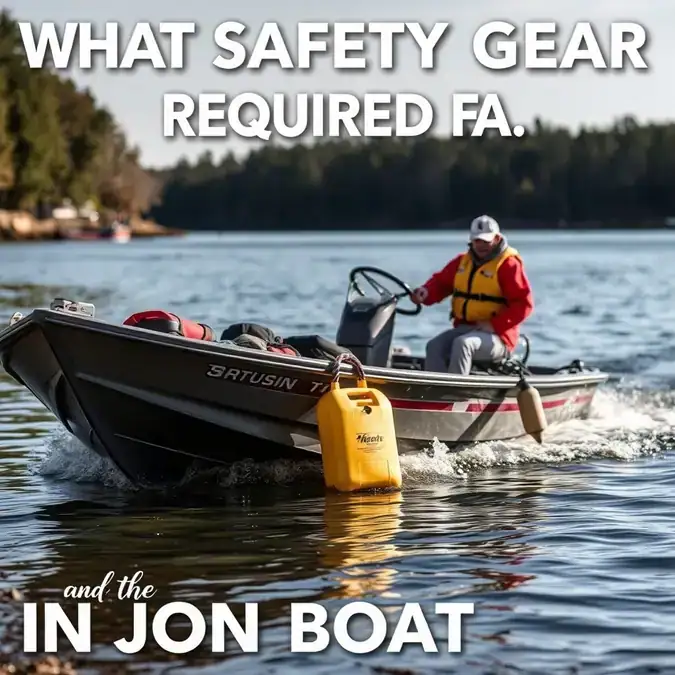
What Safety Gear Is Required For A Jon Boat: Complete Guide

You load your jon boat for a day on the water. The sun shines. The fish bite. But do you have the right safety gear? The law says you must carry certain items. Skip them and you risk a ticket or worse. This guide covers every piece of required gear. It also shares smart extras that keep you safe. Let us walk through it together.
What Safety Gear Is Required For A Jon Boat By Law
The Coast Guard sets the base rules for all boats. Your state may add more rules. You must follow both. A jon boat is a motor boat in the eyes of the law. That means you need life jackets. You need a fire extinguisher. You need a sound device. You need lights at night. You may need visual distress signals. The list changes with boat length. It changes with where you boat. Always check your state website before you launch.
Have you ever been stopped for a safety check? It happens fast. The officer looks for each required item. Missing one item means a fine. It can also mean a trip back to shore. I keep a printed list in my glove box. I check it every time I put the boat in the water. It takes two minutes. It saves hours of trouble.
Federal rules apply on federal waters. State rules apply on state waters. Most lakes and rivers are state waters. The ocean is federal water. Some big rivers are federal too. Know where you are. Know which rules apply. The Coast Guard app shows your location and the rules. It is free and easy to use.
Boat length is the main factor. Boats under 16 feet have one set of rules. Boats 16 to 26 feet have more rules. Boats over 26 feet have even more. Most jon boats are under 16 feet. Some are 16 to 18 feet. Measure your boat from bow to stern. Do not guess. The length decides what you must carry.
Registration numbers must be on the bow. They must be three inches tall. They must contrast with the hull color. You need a registration card on board. You need a hull identification number. It is like a VIN for a car. It stays with the boat forever. Check that yours is clear and readable.
Engine cut off switches are now required. The link must attach to the driver. If you fall out the engine stops. This rule started in 2021. It applies to boats under 26 feet. It applies when the boat is on plane. Clip the lanyard to your life jacket or belt. Do not wrap it on the steering wheel. That defeats the purpose.
Ventilation is required for gas engines. Closed engine compartments need powered blowers. Run the blower four minutes before starting. This clears gas fumes. Gas fumes sink. They can explode. I sniff the bilge every time. My nose is a good backup sensor.
Backfire flame arrestors are required on gas inboards. Most jon boats have outboards. Outboards do not need them. If you have an inboard or stern drive you need one. It stops flames from leaving the engine. Check it each season. Clean it if it looks dirty.
Pollution placards are required on boats 26 feet and up. Most jon boats are smaller. You do not need one. But you must not dump trash or oil. Pack it in pack it out. Keep a small trash bag on board. It is good manners and good law.
Marine sanitation devices are required if you have a toilet. Jon boats rarely have toilets. If you add a portable toilet you must follow the rules. No discharge zones exist in many areas. Know the rules for your water. Use pump out stations when needed.
Do I Need Life Jackets For Everyone On A Jon Boat
Yes. You need one wearable life jacket for each person. They must be Coast Guard approved. They must be the right size. They must be in good condition. They must be easy to reach. You cannot store them in plastic bags. You cannot store them under seats. Wear them. It is that simple.
Have you ever tried to put on a life jacket in the water? It is hard. It is scary. Cold water makes it harder. Panic makes it impossible. Wear yours from dock to dock. Make your passengers wear theirs. No excuses. I have seen too many close calls. A life jacket only works if it is on you.
Children under 13 must wear a life jacket. This is federal law on moving boats. Some states lower the age to 12 or 10. Check your state. The jacket must fit the child now. Not next year. Not when they grow. A loose jacket can slip off. A tight jacket restricts breathing. Test the fit before you leave shore.
Type I jackets are for rough water. They turn unconscious people face up. They are bulky. Type II jackets are for calm water. They turn some people face up. They are less bulky. Type III jackets are for calm water and active use. They do not turn you face up. They are comfortable. Most jon boaters use Type III. They let you cast and move.
Inflatable life jackets are Type V. They are comfortable. They are cool in summer. They require maintenance. You must check the CO2 cylinder. You must check the inflator. You must repack them after inflation. They are not for children under 16. They are not for non swimmers. They are not for high speed impact sports.
Dogs need life jackets too. They can tire fast. They can panic. A dog jacket has a handle on top. You can lift them back in. I never take my lab without his jacket. He swims well but he is old. The jacket gives him confidence. It gives me peace of mind.
Check your jackets each season. Look for tears. Look for broken straps. Look for faded fabric. Squeeze the foam. It should spring back. If it stays compressed replace it. Inflatables need cylinder checks. Weigh the cylinder. Compare to the stamped weight. Replace if light.
Store jackets dry. Mildew ruins foam. Mildew rots straps. Hang them in a dry place. Do not leave them in the boat all winter. Mice love foam. They make nests. They chew straps. I learned this the hard way. Now mine hang in the garage.
Carry one extra jacket. A guest may show up. A jacket may fail. An extra costs little. It solves big problems. I keep a universal adult Type III in a mesh bag. It fits most people. It stays dry. It is ready in seconds.
Wear your jacket. Make it a habit. Put it on before you start the truck. Take it off after you tie up. Your family will follow your lead. Safe habits save lives. It is the single most important thing you do.
What Type Of Fire Extinguisher Do I Need For A Jon Boat
You need a Coast Guard approved B-I extinguisher. The B means it fights flammable liquids. Gas and oil are flammable liquids. The I means it is a small size. Boats under 26 feet need one B-I. Boats 26 to 40 feet need two B-I or one B-II. Most jon boats need just one B-I.
Have you ever seen a boat fire? It spreads fast. Fiberglass burns. Gas burns. You have seconds. An extinguisher buys time. It can save the boat. It can save lives. Mount it where you can grab it fast. Not under the seat. Not in a locker. Right at the helm.
Check the gauge monthly. The needle must be in the green. If it is in the red replace it. Shake dry chemical units twice a year. The powder packs down. Shaking keeps it loose. Turn it upside down. Tap the bottom. Hear the powder move. Good to go.
Mount the bracket securely. Vibration loosens screws. Use lock washers. Use thread locker. A loose extinguisher becomes a missile. It can hurt someone. It can break something. I check my mount every time I wax the boat.
Know how to use it. Pull the pin. Aim at the base of the fire. Squeeze the handle. Sweep side to side. PASS. Practice with an old one. Your fire department may offer training. It is worth an hour of your time.
Replace extinguishers every 12 years. The date is stamped on the bottom. Some need hydrostatic testing at 6 years. Check the label. Disposable units cannot be recharged. Rechargeable units can. Know which you have. Keep the receipt.
Engine compartments need fixed systems sometimes. Inboards over a certain size need them. Outboards do not. If you repower to an inboard check the rules. A fixed system costs more. It works automatically. It protects you while you sleep.
Do not use water on a gas fire. Water spreads gas. Gas floats on water. The fire follows. Use your extinguisher. Use a fire blanket for small galley fires. Keep a blanket near the stove if you cook. They are cheap and effective.
Store a spare in your tow vehicle. Trailer fires happen. Wheel bearings overheat. Brakes stick. A spare extinguisher handles it. I keep a small one in my truck door. It has saved a buddy’s trailer twice.
Read the label. Know the rating. B-I is minimum. B-II is better. More chemical means more fight time. A 5 lb unit is not much heavier than a 2.5 lb. The extra time matters. Buy the best you can afford. Your life is worth it.
Do Jon Boats Need Navigation Lights
Yes. Between sunset and sunrise you must show lights. In fog or rain you must show lights. Anchored at night you must show a white light. The rules are specific. Red on port. Green on starboard. White on stern. White on mast or all around. Know your configuration.
Have you boated at night without lights? It is terrifying. You cannot see others. They cannot see you. A collision at night is often fatal. Lights are cheap. Batteries are cheap. There is no excuse. I test mine before every trip. Even day trips. You never know when you will stay late.
Battery powered lights work fine. LED lights last for hours. They are bright. They are waterproof. Clamp on models are easy. Permanent mount models are cleaner. Wire them to a switch panel. Add a fuse. Label the switch. Red for port green for starboard.
Side lights must be visible for one mile. Stern light must be visible for two miles. All around white light must be visible for two miles. Check the packaging. Cheap lights may not meet the range. Spend a few dollars more. Get Coast Guard approved lights.
Sailboats under power show power boat lights. Jon boats are power boats. Show red green white. If you drift you still show power boat lights. If you anchor show all around white only. Do not show side lights at anchor. It confuses other boaters.
Carry spare bulbs. Carry spare batteries. Carry a flashlight. A headlamp keeps your hands free. I keep a waterproof headlamp in my tackle box. It has saved many trips. It helps with night fishing too.
Clean your lenses. Salt spray clouds them. Bugs splat on them. Dirt dims them. Wipe them with a damp cloth. Dry them. Do it at the ramp. It takes ten seconds. Bright lights save lives.
Know the light rules for your state. Some states require lights on trailers. Some require lights at the ramp. Federal rules cover the water. State rules cover the road. Follow both. A ticket at the ramp ruins a trip.
Test your lights at home. Turn them on. Walk around the boat. Check each color. Check each angle. Fix problems in the driveway. Not on the water. Not in the dark. I do this the night before every trip.
Consider a light pole. It raises the all around light higher. Higher means more visible. Telescoping poles store flat. They deploy in seconds. They cost little. They work well. I use one on my 14 footer. It makes me easy to see.
What Sound Signaling Device Is Required For A Jon Boat
You need a whistle or horn. It must be audible for half a mile. A pealess whistle works wet or dry. It never freezes. It never clogs. It costs three dollars. Clip it to your life jacket. It is always there. A horn is louder. It needs a can of air. The can runs out.
Have you ever needed to signal in fog? Sound travels far on water. A whistle cuts through fog. A horn cuts through wind. Five short blasts means danger. One prolonged blast means leaving dock. One prolonged every two minutes in fog. Learn the signals. Use them.
Mount a horn at the helm. Wire it to a button. Test it monthly. The diaphragm can corrode. The air can leak. A dead horn helps no one. I keep a whistle on a lanyard around my neck. Backup to the backup.
Bells are required on boats over 12 meters. That is 39 feet. Jon boats are smaller. You do not need a bell. But a small bell is nice. It signals position at anchor. It is traditional. It sounds good. Your choice.
Air horns need replacement cans. Check the pressure. Shake the can. Feel the weight. Light can means empty. Replace it. Keep a spare can in the console. They are cheap. They store flat.
Electric horns need power. Check the fuse. Check the wiring. Corrosion kills connections. Clean terminals yearly. Dielectric grease helps. A working horn is a legal horn. A dead horn is a violation.
Practice your signals. One short blast I am turning starboard. Two short blasts I am turning port. Three short blasts I am backing up. Five short blasts danger. One prolonged I am leaving. Learn them. Use them. They prevent accidents.
Teach your passengers. They may need to signal. Show them the whistle. Show them the horn. Let them try. It builds confidence. It builds teamwork. A crew that signals together stays safe together.
Check local rules. Some harbors restrict horn use. Some require specific signals. Know before you go. The Coast Guard app has local rules. The state website has local rules. Ignorance is not a defense.
Carry two devices. Whistle on you. Horn at helm. Redundancy saves lives. It weighs ounces. It costs dollars. It is the cheapest insurance you buy. I never leave the dock without both.
Do I Need A Throwable Flotation Device On A Jon Boat
Boats 16 feet and over need a Type IV throwable. Boats under 16 feet do not. Most jon boats are under 16 feet. Check your length. Measure bow to stern. If you are 16 feet or more you need one. It must be Coast Guard approved. It must be immediately available.
Have you ever thrown a life ring? It takes practice. Wind catches it. Current moves it. Throw underhand. Aim past the person. Pull them in with the line. Practice at the dock. Use a fender as a target. It builds skill.
Type IV devices include ring buoys and horseshoe buoys. Ring buoys are classic. Horseshoe buoys are easier to throw. Both need 60 feet of line. The line must float. Polypropylene line floats. It resists rot. It is cheap. Attach it securely.
Mount the throwable where you can grab it fast. Not in a locker. Not under a seat. On the rail. In a bracket. Visible to all. Everyone should know where it is. Everyone should know how to use it. Drill it once a season.
Check the device yearly. Look for cracks. Look for faded plastic. Look for brittle foam. Squeeze it. It should be firm. The line should be intact. No knots. No frays. Replace if doubtful. They are not expensive.
Cushions count as Type IV if approved. Check the label. Some seat cushions are approved. They serve double duty. Sit on them. Throw them. But they must be labeled Type IV. Most are not. Buy a real throwable. It is safer.
Attach a whistle to the throwable. The person in the water can signal. It helps you find them at night. It helps them stay calm. Zip tie a pealess whistle to the line. Simple. Cheap. Smart.
Keep the line coiled. No tangles. A tangled line fails. Practice coiling. Teach your crew. A neat coil deploys clean. A mess snags. I coil mine clockwise. It feeds out smooth.
Consider a throw bag. It is a bag with line inside. You throw the bag. The line pays out. It is very accurate. Rescue teams use them. They cost more. They work better. Worth it if you boat alone often.
Even if not required carry one. It is cheap insurance. It can save a swimmer. It can save a skier. It can save a dog. I keep a horseshoe buoy on every boat. Even my 12 foot jon. Peace of mind is priceless.
What Visual Distress Signals Do I Need For A Jon Boat
On coastal waters you need day and night signals. On inland waters you need night signals only. Coastal means ocean bays sounds. Inland means lakes rivers. Jon boats on lakes need night signals. Three flares or one electric light. That is the minimum.
Have you ever used a flare? They are hot. They are bright. They scare you. Practice with expired ones. Your fire department may let you. Hold it downwind. Wear gloves. Point away from face. Drop it in water when done.
Pyrotechnic flares expire in 42 months. The date is on the label. Expired flares may not work. They may misfire. Replace them on time. Keep expired ones for practice. Mark them clearly. Store them separate.
Electric distress lights are approved. They flash SOS. They run on batteries. They last for hours. They do not expire. They are not hot. They are safe. I carry one as my night signal. It is always ready.
Day signals include orange flags. Orange smoke. Red flares. The flag is simple. It needs no fire. It works all day. Smoke works in wind. Flares work anytime. Carry a mix. Cover all conditions.
Store signals dry. Water ruins pyrotechnics. A waterproof box is best. A zip bag works. Label the box. Keep it accessible. Not in the bow locker. At the helm. Seconds count in an emergency.
Know the signals. Wave the flag. Light the flare. Turn on the light. Three of anything means help. Three blasts. Three flashes. Three waves. The world knows three. Use three.
Check your kit each spring. Count the flares. Check dates. Test the light. Replace batteries. Shake the smoke. Hear the rattle. A complete kit gives confidence. An incomplete kit gives false hope.
Coastal boaters need more signals. Three day three night minimum. Six pyrotechnics total. Or three pyrotechnics plus electric light. Or three day three night non pyrotechnic. The rules are specific. Read the label. Match the requirement.
Inland boaters need night signals only. But day signals help. A mirror flashes for miles. A flag waves for miles. They cost little. They weigh nothing. Carry them. Use them if needed. Better to have and not need.
Are There Different Requirements For Jon Boats Under 16 Feet
Yes. Boats under 16 feet have fewer requirements. No throwable device needed. No day visual distress signals needed on inland waters. Same life jacket rules. Same fire extinguisher rules. Same sound device rules. Same light rules. Same registration rules.
Have you measured your jon boat? Many are 14 feet. Some are 12 feet. A few are 16 feet exactly. Sixteen feet changes things. Measure along the centerline. Bow tip to transom. No motor. No swim platform. Just the hull.
Capacity plates are required on boats under 20 feet. The plate shows max people. Max weight. Max horsepower. Follow the plate. It is the law. Overloading kills. I see overloaded jon boats every summer. Low freeboard. Water over the gunwales. One wake swamps them.
Small boats capsize easier. They swamp easier. They are less stable. Wear your life jacket. Always. No exception. The law says carry it. Wisdom says wear it. In a small boat wisdom wins.
Flat bottom jon boats are stable at rest. They tip when leaned. They slide sideways in turns. Learn your boat. Practice turns. Practice stops. Practice backing. Do it in open water. Do it alone. Know the limits.
Weight distribution matters more in small boats. Keep weight low. Keep weight centered. Heavy gear in the middle. People on seats. Not on gunwales. Not standing. Standing raises center of gravity. A wave tips you.
Motor size matters. The plate says max HP. Do not exceed it. Too much power pushes the bow down. Too much power makes the transom heavy. Too much power breaks the transom. Match the motor to the boat.
Small boats need more caution in wind. They blow around. They drift fast. Anchor early. Anchor often. Carry two anchors. Bow and stern. It keeps you pointed. It keeps you safe. I use a small mushroom anchor. It holds in mud.
Trailering small boats is easy. They are light. They launch fast. But secure them well. Straps front and back. Safety chains crossed. Lights working. Tires inflated. Bearings greased. A trailer failure ruins the day.
Enjoy your small jon boat. They are fun. They go shallow. They are cheap. They are simple. But respect the water. Respect the rules. Respect the limits. Come home every time. That is the goal.
What Safety Gear Should I Carry Beyond The Legal Minimum
The law is the floor. Not the ceiling. Smart boaters carry more. A first aid kit is essential. Cuts hooks burns happen. Waterproof kit. Bandages tape antiseptic. Pain reliever. Antihistamine. Scissors. Tweezers. Check it yearly. Replace used items.
Have you ever needed a tool on the water? A multi tool fixes loose bolts. Cuts line. Opens cans. Pliers remove hooks. Keep it dry. Oil it occasionally. A rusted tool fails. I carry a Leatherman Wave. It has saved many trips.
An anchor is not required but vital. Engine fails. Wind blows. You drift. Into rocks. Into traffic. Into danger. A small anchor holds you. Carry 50 feet of line. Chain helps it set. Mark the line every 10 feet. Know your depth.
Paddle or oars get you home. Engine dies. Battery dies. Prop falls off. A paddle moves a jon boat. It is slow but it works. Carry one. Strap it down. It doubles as a push pole. It checks depth. It fends off docks.
Bilge pump or bailer. Jon boats leak. Seams seep. Rain fills them. Waves splash in. A hand pump works. A bucket works. A 12 volt pump works better. Wire it to a switch. Add a float switch. It pumps while you fish.
VHF radio calls for help. Cell phones fail. Wet dead no signal. VHF reaches Coast Guard. Channel 16 is distress. Channel 9 is hailing. Get a handheld. Waterproof. Floating. DSC capable. Register your MMSI. It sends your location.
GPS or chartplotter shows where you are. Marks spots. Tracks routes. Finds ramp in fog. Phone GPS works but drains battery. Dedicated unit is better. Waterproof. Sunlight readable. Mount it. Power it. Learn it.
Spare prop and hardware. Props hit rocks. Props hit logs. Shear pins break. Nuts vibrate off. Carry a spare prop. Carry the wrench. Carry pins nuts washers. Practice changing it. Do it in the yard. Not on the water.
Dry bag for phone keys wallet. Electronics die wet. Keys sink. Wallets float but ruin. A dry bag keeps them safe. Clip it to the boat. Wear it on you. Small bag for pocket items. Large bag for clothes towel.
Water and snacks. Dehydration sneaks up. Sun wind heat drain you. Drink often. Eat often. Keep a cooler. Ice drinks food. A fed hydrated boater thinks clear. A tired boater makes mistakes. Take care of yourself.
How Often Should I Check And Replace My Jon Boat Safety Gear
Check everything before every trip. Life jackets extinguisher lights horn signals. Two minutes. Visual scan. Touch test. It becomes habit. Habit saves lives. I do it while the truck warms up. It is part of my launch routine.
Have you ever found dead batteries at the ramp? I have. Now I check lights at home. I check horn at home. I check radio at home. Replace batteries yearly. Spring commissioning is perfect. Fresh batteries all season. Cheap insurance.
Life jackets get a deep check each spring. Inflate inflatables. Check cylinders. Check oral tubes. Check fabric. Check straps. Check buckles. Weigh cylinders. Replace if light. Repack carefully. Practice repacking. It is not intuitive.
Fire extinguisher gets a shake and gauge check monthly. Professional inspection yearly if rechargeable. Replace at 12 years. Date is stamped. Do not guess. Old extinguishers fail. New ones work. The cost is low.
Flares expire at 42 months. Mark your calendar. Replace before they expire. Keep old ones for practice. Label them EXPIRED. Store separate. Do not mix. In panic you grab what is close. Grab the good ones.
First aid kit check each spring. Replace used items. Replace expired meds. Check bandage sterility. Check tape adhesion. Add items for your trip. Snake bite kit for south. Cold packs for north. Customize it.
Anchor line check each spring. Feel for wear. Look for cuts. Check the shackle. Check the chain. Rusty chain breaks. Replace if doubtful. Line is cheap. Chain is cheap. Your boat is not.
Bilge pump test each trip. Flip the switch. Hear it run. See water flow. Check the hose. Check the float. Debris jams floats. Clean the screen. A working pump saves the boat. A dead pump sinks it.
VHF radio test each trip. Call radio check on channel 9. Hear the reply. Check battery. Charge if low. Handhelds last 8 to 12 hours. Bring a spare battery. Bring a charger cord. Dead radio is useless.
Make a checklist. Laminate it. Keep it on the boat. Check each item. Sign and date. It proves due diligence. It builds habit. It gives peace of mind. I have used the same list for 20 years. It works.
Frequently Asked Questions About What Safety Gear Is Required For A Jon Boat
Do I need a life jacket if I am a strong swimmer?
Yes. The law requires a wearable life jacket for every person. Swimming skill does not matter. Cold water shock kills strong swimmers. Wear it always.
Can I use a car fire extinguisher on my jon boat?
No. You need a Coast Guard approved marine B-I extinguisher. Car extinguishers are not approved for boats. They may not fight gas fires. Buy the right one.
What if my jon boat has no motor?
Rowed or paddled jon boats still need life jackets sound device and lights at night. No fire extinguisher needed without motor. Check state rules for manual boats.
Are inflatable life jackets good for jon boats?
Yes if Coast Guard approved Type V. They are cool and comfortable. Not for children under 16. Not for non swimmers. Check cylinder often. Maintain them well.
How do I know if my safety gear is Coast Guard approved?
Look for the approval label. It shows a Coast Guard approval number. It shows the type. No label means not approved. Buy from marine stores. Avoid unknown brands.
Final Thoughts
The water does not forgive mistakes. Safety gear is your insurance. The law sets the minimum. Wisdom carries more. Check your gear. Wear your jacket. Know your boat. Come home every time. That is the only record that matters. Now get out there and fish safe.