
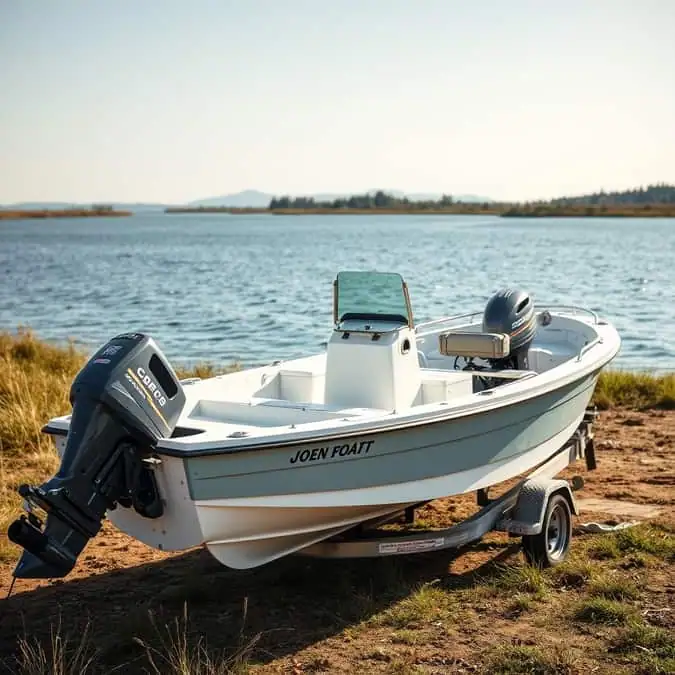
How to Follow a Jon Boat Maintenance Schedule for Saltwater Use: A Step-by-Step Guide

Saltwater eats boats fast. A good jon boat maintenance schedule for saltwater use stops rust, saves money, and keeps you safe. This guide shows you each step in plain words. You will learn what to do after every trip, each month, and each year.
Estimated Time: 30 minutes after each trip. 2 hours monthly. 4 hours yearly.
Difficulty: Easy.
Goal: Keep your jon boat clean, strong, and ready for the next run.
Before You Start: Tools, Gear & Preparation
Get your gear ready before you begin. Work on flat ground. Make sure the boat is stable on the trailer or blocks. Disconnect the battery. Wear gloves and eye protection.
| Item / Tool | Purpose | Optional / Required |
|---|---|---|
| Fresh water hose with nozzle | Rinse salt off hull and motor | Required |
| Soft brush or wash mitt | Scrub without scratching paint | Required |
| Marine soap | Clean dirt and salt film | Required |
| Bucket | Hold soap and water | Required |
| WD-40 or marine corrosion spray | Protect metal parts | Required |
| Grease gun and marine grease | Lube fittings and steering | Required |
| Wrench set | Tighten bolts and nuts | Required |
| Screwdriver set | Check screws and clamps | Required |
| Battery terminal cleaner | Remove corrosion | Required |
| Dielectric grease | Seal electrical connections | Required |
| Prop wrench | Remove prop for inspection | Optional |
| Lower unit oil pump | Change gear oil | Optional |
| Touch-up paint | Cover scratches and chips | Optional |
| Sacrificial anodes (zincs) | Replace worn anodes | Optional |
Step 1: Rinse the Boat After Every Trip
Salt stays wet and eats metal. Rinse the boat as soon as you get home. Do not wait. Use a hose with a strong spray. Hit every spot. Start at the top and work down. Spray the hull, deck, seats, and trailer. Spray the motor too. Tilt the motor down so water runs out of the prop hub. Spray the steering cable and tilt tube. Spray the trailer lights and wheels. Salt on the trailer causes rust fast.
Captain’s Note: If you fish near a ramp with a wash station, use it before you tow. It saves time at home.
Step 2: Wash with Marine Soap
Plain water does not cut salt film. Mix marine soap in a bucket. Use a soft brush or mitt. Wash the hull sides and bottom. Wash the deck and seats. Wash the motor cowling. Do not use dish soap. It strips wax and hurts gel coat. Rinse all soap off. Dry with a chamois or towel. Water spots hold salt.
Do you see white powder on aluminum? That is salt crystals. Scrub those spots again.
Step 3: Flush the Outboard Motor
Salt inside the motor kills it. Flush the motor after every salt trip. Use the flush port or muffs. Run the motor at idle. Let fresh water run for 5 to 10 minutes. Watch the tell-tale stream. It must be strong and steady. Weak stream means a bad impeller. Turn off water before you stop the motor. Tilt the motor up and down a few times to drain water.
Trail Hack: Keep a flush adapter on the motor. Snap it on fast. No tools needed.
Step 4: Spray Corrosion Protection
Water displacing spray stops rust. Spray WD-40 or a marine corrosion blocker on all metal. Hit the steering cable end. Hit the tilt tube. Hit the trim rams. Hit the prop shaft. Hit the trailer springs and axle. Hit the winch and tie-down hooks. Wipe off excess. Do not spray belts or rubber hoses. Spray makes them slip or rot.
Notice any rust starting? Sand it light. Spray heavy on that spot.
Step 5: Grease All Fittings Monthly
Grease pushes water out. Pump marine grease into every zerk fitting. Look for fittings on the steering rod, tilt tube, and trailer wheel bearings. Pump until fresh grease oozes out. Wipe the mess. Check the prop shaft. Pull the prop. Grease the shaft splines. Check the prop for nicks. Put the prop back. Torque the nut to spec. Cotter pin must be new.
No grease gun? A hand pump tube works for small jobs.
Step 6: Check and Clean the Battery
Salt air kills batteries fast. Check the battery monthly. Remove the cables. Negative first. Clean posts with a wire brush. Clean cable ends. Spray terminal protector. Coat with dielectric grease. Reconnect. Positive first. Tighten clamps. Check water level in flooded cells. Add distilled water only. Charge if voltage is below 12.6 volts.
Is the case cracked or swollen? Replace the battery now.
Step 7: Inspect the Hull for Damage
Walk around the boat. Look at every rivet and seam. Aluminum flexes. Rivets loosen. Tap rivets with a hammer. Loose ones ring dull. Tight ones ring bright. Mark loose rivets with a marker. Drill them out and replace. Check welds for cracks. Look at the transom. Soft transom means rot. Push hard on the motor mount. No flex allowed.
See a scratch down to bare metal? Touch up paint that day. Bare metal rusts in hours.
Step 8: Change Lower Unit Oil Yearly
Water in gear oil ruins gears. Change oil once a year or every 100 hours. Warm the motor first. Oil drains fast when warm. Remove the bottom drain screw. Remove the top vent screw. Let all oil drain. Look for milky color. Milky means water. Metal flakes mean gear wear. Pump new oil in the bottom hole. Fill until oil flows out the top. Replace top screw. Replace bottom screw. Use new washers.
Use only the weight your manual says. Wrong oil kills bearings.
Step 9: Replace Sacrificial Anodes
Anodes die so your motor lives. Check anodes monthly. Replace when half gone. Most motors have anodes on the trim tab, cavitation plate, and inside the water jacket. Trailer may have anodes too. Use a wrench. Clean the mount surface. Install new anode. Tighten firm. Do not paint anodes. Paint stops them from working.
Cheap anodes save motors. Buy name brand. No-name anodes wear uneven.
Step 10: Check Trailer Lights and Bearings
Salt water kills trailer parts. Check lights every trip. Have a friend hit brakes and signals. Replace dead bulbs. Spray sockets with dielectric grease. Repack wheel bearings yearly. Jack the trailer. Spin the wheel. Feel for grit or play. Pull the hub. Clean old grease. Inspect races. Pack new grease. Reinstall. Torque nut. Back off one flat. Cotter pin. Check tire pressure. Check tire sidewalls for cracks.
Spare tire must be good too. Many forget the spare.
Common Mistakes & Troubleshooting
Problem: Motor runs hot after flush.
Cause: Impeller worn or flush port blocked.
Fix: Replace impeller. Clear flush port with wire.
Problem: White powder returns fast on hull.
Cause: Not rinsing enough or soap left behind.
Fix: Rinse longer. Use less soap. Dry fully.
Problem: Steering stiff or stuck.
Cause: Salt in tilt tube or cable.
Fix: Pull cable. Clean tube. Grease heavy. Reinstall.
Problem: Battery dies overnight.
Cause: Parasitic draw or bad cell.
Fix: Disconnect cables when stored. Load test battery.
Problem: Trailer lights flicker.
Cause: Corroded ground or plug.
Fix: Clean ground wire to frame. Spray plug with contact cleaner.
Frequently Asked Questions About Jon Boat Maintenance Schedule for Saltwater Use
How often should I rinse my jon boat after saltwater use?
Rinse after every single trip. Salt starts corrosion in minutes. Do not wait until tomorrow.
Can I use car soap on my jon boat?
No. Car soap strips wax and damages gel coat. Use marine soap made for boats.
When do I change lower unit oil?
Change once a year or every 100 hours. Change sooner if oil looks milky.
Do I need to grease trailer wheel bearings every year?
Yes. Salt water gets past seals. Yearly repack prevents bearing failure on the highway.
What anodes do I need for saltwater?
Use zinc anodes for saltwater. Aluminum anodes work for brackish. Magnesium is for fresh water only.
Final Thoughts
A jon boat maintenance schedule for saltwater use is not hard. It just takes habit. Rinse every trip. Wash and spray monthly. Deep check yearly. Your boat will last decades. Skip it and you buy a new motor in two years. Grab your hose. Grab your grease gun. Take care of your ride. The fish are waiting.