
Dish Soap and Water — Helps Break Surface Tension on Contact
You have probably seen it happen. A drop of dish soap hits a bowl of water and pepper flakes scatter instantly. A paper clip that floated moments ago sinks. That quick change is dish soap and water — helps break surface tension on contact. This article explains why it works, how to use the effect outdoors, and what to watch for when you rely on it for cleaning gear, washing dishes at camp, or running simple science demos with kids.
What Surface Tension Actually Is
Water molecules pull on each other. At the surface, that pull creates a tight skin. The skin can hold light objects like pepper, dust, or a carefully placed needle. Scientists call this pull surface tension. It is measured in force per unit length, usually millinewtons per meter. Pure water at room temperature has a surface tension around 72 mN/m.
How Dish Soap Changes the Water
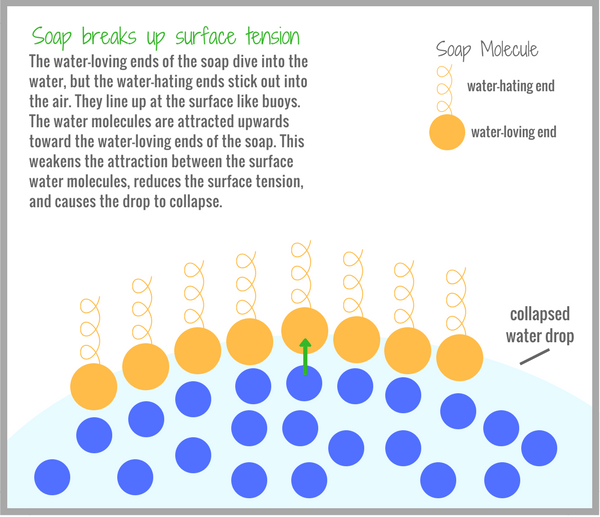
Dish soap contains surfactants. Surfactant molecules have two ends. One end loves water (hydrophilic). The other end hates water and loves oil or grease (hydrophobic). When you add soap, the hydrophobic ends rush to the surface. They push water molecules apart. The tight skin weakens fast. Surface tension can drop below 30 mN/m with just a tiny amount of soap.
The Marangoni Effect in Action
When soap hits one spot, surface tension drops there first. The surrounding water, still at higher tension, pulls the surface away from the low-tension zone. This flow spreads the soap rapidly. You see it as the pepper sprinting to the edges. That flow is the Marangoni effect. It is why a single drop can clear a whole bowl in seconds.
Why This Matters Outdoors
Campers, boaters, and RV travelers deal with greasy dishes, oily sunscreen residue, and grimy gear. Understanding surface tension helps you clean more efficiently and use less soap.
- Dish washing: A few drops in a basin cut grease fast because the lowered tension lets water penetrate food films.
- Gear cleaning: Soap helps water wet synthetic fabrics and coated surfaces that normally bead up.
- Spill response: A soap solution can help disperse light oil sheens on water, though it is not a substitute for proper containment.
- Science fun: The pepper trick or floating paper clip demo keeps kids entertained while you cook.
Simple Demo You Can Try at Camp
- Fill a wide shallow bowl with water.
- Sprinkle fine black pepper evenly across the surface.
- Dip a fingertip in dish soap.
- Touch the center of the water.
- Watch the pepper race to the rim.
Variation: Float a clean, dry paper clip on the water first. Touch soap nearby. The clip sinks as the skin collapses.
Types of Soap and Their Strength
| Soap Type | Typical Surface Tension Reduction | Notes |
|---|---|---|
| Concentrated dish liquid | Strong (down to ~25–30 mN/m) | Best for grease and demos |
| Hand soap (liquid) | Moderate | More gentle, less surfactant |
| Bar soap (grated) | Moderate to weak | Slower to dissolve |
| Biodegradable camp soap | Moderate | Formulated for low environmental impact |
Environmental Considerations
Surfactants do not vanish. They wash into soil and waterways. In high concentrations they can harm aquatic life by damaging gill membranes and disrupting natural surface films that some insects rely on. Follow these habits:
- Use the minimum effective amount.
- Choose biodegradable formulas labeled for outdoor use.
- Dispose of gray water at least 200 feet from streams and lakes.
- Scrape dishes before washing to reduce soap needed.
Common Mistakes
- Using too much soap: More soap does not lower tension further once the surface is saturated. It just creates more rinse work.
- Expecting soap to remove heavy oil alone: Soap emulsifies oil, but mechanical action (scrubbing, hot water) is still required.
- Assuming all soaps are equal: Antibacterial additives, moisturizers, and thickeners can dilute surfactant concentration.
- Pouring soapy water directly into a lake: Even biodegradable soap needs soil microbes to break down properly.
Safety Notes
- Dish soap is not a disinfectant. It removes germs mechanically but does not kill most viruses or bacteria on its own.
- Avoid contact with eyes. Rinse thoroughly if splashed.
- Store away from food and out of reach of small children.
- Do not mix with bleach or other cleaners.
Practical Insights
When you wash dishes at camp, heat water first. Hot water lowers surface tension on its own and melts grease. Add soap after the water is hot. Use a spray bottle with a dilute soap solution for quick gear wipe-downs — it spreads fast and rinses easy. For the pepper demo, use coarse black pepper; fine dust works but is harder to see. A drop of food coloring in the soap makes the Marangoni flow visible as colored streaks.
FAQ
Does dish soap break surface tension?
Yes. Dish soap contains surfactants that disrupt the cohesive forces between water molecules at the surface, lowering surface tension dramatically within seconds.
What does soap do to surface tension?
Soap molecules arrange themselves at the water surface with their hydrophobic tails pointing up. This insertion pushes water molecules apart, reducing the inward pull that creates surface tension.
How does soap affect the surface tension of water?
It reduces surface tension from about 72 mN/m (pure water) to 25–30 mN/m (typical dish soap solution). The reduction allows water to spread, wet surfaces, and penetrate grease.
How do you break surface tension?
Add a surfactant like dish soap, increase temperature, or introduce mechanical agitation. Soap is the fastest and most controllable method for small-scale uses.
Does dish soap float on water?
Liquid dish soap is denser than water, so it sinks initially. However, its surfactant molecules immediately spread across the surface, creating the visible effect.
What is the Marangoni effect?
Flow driven by a surface tension gradient. When soap lowers tension in one spot, the higher surrounding tension pulls liquid away, spreading the soap rapidly.
Final Thoughts
Dish soap and water — helps break surface tension on contact because surfactants insert themselves between water molecules and weaken the surface skin. That simple physics lets you clean greasy pots, wet stubborn fabrics, and run a memorable science demo at the picnic table. Use the smallest amount that works, choose biodegradable formulas for the backcountry, and always dispose of gray water responsibly. The effect is powerful, but the stewardship that goes with it matters just as much.