
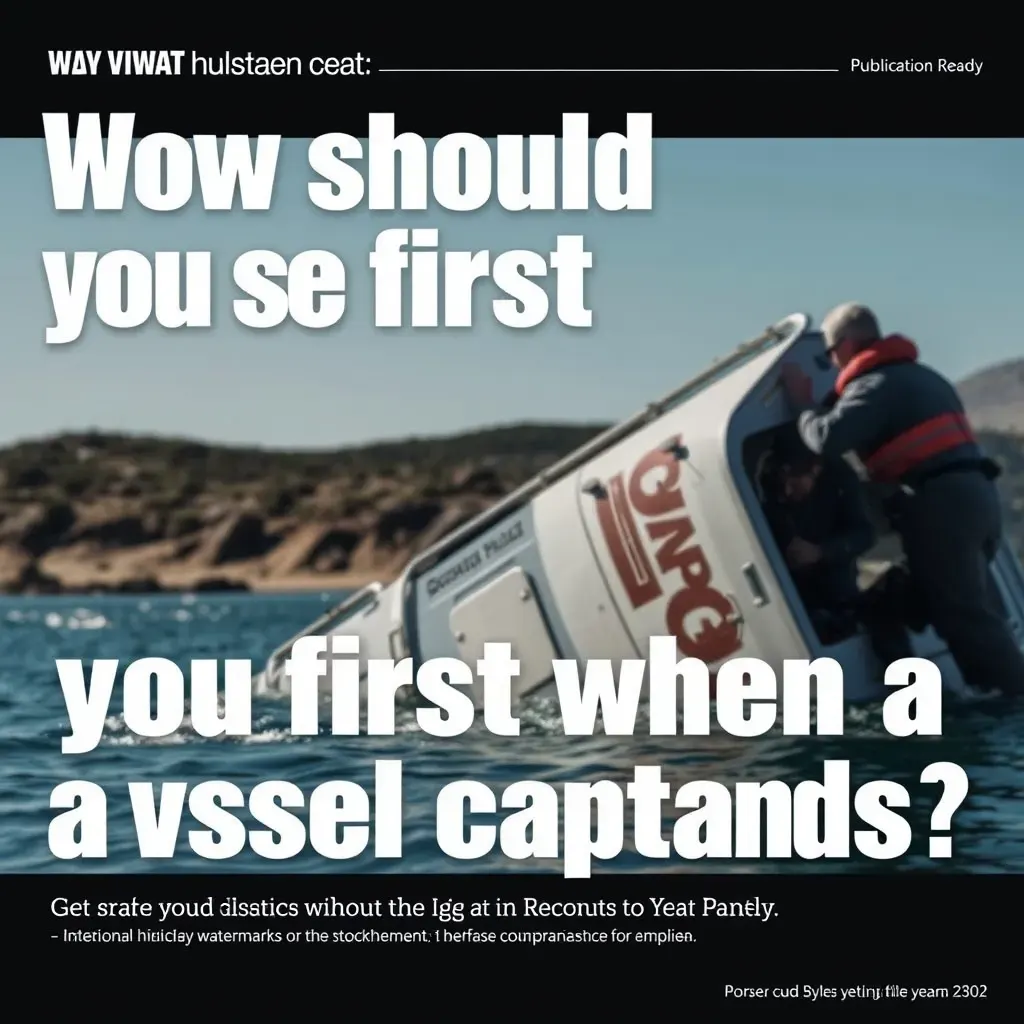
What Should You Do First When a Vessel Capsizes: A Simple Safety Guide

Have you ever felt your boat tip too far? That moment of fear is real. What should you do first when a vessel capsizes can save your life. This guide gives you clear steps to follow. You will learn how to stay calm and act fast. We cover the exact moves to make right away. You will also learn how to prepare before you leave shore. Let us dive in and get you ready for safe days on the water.
What Should You Do First When a Vessel Capsizes?
The very first thing is to stay calm. Panic makes you use up air and energy. Take a slow breath. Check if you are hurt. Look for the people near you. Make sure everyone has a life jacket on. If not, grab one fast. Hold on to the boat if you can. The boat floats and makes you easier to see. Do not try to swim to shore unless it is very close. Cold water can kill you fast. Stay with the boat and wait for help.

Have you practiced putting on a life jacket in the water? It is harder than it looks. Try it in a safe spot with a friend. You will be glad you did.
Keep your head above water. Tread water if you must let go of the boat. Use a whistle to call for help. Three short blasts is the distress signal. Shout only if you hear a boat or see people. Save your voice and energy.
Do a head count right away. Yell out names if you cannot see everyone. Check under the hull if the boat is upside down. Tap on the hull to listen for trapped people. Air pockets can form under there. People can survive for a while in those pockets.
Turn on your emergency beacon if you have one. Press the button and let it send your location. These devices work even when phones do not. They alert the Coast Guard fast. Every minute counts in cold water.
Use a waterproof flashlight at night. Flash it in a pattern. SOS is three short, three long, three short. This helps rescuers find you in the dark. Keep the light tied to your life jacket so you do not lose it.
Stay together as a group. Huddle close to share body heat. Link arms or hold straps on life jackets. This keeps everyone from drifting apart. A group is much easier to spot from a plane or helicopter.
Watch for signs of hypothermia. Shivering stops when it gets bad. Confusion and slurred speech are danger signs. Keep moving your arms and legs slowly. Do not take off wet clothes. They trap a thin layer of heat.
Know your location before you call for help. Use GPS coordinates if you have them. Look for landmarks on shore. Tell the dispatcher the nearest town or ramp. Good info gets boats to you faster.
Practice this drill with your crew. Talk through each step on a calm day. Muscle memory kicks in when fear hits. A rehearsed plan beats a panicked guess every time.
How Do You Stay Safe When a Boat Flips Over?
Safety starts before you leave the dock. Check the weather forecast every time. Look at wind speed and wave height. Small craft advisories mean stay home. File a float plan with a friend on shore. Tell them where you go and when you return. They call for help if you are late.

Do you check your drain plug before every launch? A missing plug sinks boats fast. Make it a habit. Put a bright tag on the plug so you see it.
Wear your life jacket at all times. Do not just carry it. Put it on before you step on the boat. Modern vests are comfortable and cool. Inflatable belt packs work well for anglers. There is no excuse to go without one.
Keep a ditch bag within reach. Pack a whistle, flashlight, beacon, and flares. Add a waterproof VHF radio and a first aid kit. Throw in a space blanket and high calorie bars. Grab it as you exit the boat.
Secure loose gear with bungee cords or nets. Flying tackle boxes cause injuries. A loose anchor can smash a foot. Tie down coolers and batteries. A tidy boat is a safe boat.
Know your boat’s capacity plate. Do not overload it. Too much weight raises the center of gravity. People count as weight too. Distribute load evenly side to side and front to back.
Take a boating safety course. The Coast Guard Auxiliary offers free classes. You learn rules of the road and emergency procedures. Many states require a certificate for operators. Knowledge prevents accidents.
Practice man overboard drills. Throw a cushion and circle back to retrieve it. Do this until it feels automatic. Assign roles: spotter, helmsman, retrieval. Teamwork saves lives.
Carry a sharp knife on a lanyard. You may need to cut tangled lines fast. A serrated blade works on wet rope. Keep it where either hand can reach it.
Trust your gut. If conditions look bad, turn around. No fish is worth your life. The water will be there tomorrow. Make the smart call and go home safe.
Should You Stay With the Capsized Boat or Swim to Shore?
Stay with the boat in almost every case. A capsized hull is a large floating target. Searchers see it from miles away. A person in the water is a tiny dot. The math is simple. Stay put and be found.

Have you ever tried to swim a mile in clothes? It is exhausting. Currents and cold sap your strength fast. Even strong swimmers fail in rough water.
Only swim if shore is less than a hundred yards away. And only if the water is warm. And only if you wear a life jacket. And only if no rescue is coming. That is a lot of conditions.
Climb onto the hull if you can. Get as much of your body out of the water as possible. Water steals heat twenty five times faster than air. Every inch out counts.
Use the boat as a platform. Deploy a sea anchor or bucket to keep the bow into waves. This stabilizes the hull. It also slows drift toward hazards.
Tie yourself to the boat with a long line. Use a bowline knot that will not slip. This lets you rest in the water without drifting away. Rest saves energy for signaling.
If the boat sinks, grab the ditch bag and flotation. Form a tight circle with your group. Keep the beacon high. Stay calm and wait.
Night makes staying with the boat even more critical. Lights on shore confuse distance. You may swim the wrong way. The boat reflects radar and spotlight beams.
Teach this rule to every passenger. “We stay with the boat.” Repeat it at the safety briefing. Peer pressure helps when fear takes over.
Remember the Coast Guard motto: “You have to go out, but you don’t have to come back.” They will come for you. Make it easy for them to find you.
How Do You Right a Capsized Boat?
Small open boats can often be righted. Large cabin cruisers usually cannot. Know your boat type before you need this skill. Practice righting a dinghy on a calm day with help nearby.

Do you know where the righting strap is on your sailboat? It runs along the gunwale. Grab it, lean back, and use your weight. The mast acts as a lever.
For a center console, climb on the hull. Reach over the gunwale. Grab the far side. Lean back hard. The boat may roll up. Be ready to slide in as it comes over.
Remove the engine cowl if it traps air. Air pockets slow righting. Let the water flood the motor well. The boat becomes easier to flip.
Use a righting line if installed. These run under the hull. Pull from the opposite side. Mechanical advantage helps a lot. Install one if your boat lacks it.
Bail immediately after righting. Use buckets, pumps, or a scoop. Water sloshing makes the boat unstable again. Get the water out fast.
Check the engine before restarting. Pull the plugs and crank to clear water. Change the oil if water got in. Hydrolock bends rods instantly.
If you cannot right it, do not exhaust yourself. Save energy for survival. Climb on the hull and signal. The boat still floats upside down.
Catamarans and trimarans often turtle. They stay upside down. Special righting systems exist. Know yours and practice deploying it.
When in doubt, stay on the hull. A righted boat full of water is still dangerous. Wait for a tow if conditions are rough. Pride sinks ships.
What Safety Gear Do You Need for Capsizing Emergencies?
Life jackets are number one. One per person, worn not stored. Type III vests work for most boating. Type I for offshore. Check fit every season. Kids need kid sizes.
Have you tested your inflatable life jacket lately? Pull the cord annually. Check the CO2 cylinder. Repack it correctly. A failed inflate is useless.
EPIRB or PLB is essential offshore. EPIRB mounts on the boat. PLB clips on you. Both satellite alert rescuers. Register them so they know who you are.
Waterproof VHF radio with DSC. One button sends your GPS position. Channel 16 is the hailing channel. Monitor it always. Handheld units work if the boat loses power.
Flares: three day night combos minimum. Check expiration dates. Old flares misfire or dud. Store in a dry box. Practice reading instructions in the dark.
Whistle on every life jacket. Pealess works when wet. Three blasts for distress. Cheap insurance. Attach with a lanyard so it stays with you.
Signal mirror flashes for miles. Aim at the target. Practice on a sunny day. Keep it in a pocket or ditch bag. No batteries needed.
Waterproof flashlight or headlamp. LED lasts long. Strobe mode signals SOS. Extra batteries in a ziplock. Red light preserves night vision.
First aid kit marine rated. Waterproof case. Add seasick meds and pain relievers. Include a tourniquet and pressure bandages. Take a stop the bleed course.
Ditch bag floats and is bright colored. Pack the above plus water, food, blanket, knife. Keep it at the helm. Grab and go in seconds.
How Do You Signal for Help After Capsizing?
VHF radio is your primary link. Call Mayday three times. Say your boat name three times. Give position, nature of emergency, people count. Repeat until answered.
Do you know the Mayday script? “Mayday Mayday Mayday. This is Sea Star Sea Star Sea Star. Position three two degrees north, seventy nine degrees west. Capsized. Four persons. Life jackets on. Over.”
Cell phone as backup. Call 911. Give same info. Text 911 if signal is weak. Texts go through when calls fail. Save Coast Guard number in contacts.
EPIRB or PLB activation. Flip the switch. Leave it on. Do not turn off to save battery. Rescuers home in on the signal. Stay put after activating.
Flares for visual signal. Handheld for close boats. Parachute for far ships. Hold downwind. Tilt away from face. Do not look at the flare.
Signal mirror for daytime. Flash at planes or boats. Three flashes pause three flashes. Practice aiming. It works surprisingly well.
Whistle blasts. Three short. Pause. Three short. Repeat. Carries over water. Use when you hear engines. Save your voice.
Wave arms overhead. Cross and uncross. This is the universal distress signal. Do it when you see searchers. Make yourself big.
Strobe light at night. Attach to life jacket shoulder. Flashes once per second. Visible for miles. Coast Guard night vision goggles pick it up easily.
Dye marker spreads green cloud. Good for aircraft. Lasts an hour. Deploy when you hear a plane. Mark your position clearly.
What Causes Boats to Capsize in the First Place?
Overloading is the top cause. Too many people. Too much gear. High center of gravity. A wake hits and the boat rolls. Check the capacity plate. Respect the limits.
Have you seen a boat with coolers stacked to the gunwales? That is a flip waiting to happen. Keep weight low and centered.
Sudden weight shift capsizes small boats. Everyone runs to one side to see a whale. The rail goes under. Water pours in. Stability vanishes. Stay seated underway.
Waves on the beam roll boats. Take waves at a forty five degree angle. Slow down. Do not turn sharp in troughs. Quartering seas are safer.
Improper anchoring pulls the stern down. Anchor from the bow only. Never stern anchor in current. The boat swings broadside. Waves swamp the transom.
Flooding from leaks or rain. Bilge pump fails. Battery dies. Water rises. Free surface effect sloshes water side to side. Boat rolls over. Test pumps monthly.
High speed turns throw passengers. Centrifugal force heels the boat. Prop ventilation loses grip. The boat slides sideways. Slow down before turning.
Wind and current oppose. Boat sits sideways. Waves build. A gust lays it over. Know the local conditions. Watch for wind against tide.
Modifications raise center of gravity. Tuna towers. Hard tops. Radar arches. Added weight up high. Compensate with ballast low. Consult a naval architect.
Operator inattention misses warning signs. Dark clouds build. Wind picks up. Whitecaps form. Head for shelter early. Denial causes accidents.
How Can You Prevent Your Boat From Capsizing?
Respect the capacity plate. It is law not suggestion. Count people and gear. Weigh coolers if unsure. Err on the side of caution. Leave the extra cooler on shore.
Do you load heavy items low and center? Batteries, fuel, anchors go in the bilge. Coolers on the deck but centered. Light gear up high. Balance port and starboard.
Keep scuppers clear. Debris blocks drainage. Water on deck adds weight high up. Free surface effect kills stability. Clean scuppers every trip.
Slow down in rough water. Speed increases impact force. A wave at thirty knots breaks things. At ten knots you ride over. Patience prevents damage.
Trim the boat properly. Trim tabs or engine trim. Bow down in head seas. Bow up in following seas. Level in beam seas. Adjust as conditions change.
Secure all gear. Bungee nets. Straps. Lockers latched. Loose gear becomes missiles. It also shifts weight unexpectedly. A place for everything.
Watch the weather constantly. Apps update in real time. Radar shows cells. Wind shifts precede storms. Head in at the first sign of trouble.
Take waves at an angle. Never broadside. Never directly into steep waves. Forty five degrees is the sweet spot. Adjust course as waves change.
Maintain your boat. Through hulls, hoses, clamps fail. Bilge pumps quit. Batteries die. A maintained boat stays afloat. Do a pre trip checklist every time.
Educate your crew. Safety briefing before leaving. Show life jacket locations. Demonstrate VHF use. Assign emergency roles. An informed crew is a safe crew.
What Should You Do If Someone Is Trapped Under a Capsized Boat?
Do not dive under unless trained. Entanglement kills rescuers. Lines, rigging, debris snag you. You become a second victim. Call for professional divers.
Have you ever been under an overturned hull? It is dark, loud, and disorienting. Air pockets exist but are hard to find. Panic uses oxygen fast.
Tap on the hull. Listen for taps back. Three taps means someone is there. Mark the spot with a fender or marker. Tell rescuers the exact location.
If you must reach under, use a boat hook or pole. Feel for a person. Do not put your head under. Pull them clear if you can grab clothing or life jacket.
Cut the hull only with proper tools. Reciprocating saw with metal blade. Cut near the keel for largest opening. Wear eye protection. Fiberglass dust is nasty.
Provide air if you can. A hose from a pump or compressor. Push it into a gap. Do not use engine exhaust. Carbon monoxide kills.
Keep the trapped person calm. Talk to them. Tell them help is coming. Reassurance reduces oxygen consumption. Panic is the enemy.
Prevent hypothermia. Water under the hull is cold. The person may be wet. Throw a space blanket if you can reach them. Warmth preserves life.
Coordinate with rescuers. Give them the tapping location. Number of people. Condition if known. Stay clear of their operation. Let pros work.
Prevent trapping by keeping hatches closed underway. Dog them tight. Open hatches become traps. Escape hatches should be marked and practiced.
How Do You Prepare for a Capsizing Emergency Before You Leave Shore?
File a float plan every trip. Text it to a responsible adult. Include boat description, people, route, return time. Update if plans change. It is free insurance.
Do you have a pre departure checklist? Write one for your boat. Laminate it. Use it every time. No memory lapses allowed. Check off each item aloud.
Brief your crew before casting off. Life jacket locations. Fire extinguisher spots. VHF operation. Man overboard plan. Abandon ship signal. Takes two minutes.
Check safety gear expiration. Flares, EPIRB battery, hydrostatic release, fire extinguisher gauge. Replace expired items. Schedule annual service.
Load the boat properly. Heavy low. Weight centered. Secure everything. Capacity plate not exceeded. Freeboard adequate for conditions.
Test all systems. Engine starts. Steering works. Bilge pumps run. Lights shine. Radio transmits. Horn sounds. Fix issues at the dock.
Check fuel. One third out. One third back. One third reserve. Calculate range. Know your burn rate. Running dry leaves you drifting.
Dress for immersion. Not air temperature. Water temperature kills. Wear layers. Avoid cotton. Wool and synthetics keep heat when wet. Bring spare clothes in dry bag.
Know the water. Charts studied. Hazards marked. Channels known. Tides checked. Currents understood. Local knowledge prevents groundings and capsizes.
Mentally rehearse the worst case. Capsize. Fire. Man overboard. Medical emergency. Visualize your actions. Mental practice builds muscle memory. You react instead of freeze.
Frequently Asked Questions About Vessel Capsizing
How long can you survive in cold water after capsizing?
In fifty degree water you lose dexterity in ten minutes. Unconsciousness in one hour. Survival up to three hours with a life jacket. Wear thermal protection offshore.
Can a capsized boat sink completely?
Most boats have foam flotation and stay afloat upside down. Large cabin boats may sink if hatches open. Small open boats almost always float. Stay with the hull.
Should you try to right a capsized boat alone?
Only if the boat is small and you are strong. Practice first. If it does not right in two tries, stop. Climb on the hull and signal. Do not exhaust yourself.
What is the best life jacket for capsizing protection?
A Type I offshore vest turns unconscious wearers face up. Inflatable Type I with harness is comfortable and effective. Wear it always. The best vest is the one you have on.
How do you prevent hypothermia while waiting for rescue?
Get out of the water onto the hull. Huddle with others. Keep life jacket on. Move limbs slowly. Think warm thoughts. Shivering is good. No shivering is bad.
Final Thoughts
The single most important takeaway is simple. Wear your life jacket every minute on the water. It buys you time to think and act. A capsized boat is not a death sentence if you are prepared. Practice your drills. File your float plan. Check your gear. The water rewards respect and punishes carelessness. Now get out there and enjoy the water safely. Tight lines and fair winds.